 How-to
Signs of Bed Bugs in Commercial Furniture: What to Look For
Last Updated: October 23, 2026
Quick Summary
Signs of bed bugs in commercial furniture include dark fecal spots, rust-colored stains, shed skins, live insects, tiny white eggs, and a sweet, musty odor in heavy infestations. Check cushion and armrest seams, frame-upholstery crevices, and under seat cushions, since bites are unreliable evidence.
- Bed bugs prefer tight spaces near where people sit, such as cushion seams and frame joints.
- Live bed bugs are flat and oval, about the size of an apple seed.
- Gather a flashlight, gloves, magnifier, and notepad before inspecting upholstered pieces.
- Isolate an infested piece and bag nearby clothing to wash and dry on high heat.
- Never bring used or curbside furniture into a commercial space without a full inspection first.
Table of Contents
- Signs of Bed Bugs in Commercial Furniture
- How to Inspect Furniture for Bed Bugs: A Facilities Checklist
- Bed Bug Fecal Spots on Furniture: Telling Them Apart From Other Stains
- Frequently Asked Questions
Signs of Bed Bugs in Commercial Furniture
Bed bugs are small, reddish-brown insects that hide in seams, folds, and joints of upholstered furniture. Signs of bed bugs in commercial furniture include dark fecal spots, rust-colored stains, shed skins, live insects, tiny white eggs, and a sweet, musty odor in heavy infestations. They hitchhike on clothing, luggage, and secondhand furniture, so offices, lounges, and break rooms are all fair game. Bites are unreliable evidence.
Where Bed Bugs Hide in Commercial Furniture
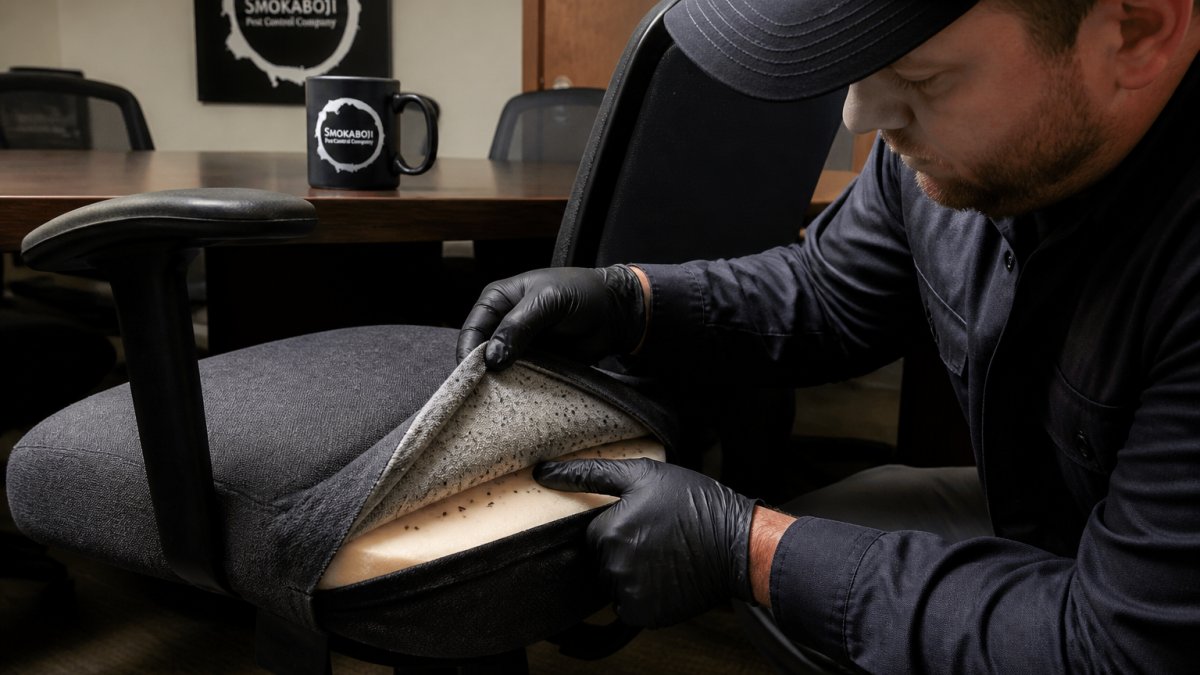
Bed bugs prefer tight spaces near where people sit: cushion and armrest seams, frame-upholstery crevices, under and between seat cushions, skirt and back panel folds, frame joints, and drawer tracks. Inspect high-traffic lounge and break room pieces more often.
Common Signs to Look For
No single sign proves an infestation, but a cluster does. Look for flat, oval live bed bugs about the size of an apple seed, pale shed skins, tiny white eggs glued into seams, dark ink-like fecal spotting, rust-colored blood stains, and a sweet musty odor.
Commercial Furniture Types and Risk
Upholstered furniture with deep seams gives bed bugs the most places to hide; wooden and metal frames are lower risk but still worth checking. Used and curbside furniture brought in without inspection easily starts an infestation.
How to Inspect Furniture for Bed Bugs: A Facilities Checklist
Follow these steps for every upholstered piece in high-traffic areas.
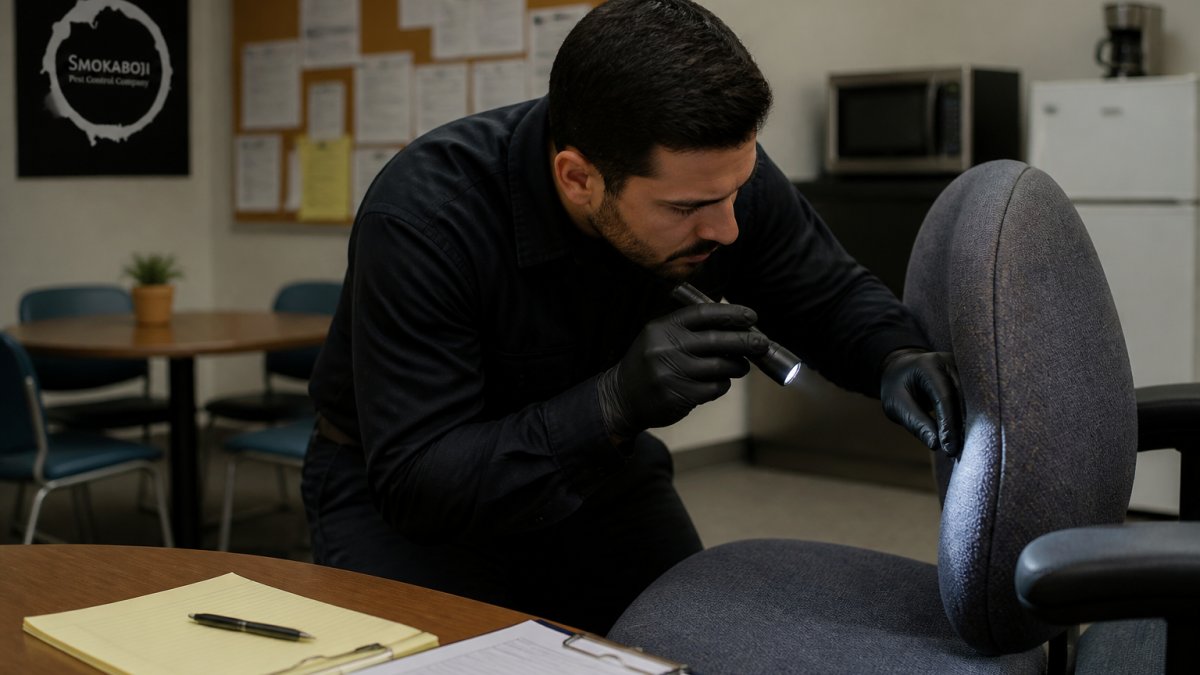
Gather a flashlight, gloves, magnifier, and notepad; pull back cushions and check every fold, crevice, and joint; flip cushions and check the base; inspect drawers, cubbies, and coat closets; record the piece, location, and findings; then re-inspect on a schedule. For a deeper walkthrough, see our guide on signs of bed bugs in mattress seams and our step-by-step mattress inspection guide.
What to Do If You Find Bed Bugs at Work
Isolate the infested piece so bugs cannot spread, and bag nearby clothing to wash and dry on high heat. Do not move the piece through the building. Call a licensed pest control team to confirm and treat.
Prevention for Businesses
Inspect all incoming and secondhand furniture, keep coat closets and storage areas clean and checked, train staff to report signs early, schedule regular inspections of high-traffic areas, and vacuum upholstered furniture often. For a fuller prevention plan, read our guide to preventative pest maintenance for office buildings and our overview of pest control standards for commercial facilities.
Bed Bug Fecal Spots on Furniture: Telling Them Apart From Other Stains
Bed bug fecal spots are small dark dots that bleed into fabric like ink, cluster near seams and crevices, and do not wipe away easily.
| Sign | What It Looks Like | Where to Look |
|---|---|---|
| Fecal spotting | Dark dots, ink-like | Seams and crevices |
| Rust-colored stains | Reddish-brown smears | Cushion edges |
| Shed skins | Pale hollow casings | Folds and joints |
Blood spots from crushed bugs are reddish-brown and appear near where people sit; fecal spots are darker and more dot-like. If unsure whether dark marks are droppings or dirt, our guide on bed bug droppings vs dirt on a mattress breaks down the difference.
Evidence-Based Identification Versus Bites
Bites alone are weak evidence; rely on physical signs on the furniture instead.
When signs point to an infestation, professional treatment is the surest path to a lasting fix.
Bed bugs in commercial furniture spread fast when signs go unnoticed. If your inspection turns up fecal spots, shed skins, or live insects, act before the problem reaches every floor. Smokaboji Pest Control offers fully licensed and insured technicians, customized treatment plans, and preventative maintenance to keep your building pest-free. Our team is available on-call for urgent needs and serves businesses across the region. Get started with Smokaboji Pest Control and stop bed bugs before they spread.
Frequently Asked Questions
Can bed bugs live in upholstered office furniture?
Yes. Bed bugs shelter in seams, folds, crevices, and joints of upholstered furniture, including office chairs, lounge sofas, and break room seating. They feed on people using the furniture and then retreat into fabric edges and frame gaps. Shared seating in high-traffic areas carries the most risk because more people use it daily. Regular inspection of seams and cushion undersides helps catch an infestation early, before it spreads to other pieces.
What are the signs of bed bugs in office furniture?
Look for rust-colored stains and dark fecal spotting along seams, small pale shed skins, tiny white eggs tucked in crevices, and live bed bugs near joints and cushion edges. Bites on staff are not reliable evidence on their own. Document what you find with photos and dates, then have a licensed technician confirm the identification before any treatment decisions are made.
Should you remove or dispose of furniture if you find bed bugs?
Not immediately. Throwing out an infested piece can spread bed bugs through the building as it is moved, and it does not address bugs in nearby furniture. Isolate the piece, wrap or bag it if it must be moved, and let a professional assess whether treatment or disposal makes sense. Many upholstered items can be treated with steam and targeted applications rather than discarded.