 ultimate-guide
Preventative Pest Maintenance for Office Buildings
Table of Contents
- Why Preventative Pest Maintenance Is a Business Necessity
- Common Pests in Office Buildings and the Risks They Bring
- Integrated Pest Management for Businesses: A Smarter Approach
- Your Commercial Pest Control Checklist for Year-Round Protection
- Frequently Asked Questions
Last Updated: September 5, 2026
Why Preventative Pest Maintenance Is a Business Necessity
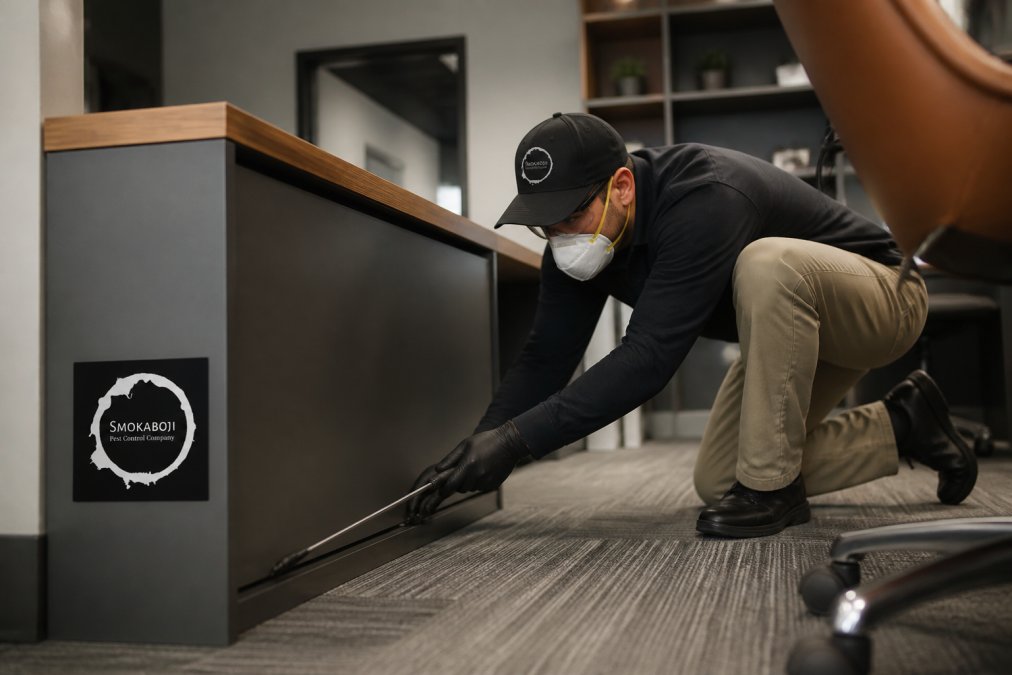
A single cockroach sighting in a client meeting room can undo years of reputation building. Preventative pest maintenance for office buildings is the systematic approach to stopping infestations before they start, combining routine inspections, exclusion work, and sanitation protocols. The EXTERNAL_LINK: U.S. Environmental Protection Agency guidance on [pest management | epa.gov] emphasizes that prevention is the most effective and least hazardous strategy for commercial facilities. Waiting for visible signs of pests means the problem has already established itself in walls, breakrooms, and HVAC systems.
Common Pests in Office Buildings and the Risks They Bring
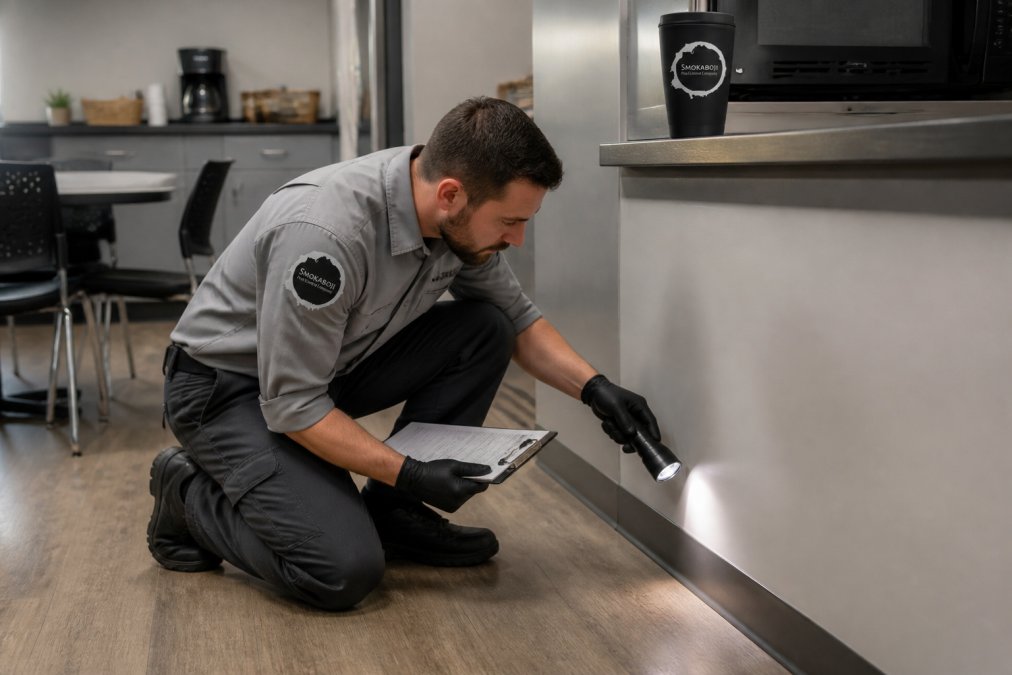
Rodents, cockroaches, ants, and flies are the most frequent offenders. Rodents gnaw through wiring, creating fire hazards; cockroaches contaminate food surfaces and trigger allergies. Beyond property damage, pests threaten compliance with health codes, exposing property managers to liability and tenant complaints.
Integrated Pest Management for Businesses: A Smarter Approach
Integrated pest management for businesses is a documented, decision-making framework the U.S. Environmental Protection Agency endorses for commercial facilities.
The Four Pillars, Operationalized
1. Exclusion: The First Line of Defense
Exclusion denies pests physical entry. Audit for gaps larger than 1/4 inch for rodents and 1/16 inch for cockroaches around utility penetrations, loading dock door seals, and weep holes, sealing with copper mesh or steel wool, not caulk. Replace door sweeps annually.
2. Sanitation: Removing the Attractants
Sanitation risks concentrate in breakrooms: unsealed food containers, crumbs in desk drawers, and trash bins not emptied nightly. Include a weekly breakroom deep clean that pulls out appliances.
3. Moisture Management: Eliminating Breeding Habitats
Cockroaches and drain flies require moisture to breed. Hidden sources include leaky pipes, HVAC condensation lines, and coffee machine drip pans. A monthly check is core IPM; the EPA notes moisture control is often the most overlooked pillar.
4. Monitoring: Data-Driven Decision Making
Monitoring uses stations at 20-foot intervals along exterior walls, near entry points, and in utility rooms, checked monthly. A sudden activity spike points to a new entry point or nearby construction, driving targeted, least-toxic interventions.
IPM and Green Building Standards: A Natural Alignment
For LEED certification, IPM is a prerequisite for Indoor Environmental Quality credits. LEED v4.1 requires a documented plan using non-chemical methods first, which also signals responsible management to sustainability-focused tenants.
The U.S. Environmental Protection Agency guidance on pest management provides the foundational framework, but the operational details matter. A building that simply sprays quarterly is not practicing IPM; it is practicing reactive chemical application. A building that audits entry points, monitors pest pressure, and only uses targeted, low-toxicity treatments when monitoring data justifies it is practicing IPM. That distinction is what separates a professionally managed property from one that is merely serviced.
Your Commercial Pest Control Checklist for Year-Round Protection
A checklist is only as good as its execution. Tie each item to a specific mechanism of pest entry or survival and a measurable cost.
The Seasonal Rhythm of Pest Pressure
Pest activity follows weather. Spring: inspect exterior perimeters for cracks and door sweeps. Summer: clean trash bins twice weekly due to fly pressure. Fall: rodents seek shelter, a mouse enters through a pencil-width gap. Winter: rodent activity peaks indoors, making monthly station reviews non-negotiable.
The Cost-Benefit Logic of Each Checklist Item
Most checklists omit the financial rationale. Here is the ROI framework for preventative versus reactive maintenance.
| Checklist Item | Frequency | Responsible Party | Cost-Benefit Rationale |
|---|---|---|---|
| Exterior perimeter inspection | Quarterly | Facility manager | A 30-minute inspection costs roughly $50 in staff time. An undetected rodent entry point can lead to a $2,000+ exclusion and trapping contract, plus potential wire damage. |
| Breakroom deep cleaning | Weekly | Janitorial staff | A single cockroach sighting in a breakroom can trigger a tenant complaint and a service call. Preventative sanitation costs $100/week in labor; a single emergency cockroach treatment runs $300-$500. |
| HVAC filter and duct check | Semi-annually | HVAC contractor | Rodents use ductwork as a highway. A blocked or damaged duct from nesting can reduce HVAC efficiency by up to 15%, increasing energy bills. The inspection cost is negligible compared to the repair. |
| Pest monitoring station review | Monthly | Pest control provider | Monitoring stations are your early warning system. A monthly review catches a single mouse before it becomes a breeding population. The cost of the monthly visit is a fraction of a single emergency rodent removal. |
| Employee awareness training | Annually | HR department | A trained employee who reports a sighting immediately can save $500+ in containment costs. Untrained employees who ignore a sighting allow the problem to establish for weeks. |
Post-Incident Recovery Protocols: The Missing Piece
A visible pest sighting is a reputational event; your first 48 hours determine whether it becomes a crisis or a blip.
- Hour 1 - Isolate and Document: Close off the affected area. Take dated photos of the sighting location and any droppings or damage for your provider and potential liability discussions.
- Hour 4 - Notify Your Provider: Call your provider with the documentation. Do not attempt DIY treatment; improper application can scatter pests deeper. Your provider should schedule a targeted treatment within 24 hours.
- Hour 24 - Internal Communication: Send a brief, factual notice to tenants stating that a routine monitoring station detected activity and a professional is addressing it. Transparency builds trust; silence breeds rumors.
- Day 2 - Root Cause Analysis: Work with your provider to identify the entry point or sanitation gap. Adjust your checklist, not just the symptom.
- Day 7 - Follow-Up Inspection: Schedule a follow-up visit to confirm resolution. Document and close the loop with tenants.
The cost of this protocol is time and a potential service call. The cost of ignoring it is tenant churn, lease penalties, and a reputation that takes years to rebuild. The Occupational Safety and Health Administration guidance on workplace sanitation notes that maintaining clean conditions is a core employer responsibility, but a documented response protocol demonstrates that you are managing risk, not just reacting to it.
Frequently Asked Questions
Is pest control considered preventive maintenance?
Yes, when scheduled regularly, pest control is a form of preventive maintenance. Just like checking HVAC systems or fire alarms, routine pest maintenance protects your building's structural integrity and your reputation. A proactive plan stops infestations before they cause costly damage or force an emergency shutdown. This approach is often more affordable than waiting for a visible problem to appear.
How often should commercial buildings schedule professional pest inspections?
Most commercial facilities benefit from a professional pest inspection every one to three months. The exact frequency depends on your building's age, location, and the type of business. A facility with a cafeteria or high foot traffic may need more frequent visits. A quarterly schedule is a solid starting point for preventative pest maintenance for office buildings, but a licensed provider can recommend the right cadence for your property.
What are the most effective preventative measures for office pest control?
The most effective measures follow an integrated pest management (IPM) approach. Start by sealing entry points like gaps under doors and cracks in the foundation. Maintain strict breakroom sanitation to remove food sources, and manage waste disposal in sealed bins. Regular cleaning and HVAC maintenance also control moisture, which attracts pests. Combine these steps with a professional commercial pest control checklist to catch issues early.
Preventative pest maintenance for office buildings demands consistency, documentation, and a partner who understands commercial facilities. Smokaboji Pest Control brings fully licensed and insured technicians, customized treatment plans, and preventative maintenance programs designed for property managers who cannot afford downtime. Get started with Smokaboji Pest Control and keep your building pest-free with a plan that works around your tenants.
This article was written using GrandRanker
Frequently Asked Questions
Q: Is pest control considered preventive maintenance?
A: Yes, when scheduled regularly, pest control is a form of preventive maintenance. Just like checking HVAC systems or fire alarms, routine pest maintenance protects your building's structural integrity and your reputation. A proactive plan stops infestations before they cause costly damage or force an emergency shutdown. This approach is often more affordable than waiting for a visible problem to appear.
Q: How often should commercial buildings schedule professional pest inspections?
A: Most commercial facilities benefit from a professional pest inspection every one to three months. The exact frequency depends on your building's age, location, and the type of business. A facility with a cafeteria or high foot traffic may need more frequent visits. A quarterly schedule is a solid starting point for preventative pest maintenance for office buildings, but a licensed provider can recommend the right cadence for your property.
Q: What are the most effective preventative measures for office pest control?
A: The most effective measures follow an integrated pest management (IPM) approach. Start by sealing entry points like gaps under doors and cracks in the foundation. Maintain strict breakroom sanitation to remove food sources, and manage waste disposal in sealed bins. Regular cleaning and HVAC maintenance also control moisture, which attracts pests. Combine these steps with a professional commercial pest control checklist to catch issues early.