 How-to
Can Springtails Damage Bathroom Grout?
Last Updated: November 19, 2026
Quick Summary
No, springtails cannot damage bathroom grout, so the answer to can springtails damage bathroom grout is a clear no. Their soft mouths scrape mold and decaying plant matter, not cement or sand. Pitted, crumbly, or stained grout is moisture damage, not bug damage.
- Springtails are usually a symptom of moisture, such as a slow leak or failing sealant, rather than the cause of damage.
- Springtails are tiny jumping bugs, usually under a quarter inch long, that never bite people or pets.
- Find the moisture source by checking for a water leak, dripping pipe, or loose caulk line.
- Clean grout with a stiff brush and a mild cleaner, not bleach alone, and re-seal grout every year or two.
- Call a professional when springtails return after cleaning or when you cannot find the leak.
Table of Contents
- Can Springtails Damage Bathroom Grout? The Short Answer
- How to Identify Springtails in Your Bathroom
- How to Get Rid of Springtails in the Bathroom
- Frequently Asked Questions
Can Springtails Damage Bathroom Grout? The Short Answer
No. To answer the common question of can springtails damage bathroom grout: they cannot. Their soft mouths scrape mold and decaying plant matter, not cement or sand. Pitted, crumbly, or stained grout is moisture damage, not bug damage.
Springtails are usually a symptom of moisture, such as a slow leak, trapped dampness, or failing sealant, rather than the cause of the damage.
Springtails are harmless to grout, tile, and caulk; the moisture that attracts them is what shortens the life of your bathroom surfaces.
How to Identify Springtails in Your Bathroom
Springtails are tiny jumping bugs, usually under a quarter inch long, with a built-in spring that flings them into the air when disturbed.
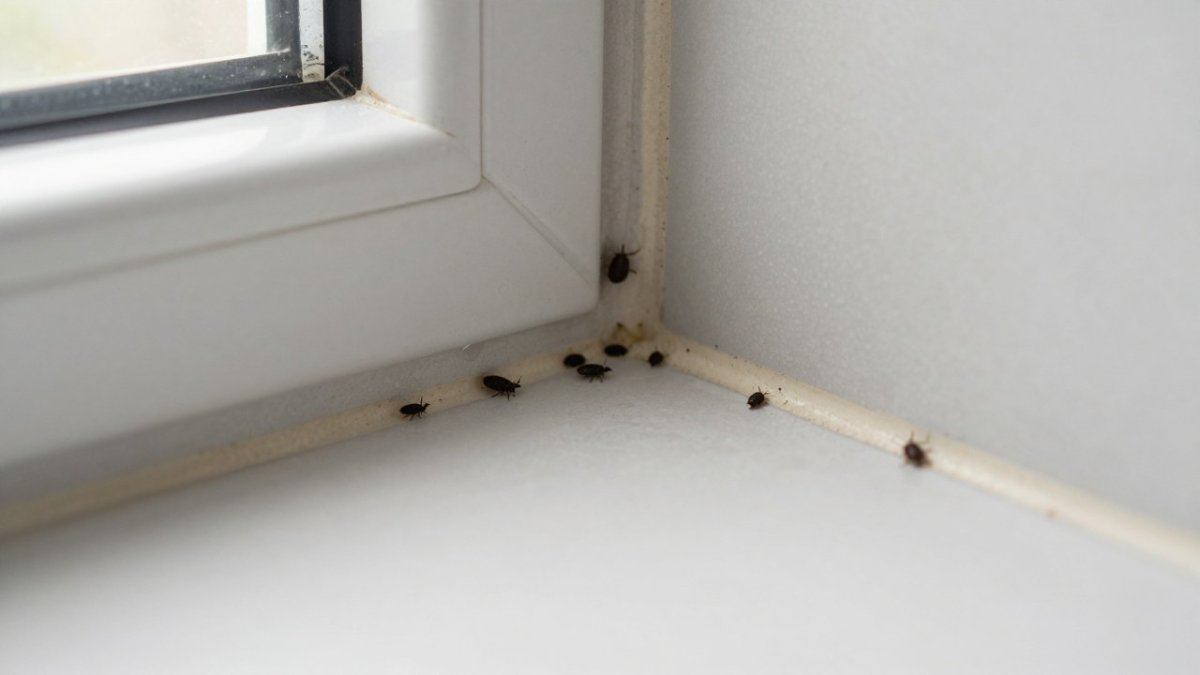
Here is what to look for:
- Size: one to two millimeters, smaller than a sesame seed
- Movement: slow crawl, then an abrupt jump when you touch them
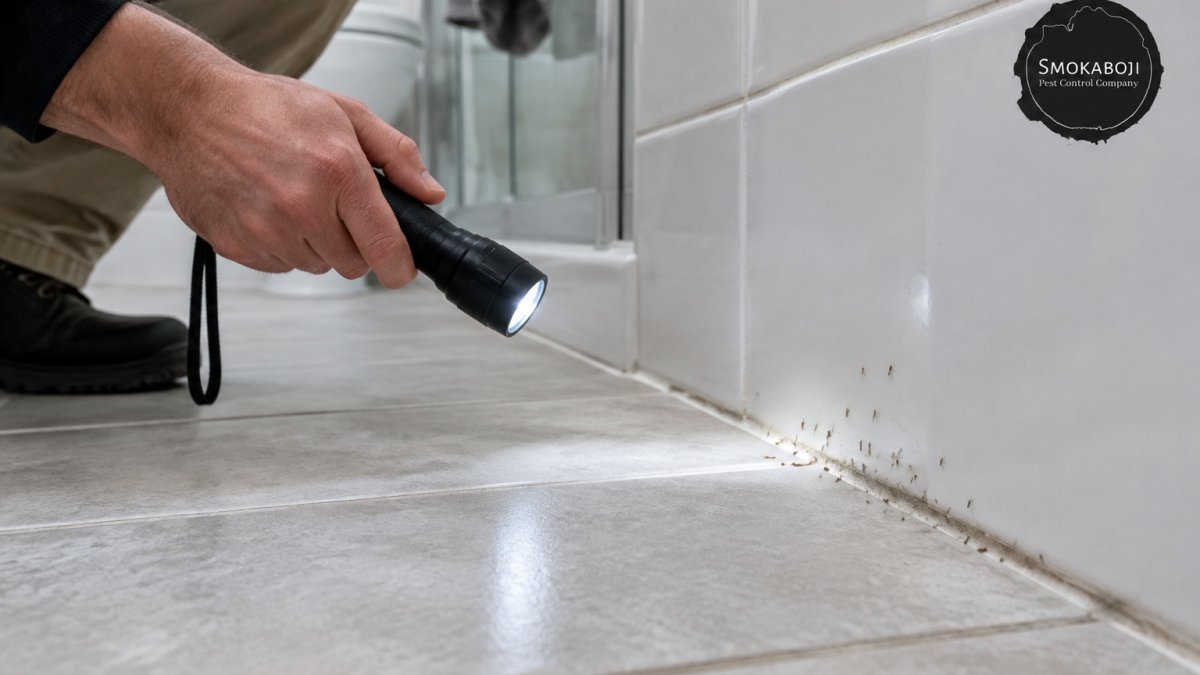
- Location: shower grout, bathtub edges, sink overflow holes, drain rims
For a closer look, see our guide to tiny jumping bugs in your bathroom and are springtails harmful to bathroom surfaces.
How to tell springtails from other bathroom pests
Fleas bite; springtails do not. Silverfish are longer and faster. Drain flies look like tiny moths. Springtails jump, cluster near moisture, and never bite people or pets.
How to Get Rid of Springtails in the Bathroom
The fix is not a spray. It is drying the room out and removing the gunk they feed on:
- Find the moisture source. Check for a water leak, dripping pipe, or loose caulk line.
- Clean grout and drains. Scrub shower grout and pour an enzyme cleaner down the drain.
- Dry the room. Run the exhaust fan during and after showers.
- Seal cracks and crevices. Re-caulk gaps around the tub, sink, and tile edges.
- Fix the leak. Repair dripping pipes before mold takes hold.
Most infestations clear once dampness is gone. If springtails keep returning, the moisture source is still there. Our team handles recurring insects and hidden leak checks; view our pest control pricing to see how a treatment plan is built.
Grout-specific cleaning and repair guidance
Clean grout with a stiff brush and a mild cleaner, not bleach alone. Bleach kills surface mold but leaves the residue springtails feed on. Re-seal grout every year or two in wet areas. Replace crumbly grout, because that is water damage, not bug damage.
When to call a professional
Call for help when springtails return after cleaning, when you cannot find the leak, or when mold keeps coming back. A professional technician can help trace the moisture source and address the infestation.
Here is the five-step approach the article recommends for clearing springtails from a bathroom.
| Step | What to do |
|---|---|
| 1 | Find the moisture source: water leak, dripping pipe, or loose caulk line |
| 2 | Clean grout and drains; pour an enzyme cleaner down the drain |
| 3 | Dry the room; run the exhaust fan during and after showers |
| 4 | Seal cracks and crevices; re-caulk gaps around tub, sink, and tile edges |
| 5 | Fix the leak; repair dripping pipes before mold takes hold |
Springtails are a warning sign, not a wrecking crew. If they keep showing up in your bathroom, the moisture behind them needs a real fix. Smokaboji Pest Control offers licensed, insured technicians, customized treatment plans, and on-call response for urgent pest issues throughout Northwest Iowa and Southwest Minnesota. Get started with Smokaboji Pest Control and stop the cycle of recurring bathroom pests.
Frequently Asked Questions
Can springtails damage bathroom grout?
No. Springtails do not chew, bore, or break down grout, tile, or caulk. They feed on mold, mildew, and organic residue that grows on damp surfaces. If grout looks crumbly or stained, the cause is moisture, water intrusion, or a hidden leak, not the springtails themselves. Fixing the moisture source protects the grout.
Why are springtails gathering on my shower grout?
Springtails grout sightings usually mean the grout stays damp and supports mold or organic buildup. Shower grout, bathtub edges, and sink rims hold moisture long after use. Check for dripping pipes, poor ventilation, and cracked sealant. Drying the area and cleaning grout lines removes their food source and drives them out.
Do springtails jump, and do they bite?
Springtails have a tail-like appendage that lets them spring several inches when disturbed, which is why homeowners often describe them as jumping. They do not bite, sting, or carry disease. Their presence is a moisture indicator, not a health threat. If they keep returning, a professional inspection can find the hidden leak or damp spot feeding them.