 comparison
Bed Bug Droppings vs Dirt on a Mattress: How to Tell
Table of Contents
- Bed Bug Droppings vs Dirt: Key Differences
- Signs of Bed Bug Infestation and How to Identify Bed Bug Bites
- When to Call Smokaboji Pest Control
- Frequently Asked Questions
Last Updated: September 14, 2026
Bed Bug Droppings vs Dirt: Key Differences
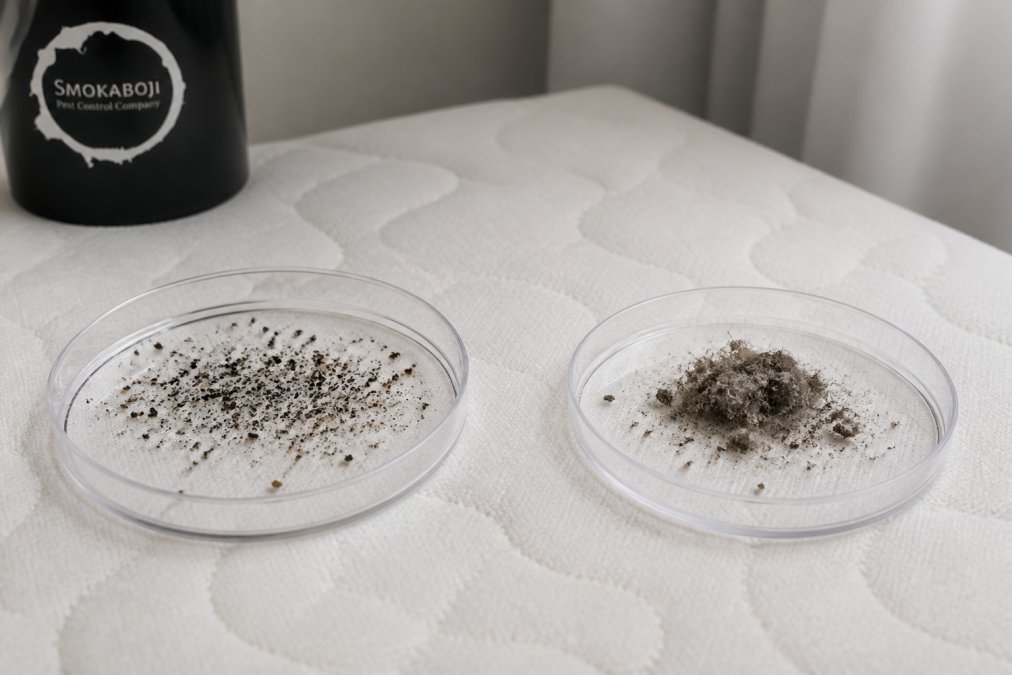
Telling bed bug droppings vs dirt comes down to color, texture, and placement. Bed bug droppings are digested blood: fresh spots look like reddish-brown ink smears, older ones dry into raised dark spots, while dirt, lint, and dust are gray, dry, and sit loosely in the weave (the EPA).
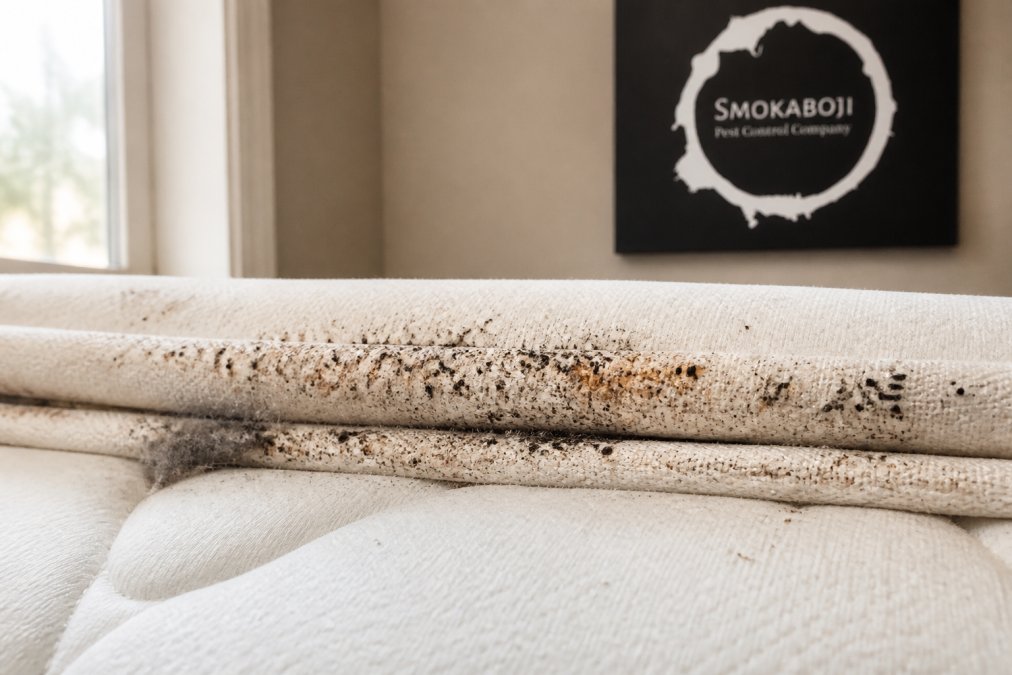
The smear test is most useful: wet a cotton swab or white cloth and rub the spot. Bed bug fecal spots leave a reddish-brown streak from digested blood meal; dirt wipes away with no red tint.
| Feature | Bed Bug Droppings | Dirt, Lint, or Dust |
|---|---|---|
| Color | Rust-colored to reddish-brown, darkening with age | Gray, tan, or neutral brown |
| Texture | Raised, ink-like, hardened when dry | Dry, loose, powdery |
| Smear test result | Reddish-brown streak | No color transfer, wipes away clean |
Where Bed Bugs Leave Droppings
Look along mattress seams, piping, and the fabric tag first. Bed bug harborages sit within a few feet of where people sleep, so droppings cluster near seams, box spring corners, and headboard joints, often the earliest sign, before bites or live bugs (the CDC).
Why Droppings Stain Mattresses
Digested blood meal is why the marks sink in and stay: moisture soaks into absorbent fabric, and once dry, the pigment binds to the fibers. That is why a rust-colored stain on a light mattress pad is so hard to wash out, and why the stain itself is evidence, not just cosmetic.
Signs of Bed Bug Infestation and How to Identify Bed Bug Bites
The clearest signs of bed bug infestation are clustered dark fecal spots, tiny white eggs, shed skins, and a musty odor in heavy cases (the EPA). Bites add a second clue: small itchy welts, often in lines or groups on skin exposed during sleep.
What Bed Bug Bites Look Like
Bites appear as small red welts, often in rows of three, though reactions vary widely. Some household members show no marks while others react strongly, so a lack of bites does not rule out bed bug activity, check the mattress for fecal spotting regardless.
Bed Bug Droppings vs Other Mattress Stains
Blood smears, mold spores, and rust marks all get mistaken for bed bug droppings. A smear test separates them: crushed bed bugs leave bright red smears, mold grows in damp fuzzy patches, and rust marks do not smear. Flea droppings look similar but sit on pets and carpet, not mattress seams.
How Do You Confirm Bed Bug Droppings Without a Microscope?
You confirm them with the smear test plus placement, not magnification. A reddish-brown streak from a spot clustered in a seam is strong evidence. Under low-power magnification, dried excrement shows a cracked, granular surface, but a swab and flashlight get most homeowners to a confident answer.
When to Call Smokaboji Pest Control
Call a professional when you find clustered droppings in multiple harborages, when bites continue after cleaning, or when a smear test confirms digested blood in seams and furniture joints. Bed bugs hide in wall voids, outlet plates, and furniture frames beyond the mattress, and store-bought sprays rarely reach those spots. Smokaboji Pest Control provides fully licensed and insured technicians, customized treatment plans, and preventative maintenance across Northwest Iowa and Southwest Minnesota. Our on-call availability matters when an urgent problem appears, the same responsiveness Emily Wilson noted after calling at 5 pm on a Thursday and getting a fast response. If you are unsure whether a spot is bed bug droppings or dirt, our team can confirm it and treat the source rather than the symptom.
Frequently Asked Questions
How can I tell the difference between bed bug poop and dirt?
Bed bug droppings are small, dark spots that look like ink dots or ground pepper. They sit on top of the fabric rather than settling into it. Dirt and lint are usually gray, fuzzy, and easy to brush away. Try wiping a spot with a damp cloth. Bed bug droppings smear into a rust-colored streak because they contain digested blood. Dirt just wipes off clean.
Do bed bug droppings smear when wet?
Yes. Fresh droppings smear easily when wet because they contain digested blood. A damp cloth or paper towel will pull a reddish-brown streak from the spot. Older, dried excrement may be hardened and harder to smear. This is the basis of the bed bug fecal spots test. If the spot smears into a rust color, that is a strong sign of bed bug activity.
Where do bed bugs usually leave droppings on a mattress?
Bed bugs leave droppings near where they hide. Check mattress seams, the piping along the edge, tags, and the folds of your mattress pad. They also leave fecal spotting behind headboards, in box spring corners, and along baseboards. These harborages sit close to where you sleep. Look for clusters of dark spots, not just one or two.
A single stain is easy to dismiss. A confirmed infestation that spreads through seams, furniture, and wall voids is not. If your smear test points to bed bug activity, Smokaboji Pest Control can confirm it with a licensed inspection, build a customized treatment plan for your home, and set up preventative maintenance so the problem does not return. Get started with Smokaboji Pest Control and sleep without second-guessing every dark speck on the mattress.