 How-to
How Do You Keep Pests Out of Farm Storage Areas?
Last Updated: October 26, 2026
Quick Summary
Keeping farm storage pests out starts with a clean, sealed bin: empty it completely, sweep out old grain residue, and seal cracks and gaps before new grain goes in. Dry, cool storage and regular monitoring keep problems from building.
- Empty the bin completely before new grain goes in.
- Sweep out old grain residue and seal cracks and gaps.
- Dry, cool conditions and treatment support stored grain insect control.
- Monitoring shows when to hire professional pest control for large farms.
- Technicians build customized treatment and preventative maintenance plans.
Table of Contents
- Start With Grain Bin Sanitation and Structural Sealing
- Stored Grain Insect Control: Dry, Cool, and Treat
- Pest Monitoring in Grain Storage and Rodent Control in Farm Buildings
- Frequently Asked Questions
Start With Grain Bin Sanitation and Structural Sealing
Keeping farm storage pests out starts with a clean, sealed bin: empty it completely, sweep out old grain residue, and seal cracks and gaps before new grain goes in.
For the full walkthrough, see our guide to protecting grain supplies from farm pests. A seasonal pest prevention checklist for farmhouses also keeps the work on schedule year-round.
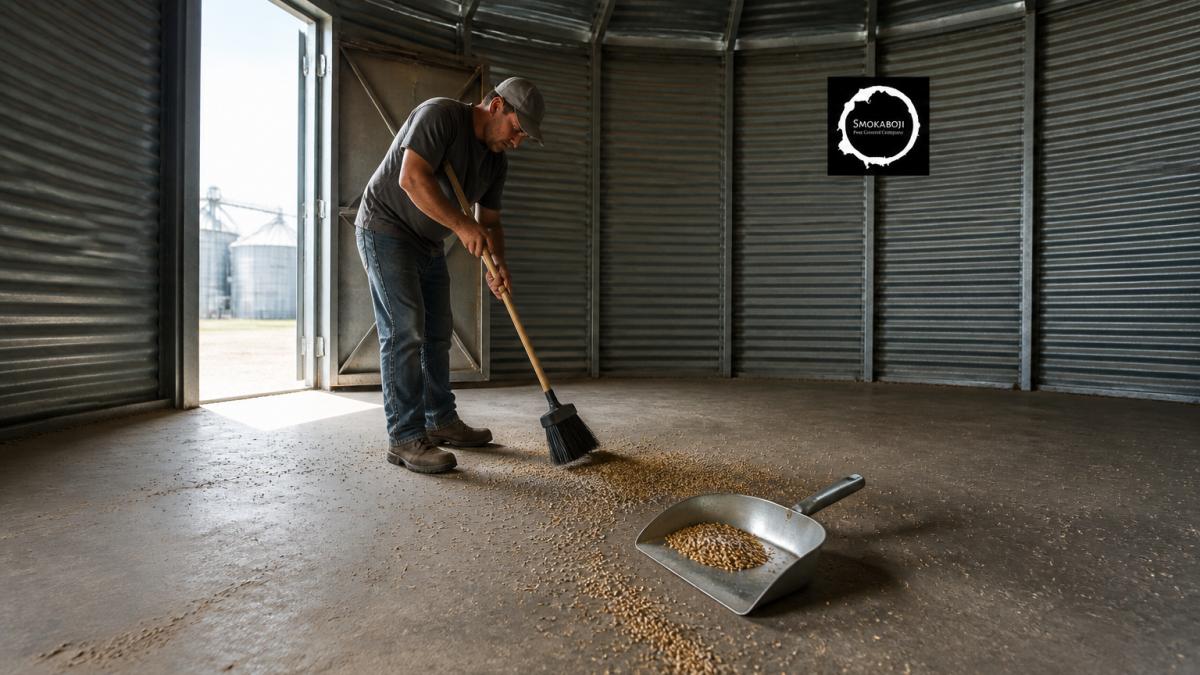
Before new grain goes in, work through these bin preparation steps.
| Step | What to do |
|---|---|
| Empty the bin | Empty it completely before new grain goes in |
| Clear residue | Sweep out old grain residue |
| Seal the structure | Seal cracks and gaps |
Stored Grain Insect Control: Dry, Cool, and Treat
Not sure what you're seeing? Learn how to tell if grain beetles are in your cereal and stored supplies.
Pest Monitoring in Grain Storage and Rodent Control in Farm Buildings
That's where Smokaboji Pest Control comes in. When monitoring shows a serious infestation, learn when and how to hire professional pest control for large farms. For a dedicated walkthrough, see our guide to preventing rodents in agricultural storage buildings. Our licensed, insured technicians build customized treatment and preventative maintenance plans across Northwest Iowa and Southwest Minnesota.
Frequently Asked Questions
How often should farm storage areas be inspected for pests?
Check active grain storage every two weeks during warm months and monthly in cool weather. Walk the outside of bins and buildings weekly for rodent runs, droppings, or chewed seals. Empty structures need a full cleanout and inspection between crops. Keep a simple log of dates, findings, and actions so you can spot trends before an infestation spreads.
What sanitation steps help prevent pests in grain bins and storage buildings?
Remove all old grain, dust, and debris from floors, walls, and augers before loading new grain. Sweep corners and ledges where residues collect. Clear vegetation and spilled grain within 10 feet of structures. Seal cracks and gaps with caulk or metal flashing. Store pesticides separately and keep bait stations locked away from children and animals.
When should a farmer call a pest control professional for a storage-area infestation?
Call a licensed professional when you find live insects in multiple bins, rodent activity that persists after sealing and trapping, or grain that is heating or smelling musty. Fumigation carries serious safety risks and requires certified applicators. A professional can identify the pest, recommend targeted treatment, and set up a monitoring plan to prevent repeat problems.
Pests in your grain bins and farm buildings rarely fix themselves, and waiting lets one infestation spread to the next structure. If monitoring turns up rodents, insects, or damage you can't get ahead of, Smokaboji Pest Control can help with customized treatment plans, preventative maintenance, and prompt response to urgent pest issues. Get started with Smokaboji Pest Control and keep your farm storage areas protected all year.