 how-to
Protecting Grain Supplies From Farm Pests: A How-To Guide
Table of Contents
- Step 1: Inspect and Identify Stored-Grain Pests
- Step 2: Clean and Prepare Grain Bins Before Storage
- Step 3: Monitor Grain Bins and Control Pests
- Frequently Asked Questions
Last Updated: October 4, 2026
Step 1: Inspect and Identify Stored-Grain Pests
Protecting grain supplies from farm pests starts with knowing what you're looking for. Common stored-grain insects include Indian meal moths, grain moths, and mites that feed on crops and leave contamination. Smokaboji Pest Control provides expert, reliable pest management solutions for residential and commercial properties throughout Northwest Iowa and Southwest Minnesota.
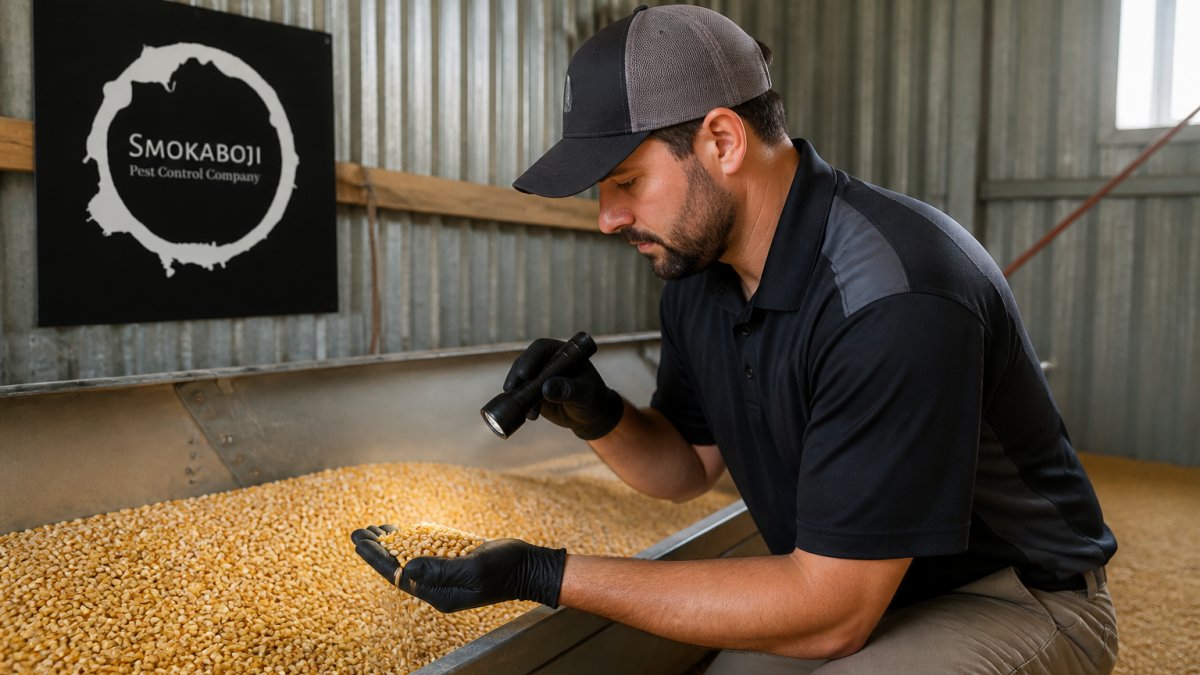
Look for adult insects on grain surfaces, webbing or clumping (moth larvae), musty odors, grain dust accumulation, rodent droppings, and temperature hot spots inside the grain mass.
Inspect every 7-10 days during storage season using a grain probe to pull samples from multiple depths. Check samples under bright light for movement or insect bodies and document findings to track pest spread.
Step 2: Clean and Prepare Grain Bins Before Storage
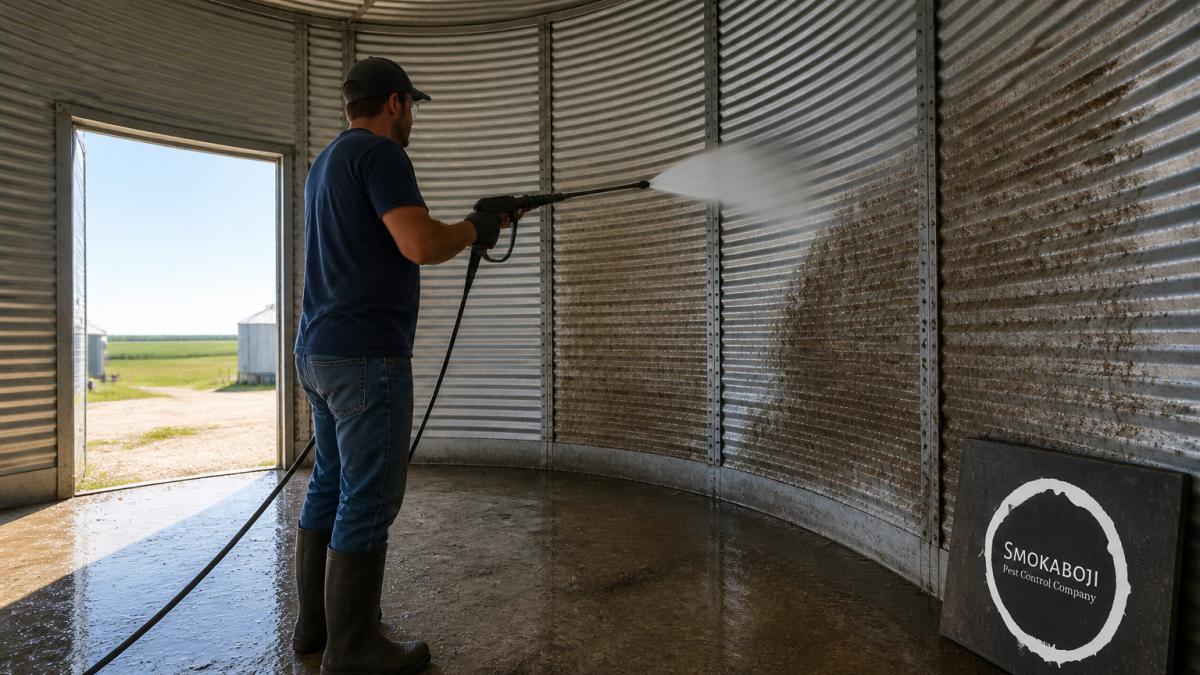
Clean bins thoroughly before filling; old residue and debris create pest hiding spots and trap moisture, accelerating pest activity and grain deterioration.
Remove loose grain and debris, sweep dust, pressure wash and dry surfaces, seal cracks and gaps larger than 1/8 inch, inspect roof and walls for damage, and check door seals.
Seal all gaps; pests enter through tiny openings. Walk the bin perimeter outside and seal any opening where light comes through.
Target 12-14% moisture for long-term storage; grain above 15% attracts mites and mold. Dry grain through a dryer or air-drying before binning.
Step 3: Monitor Grain Bins and Control Pests
Protecting grain supplies from farm pests requires ongoing monitoring after storage begins. Check temperature and moisture weekly; inspect for insects every 7-10 days the first month, then every 14 days if stable.
Record temperature, moisture, and inspection dates; note insects found and track trends. Stop monitoring only after 90 days with zero pest activity.
Early detection enables control options: pest strips, diatomaceous earth, or botanical controls like neem. Larger infestations may require professional grain protectant application.
Smokaboji Pest Control offers professional grain storage monitoring and treatment with licensed technicians who recommend control strategies to protect your harvest and profit.
Protecting grain supplies from farm pests requires clean bins, regular inspections, and quick action on early warning signs. When you need professional support, Smokaboji Pest Control stands ready to help. Submit your grain storage questions to our team today.
Frequently Asked Questions
How often should grain bins be checked for insect activity?
Inspect grain bins at least every two weeks during storage season, or weekly if you notice signs of pest activity. Check for live insects, larvae, droppings, webbing, or grain damage. Early detection prevents small infestations from becoming serious problems that compromise grain quality and reduce profit margins.
What are the best methods for grain mite prevention and grain moth control?
Prevent grain mites by maintaining grain moisture below 12% and temperature below 60°F when possible. For grain moth control, use sealed storage containers, inspect incoming grain, and apply approved botanical controls like neem preparations or physical barriers such as pest strips. Remove infested grain promptly and clean bins thoroughly between storage cycles.
Is it safe to use pest control treatments around my family and animals?
Professional pest control treatments are formulated to be safe when applied correctly by licensed technicians. Always inform your pest control provider about children and pets in the home. Follow all post-treatment instructions, including ventilation and re-entry times. Licensed applicators understand proper application rates and safety protocols to protect your family while effectively eliminating pests.