 How-to
5 Signs It's Time to Replace a Bed Bug Mattress
Quick Summary
You should replace a bed bug infested mattress when the infestation is heavy, with live bugs, eggs, and dark fecal spots along the seams. Replacement also makes sense if the mattress is damaged, with torn seams, deep stains, or worn-out foam. Light infestations caught early may respond to treatment, so a professional inspection can help you decide whether to replace bed bug mattress or treat it.
- Heavy infestations with live bugs, eggs, and fecal spots usually call for replacement.
- Torn seams, deep stains, or worn-out foam are signs the mattress is damaged beyond saving.
- Light infestations caught early may respond to treatment instead of replacement.
- Check mattress seams, tags, and bed frame joints for live bugs, shed skins, and eggs.
- Don't wrap an infested mattress in plastic before a professional inspects it.
Table of Contents
- Can You Treat an Infested Mattress Instead of Replacing It?
- Early Signs of Bed Bugs on Mattress and When Replacement Makes Sense
- Booking Your Inspection and Treatment With Smokaboji Pest Control
- Frequently Asked Questions
Can You Treat an Infested Mattress Instead of Replacing It?
Not always. Many infested mattresses can be treated, but a heavily infested one often cannot be saved, so deciding whether to treat or replace depends on severity. Here's how to tell which group yours falls into.
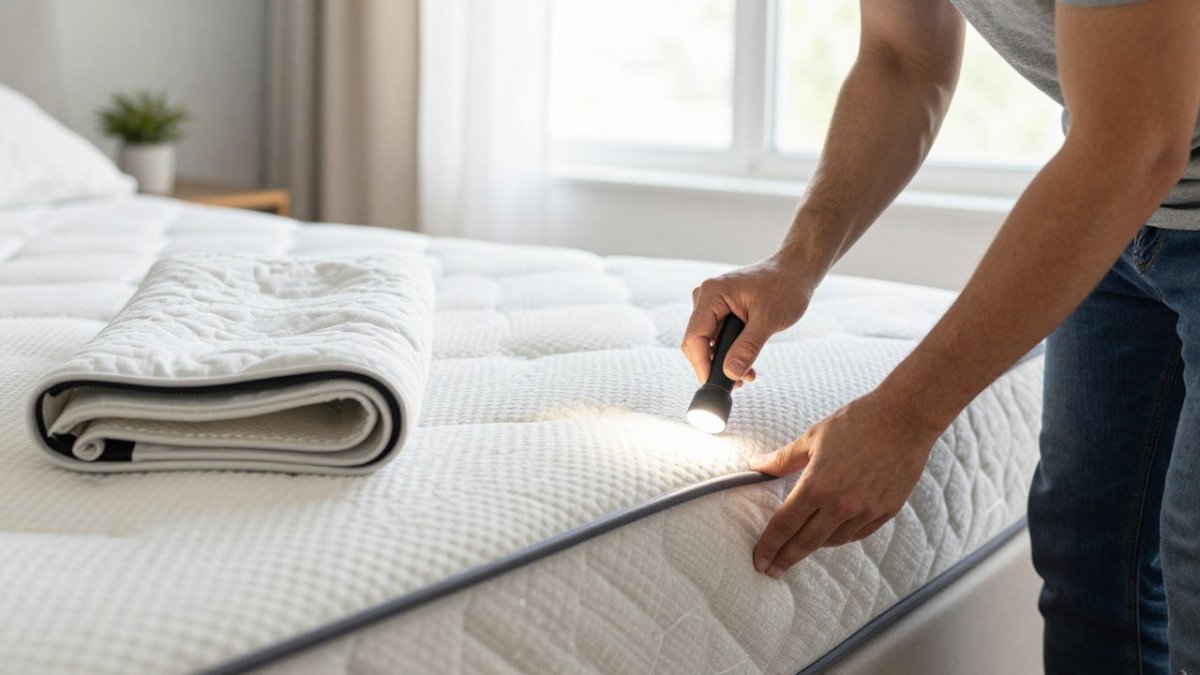
Start with a simple question: how bad is it? A light infestation caught early may respond to treatment. Our complete guide to eliminating bed bugs compares the available methods so you can weigh them against replacement. A mattress crawling with live bugs, eggs, and fecal spots usually calls for replacement. A professional inspection can help you decide which path makes sense.
- Light infestation: a few bugs or shed skins, found early
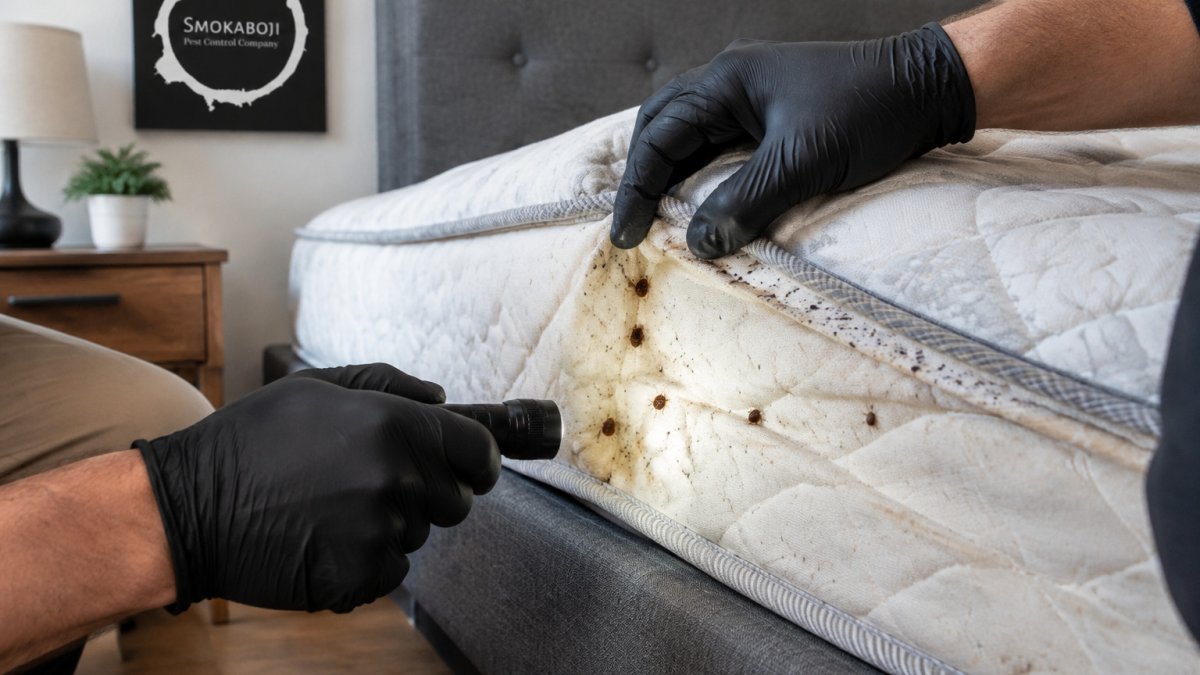
- Heavy infestation: live bugs, eggs, and dark fecal spots along seams
- Damaged mattress: torn seams, deep stains, or worn-out foam
Watch out: Don't wrap an infested mattress in plastic on your own before a professional inspects it. Sealing it can trap bugs and make the problem harder to treat.
Early Signs of Bed Bugs on Mattress and When Replacement Makes Sense
Look for these signs first. Live bugs are flat, reddish-brown, and about the size of an apple seed (the CDC). Check the mattress seams, tags, and the bed frame joints. Our signs of bed bugs in mattress seams guide shows exactly where these pests hide.
- Tiny dark spots that look like marker dots
- Small blood spots on sheets
- Shed skins and pale eggs in seams
- Bites in lines or clusters on the skin
If you find bugs throughout the mattress and the frame, replacement often makes sense. You can follow a step-by-step mattress inspection to confirm what you're seeing before you decide. Bed bugs in a mattress can also hide in box springs and nearby furniture, so check those too.
Here is a quick guide to the signs of bed bugs on a mattress and what they suggest about replacement.
| Sign | What it looks like | Note |
|---|---|---|
| Live bugs | Flat, reddish-brown, about the size of an apple seed | Check seams, tags, and frame joints |
| Tiny dark spots | Look like marker dots | Common sign on the mattress |
| Small blood spots | Appear on sheets | Sign of feeding |
| Shed skins and pale eggs | Found in seams | Shows an active infestation |
| Bites | Appear in lines or clusters on skin | Symptom on the body |
Booking Your Inspection and Treatment With Smokaboji Pest Control
If you're not sure whether to treat or replace, a professional inspection can help you decide. Call Smokaboji Pest Control to ask about scheduling an inspection.
Our team serves Northwest Iowa and Southwest Minnesota with licensed, insured technicians. For current pricing or a quote, visit the Smokaboji Pest Control website.
Last Updated: November 14, 2026
Frequently Asked Questions
Do I need to throw away my mattress after bed bugs?
Not always. Many mattresses can be treated and kept if the infestation is light and the frame is sound. Replacement is usually worth considering when the mattress is torn, stained heavily with fecal spots, badly worn so seams and crevices cannot be inspected, or when bugs return after professional treatment. Ask your pest control professional for an inspection before deciding. If you do discard it, wrap it in plastic, label it as infested and check local rules for disposal.
How long can bed bugs live in a mattress?
Adult bed bugs can survive several months without feeding, and eggs can hatch after about a week or two depending on temperature. That is why a mattress can stay infested long after the last bite, and why treatment should be followed by monitoring. A bed-bug-proof encasement, placed for at least a year, can starve trapped bugs and prevent new ones from reaching you. Check seams and labels for live bugs or shed skins before reusing the mattress.
Will a bed bug-proof mattress cover prevent an infestation?
A zippered, bed-bug-proof encasement can trap existing bugs inside and block new ones from getting in or out, so it is useful both during and after treatment. It does not kill bugs that are already in the mattress, and it works best combined with a professional inspection and treatment plan. Choose a cover labeled bed-bug-proof, make sure the zipper is fully closed, and keep it on for at least one year.