 How-to
How to Use Pesticides Safely Around Livestock
Last Updated: November 5, 2026
Quick Summary
Safe pesticide livestock use starts with the product label, which tells you which animals can be near a treated area, how long they must stay away, and what protective gear you need. Always read the label before you open the jug, and follow grazing restrictions and withdrawal periods exactly as stated.
- Using a product on a site the label does not list is illegal.
- Treated surfaces must dry fully before animals return.
- A grazing restriction is the time animals must stay off treated pasture.
- Log the application date, product name, and rate for each application.
- Call your veterinarian right away with the product label in hand if you suspect poisoning.
Table of Contents
- Pesticide Label Livestock Precautions You Cannot Skip
- Pesticide Grazing Restrictions and Withdrawal Periods
- How Pesticide Exposure in Animals Shows Up
- Frequently Asked Questions
Pesticide Label Livestock Precautions You Cannot Skip
Safe pesticide livestock use starts with the product label, the law. It tells you which animals can be near a treated area, how long they must stay away, and what protective gear you need. Always read the label before you open the jug.
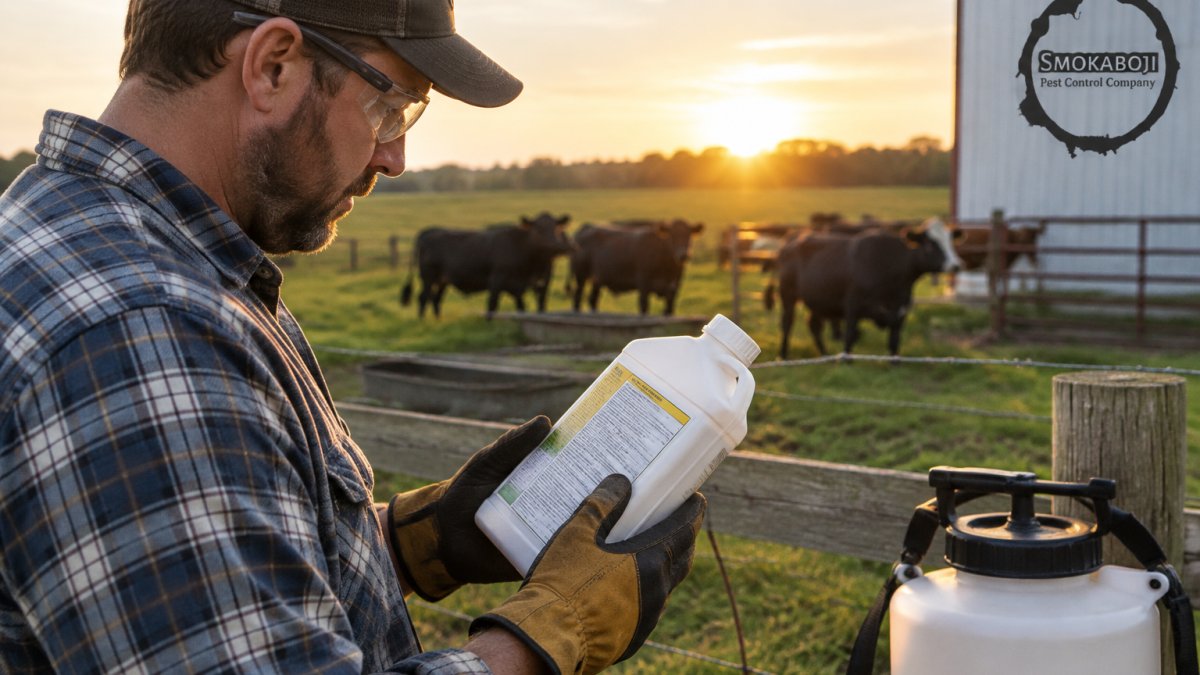
- Approved sites and species. Using a product on a site the label does not list is illegal.
- Protective equipment. Wear every item the label names.
- Re-entry and drying time. Treated surfaces must dry fully before animals return.
- Ventilation. Barns and coops need airflow during and after application.
- Storage and disposal. Keep products locked, away from feed, in original containers.
Applying a product labeled only for buildings inside a pasture, or skipping required gloves, is a misuse that can harm animals and create legal exposure. Check the EPA pesticide label requirements for how labels are structured.
Dairy and poultry operators should see our guide to safe insect repellent options for dairy barns and how to store pest control products safely.
Pesticide Grazing Restrictions and Withdrawal Periods
A grazing restriction is the time animals must stay off treated pasture; a withdrawal period is the time between the last treatment and slaughter or milk collection. Both come from the label and are non-negotiable.
Log the grazing restriction and keep animals off treated pasture for the full interval, even if the grass looks dry. Confirm the withdrawal period before slaughter or milk sale, and record the application date, product name, and rate.
For lower-residue options near grazing animals, see eco-friendly fly control for livestock; if using diatomaceous earth, read how to use diatomaceous earth for pest control safely first.
Two label-based intervals govern how long animals must stay off treated areas and how long before slaughter or milk collection.
| Term | What it means | Key action |
|---|---|---|
| Grazing restriction | Time animals must stay off treated pasture | Keep animals off for the full interval |
| Withdrawal period | Time between last treatment and slaughter or milk collection | Confirm before slaughter or milk sale |
| Records to log | Application date, product name, and rate | Record each application |
How Pesticide Exposure in Animals Shows Up
Pesticide livestock exposure often shows up as subtle signs first: drooling, tremors, weakness, vomiting, or unusual behavior after any application. Birds may show ruffled feathers or drop in egg production; cattle and horses may go off feed or act disoriented.
If you suspect poisoning, call your veterinarian right away with the product label in hand. Move animals before you spray, cover feed and water troughs, wash equipment away from animal areas, and store products in a locked cabinet, never a feed room.
Poultry owners worried about exposure should read non-toxic pest management for poultry coops.
Frequently Asked Questions
How long should livestock stay away after pesticide spraying?
The re-entry interval is printed on the pesticide label and varies by product, so check it before you spray. Keep animals off treated pasture, out of treated housing, and away from sprayed surfaces until the stated interval passes and the product has fully dried. If the label gives a range or a grazing restriction, follow the longer period. When in doubt, move livestock to untreated pasture and confirm the interval with your veterinarian or a licensed applicator before letting them back in.
Can livestock graze in a pasture after it has been sprayed?
Only after the grazing restriction on the label has passed. Many pasture products list a specific number of days before forage can be grazed or cut for hay, and that window protects both the animals and the food supply. Spray drift onto adjacent pasture counts too, so check neighboring fields. If you are unsure which product was applied or when, keep animals off and call a licensed pest professional or your county extension office for guidance.
What should you do if livestock are exposed to pesticide?
Move the animals away from the source immediately and into a ventilated area with access to clean water. Note the product name and active ingredient from the label, then call your veterinarian right away. Signs of pesticide exposure in animals can include drooling, tremors, weakness, or difficulty breathing. Do not wait for symptoms to worsen, and do not treat the animal yourself with home remedies. Keep the label handy so your vet can advise on the correct response.
Pest problems around livestock do not fix themselves, and guessing at chemical safety is not worth the risk. Smokaboji Pest Control brings fully licensed and insured technicians, customized treatment plans, and preventative maintenance to farms and rural properties across the region. We use proven products and practices built for properties with animals. Get started with Smokaboji Pest Control and keep your livestock and your family protected.