 How-to
7 Ways to Keep Dairy Cows Comfortable During Fly Season
Last Updated: October 29, 2026
Quick Summary
Keeping dairy cows comfortable during fly season works best as a season-long plan that combines sanitation, biological controls, and targeted chemicals. Control moisture and remove manure and spilled feed regularly, since flies breed in wet bedding and spilled feed. Identify the fly species present, set traps, monitor populations, and review your parasite plan each season.
- Stable flies bite legs and belly, while horn flies cluster on back and sides.
- Read every label for lactating-cow approval and withdrawal periods before using fly sprays.
- Flies breed in wet bedding and spilled feed, so moisture control and regular removal reduce breeding sites.
- Apply chemicals only where needed as part of an integrated pest management plan.
- Set traps and monitor fly populations, then review your parasite plan each season.
Table of Contents
- The Impact of Fly Stress on Milk Production
- Safe Fly Sprays for Milk Cows: What Works and What to Avoid
- Integrated Pest Management for Dairy Farms: A Step-by-Step Plan
- Frequently Asked Questions
The Impact of Fly Stress on Milk Production
Keeping dairy cows comfortable during fly season starts with understanding how biting flies affect the herd. Stable flies bite legs and belly; horn flies cluster on back and sides.
Safe Fly Sprays for Milk Cows: What Works and What to Avoid
Safe fly sprays for milk cows must protect the cow without leaving residues in milk, so read every label for lactating-cow approval and withdrawal periods. See our guides to eco-friendly fly control for livestock and safe insect repellent options for dairy barns.
Integrated Pest Management for Dairy Farms: A Step-by-Step Plan
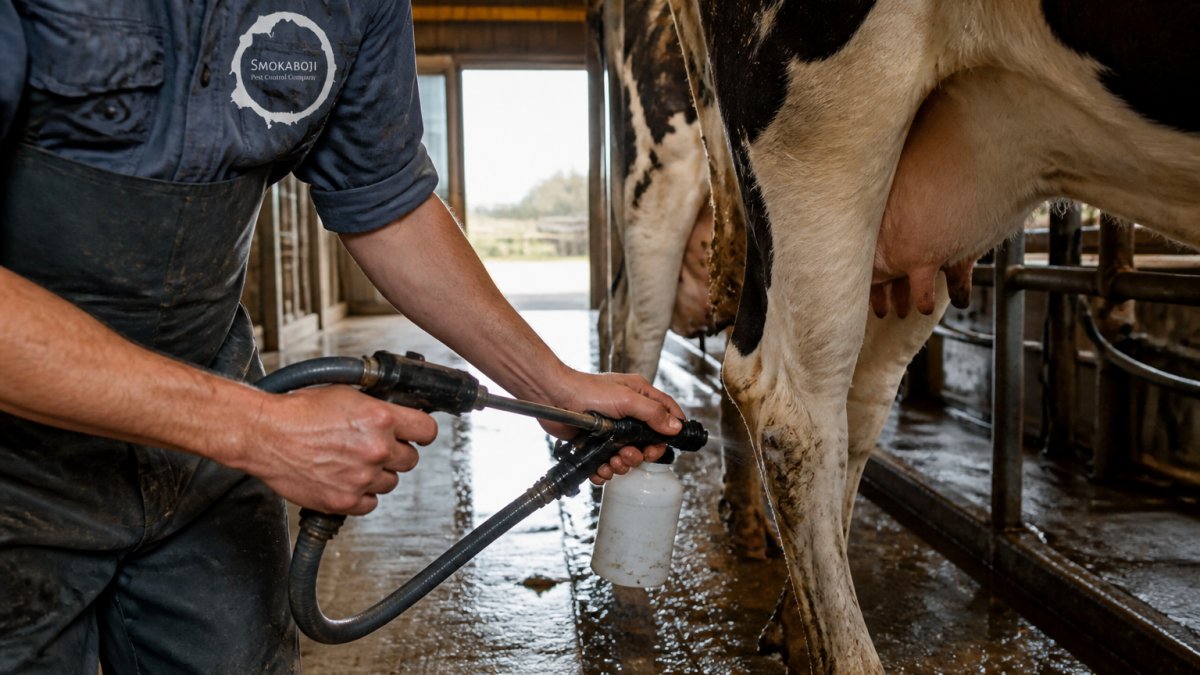
Integrated pest management for dairy farms combines sanitation, biological controls, and targeted chemicals. Manure management is important: flies breed in wet bedding and spilled feed, so moisture control and regular removal help reduce breeding sites. Identify the species, reduce breeding sites, set traps and monitor fly populations, and review your parasite plan each season. For operations that need additional support, see professional pest control for large farms.
Fly season tests any dairy operation, and farms that stay ahead treat fly control as a season-long effort.
Fly control works best as a season-long plan that combines several tactics.
| Step | What to do |
|---|---|
| Sanitation | Control moisture and remove manure and spilled feed regularly |
| Biological controls | Use natural controls alongside sanitation and chemicals |
| Targeted chemicals | Apply chemicals only where needed |
| Species check | Identify the fly species present |
| Breeding sites | Reduce wet bedding and spilled feed |
| Traps and monitoring | Set traps and monitor fly populations |
| Seasonal review | Review your parasite plan each season |
Frequently Asked Questions
What can I put on dairy cows to keep flies away?
Use fly sprays and pour-ons labeled specifically for lactating dairy cows, and follow the withdrawal period on the label before milk goes to the tank. Ear tags, back rubbers, and dust bags are common delivery methods. Always check that the product lists dairy cattle on the label, since products cleared only for beef cattle can leave chemical residues in milk. Rotate active ingredients so flies do not build resistance, and pair sprays with manure management so you are not just treating symptoms.
How does fly stress impact milk production in a herd?
Biting flies like stable flies and horn flies irritate cows constantly, so animals spend energy swatting, bunching, and standing in water instead of eating and resting. Fly pressure also pushes cows into confinement housing or shade for relief, which can cut grazing time. Watching body condition score and daily milk weights during peak fly season gives you a practical read on how much the flies are costing you.
Are there organic or chemical-free fly control options for dairy barns?
Good bedding management and frequent manure removal do more than most products, because they remove the moist material where flies lay eggs. Keep bedding moisture low and clean stalls regularly.