 how-to
Why Fruit Flies Keep Coming Back: A Homeowner's Guide
Table of Contents
- Why Fruit Flies Keep Coming Back to Your Kitchen
- What Attracts Fruit Flies and Where They Hide
- Fruit Flies in Kitchen Drains and How to Eliminate Them
- Frequently Asked Questions
Last Updated: October 15, 2026
Why Fruit Flies Keep Coming Back to Your Kitchen
Fruit flies keep coming back because you're missing the hidden breeding source. Homeowners often focus on traps and sprays while ignoring where the flies lay eggs, until that source is eliminated, new flies keep emerging.
What Attracts Fruit Flies and Where They Hide
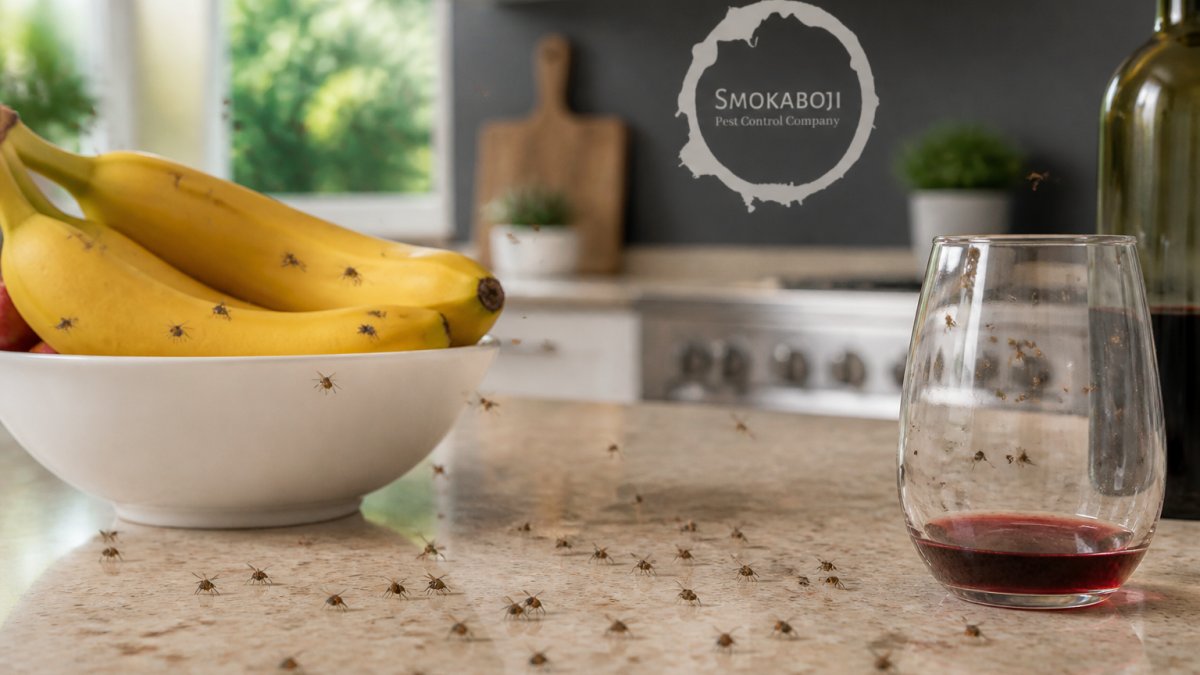
Fruit flies are drawn to fermenting sugars and decaying organic matter, overripe bananas, melons, tomatoes, squash, and onions, but they keep returning because of an undiscovered breeding source.
First, confirm you're actually dealing with fruit flies
Fruit flies are about 1/8 inch long, tan to brownish-black, with red eyes, hovering over produce, bottles, and damp rags. Drain flies are smaller, fuzzy, hold their wings in a heart shape, and hop. Fungus gnats look like tiny mosquitoes and cluster around overwatered houseplants.
Why the flies seem to multiply no matter what you do
A single female can lay hundreds of eggs, and the cycle from egg to egg-laying adult completes in roughly a week in a warm kitchen. Traps catch flying adults but do nothing to the eggs, larvae, and pupae in a moist food source, so new adults keep emerging for one to two weeks.
A systematic source-finding checklist
Work through this list in order, cleaning thoroughly at each step.
- Produce. Check the fruit bowl, crisper, and counter baskets, one forgotten tomato can support a generation.
- Bins and liners. Lift the bag and check the bottom of the can, where leaked soda or juice ferments.
- Recycling. Rinse bottles, cans, and jars, and empty the bin twice a week.
- Under and behind appliances. Pull out the fridge, stove, and microwave; crumbs and spilled juice feed larvae.
- Drains and disposals. See the drain section below.
- Compost caddies. Empty and scrub every one to two days, and keep a lid on it.
- Reusable bottles and travel mugs. Rinse and dry before storing.
- Houseplants. Let the top inch of soil dry out between waterings.
- Bulk produce. Inspect and refrigerate what you won't eat within a day or two.
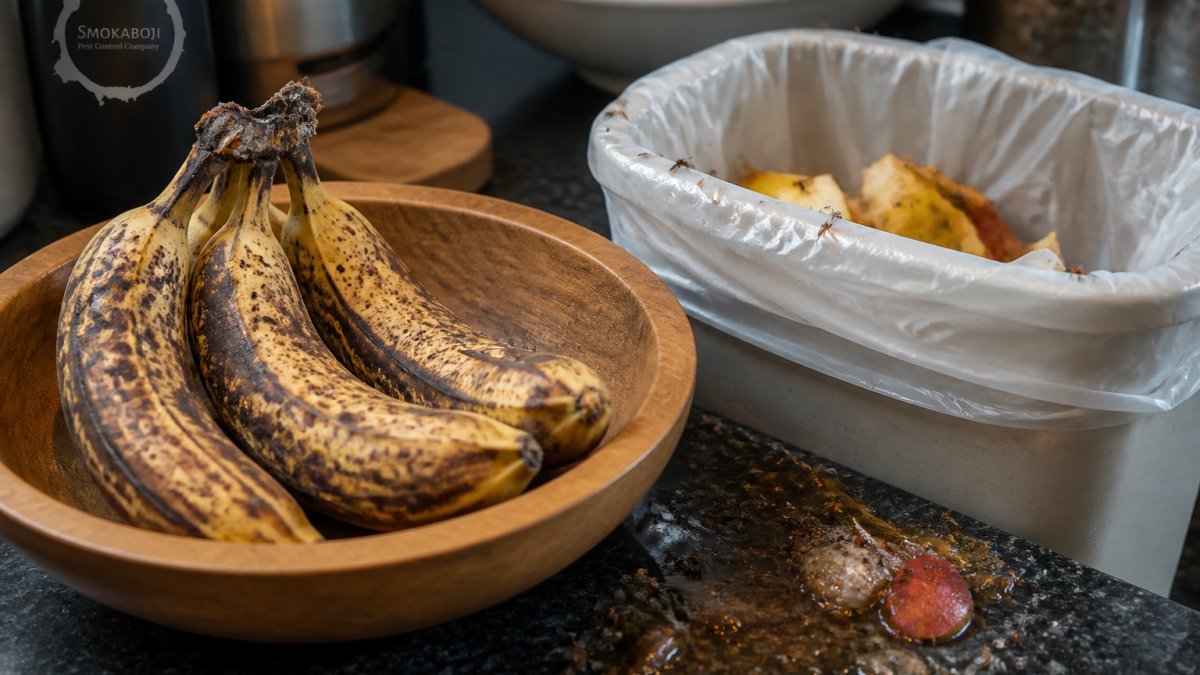
Once every item is clean and dry, the remaining adults die off within a week or two, and traps speed that up.
Fruit Flies in Kitchen Drains and How to Eliminate Them
Drains are a common breeding ground but also the most over-diagnosed source. Confirm the drain is actually the problem before pouring anything down the sink.
How to tell whether the drain is the source
Tape a clear cup or plastic wrap loosely over the drain overnight and check for flies on the underside in the morning. Several flies means the drain is likely a breeding site; if it's clean but flies are active, your source is elsewhere.
Safe drain cleaning that actually reaches the source
Larvae live in the slime layer inside the pipe, so surface cleaning does nothing. Work in this order:
- Remove the strainer and scrub it with a brush and dish soap.
- Pour a kettle of boiling water down the drain slowly in two or three stages.
- Follow with a half cup each of baking soda and white vinegar, let sit 15 to 30 minutes, then flush with hot water.
- For a disposal, run cold water with ice cubes and coarse salt to scour the walls.
- Repeat every two to three days for one to two weeks, since surviving eggs and larvae hatch and need a second treatment.
A measurable follow-up plan
Set two or three apple-cider-vinegar traps near the sink and count flies every morning. A working treatment shows a downward trend within three to five days and near-zero counts by day ten to fourteen. If counts stay flat or rise after two weeks, the source is somewhere you haven't reached, under an appliance, in a floor drain, or inside a disposal housing, and it's reasonable to call a professional.
Frequently Asked Questions
Why do fruit flies keep coming back after I use a trap?
Traps catch adult flies, but they don't eliminate eggs and larvae already present in hidden food sources or drains. If you're not finding and removing the breeding source, overripe fruit, fermenting residue, or drain buildup, new flies emerge to replace the ones you trap. A single female fruit fly can lay hundreds of eggs, so traps alone create a cycle where you're always catching new generations.
Can fruit flies breed in kitchen drains?
Yes. Drains are ideal breeding grounds because they contain decomposing food particles, moisture, and organic buildup that fruit flies feed on. Eggs and larvae can develop inside drain pipes where traps can't reach them. This is why recurring infestations often persist even after you've cleaned counters and removed visible fruit. Drain cleaning is essential to break the cycle.
How do I know if my fruit fly problem needs professional pest control?
If you've removed visible food sources, set vinegar traps, cleaned drains, and the flies still return within a week or two, the infestation has likely established in places you can't access, wall voids, beneath appliances, or deep inside plumbing. Smokaboji Pest Control can locate hidden breeding sources and apply targeted treatments to eliminate the problem at its root, not just manage symptoms.
Recurring fruit fly problems aren't about bad luck, they're about incomplete solutions. Traps catch adults, but breeding sources keep producing new ones. Finding and eliminating hidden food sources, cleaning drains thoroughly, and storing produce correctly stops the cycle at its root. If you've tried these steps and flies keep returning, contact Smokaboji Pest Control for a professional inspection and customized treatment plan tailored to your specific situation.