 how-to
Are Springtails Harmful to Bathroom Surfaces?
Table of Contents
- Are Springtails Harmful to Bathroom Surfaces?
- What Attracts Springtails to Bathrooms
- How to Get Rid of Springtails in Your Bathroom
- Frequently Asked Questions
Last Updated: October 20, 2026
Are Springtails Harmful to Bathroom Surfaces?
Are springtails harmful to bathroom surfaces? No. Springtails don't damage tile, grout, fixtures, or other bathroom materials directly. They're tiny, harmless insects that jump when disturbed but cause no structural harm.
However, their presence signals a bigger problem: moisture. Springtails thrive in damp environments and indicate that humidity levels in your bathroom are too high. The real concern is the excess moisture they're attracted to, which can eventually lead to mold, mildew, and decay in wood or organic materials.
At Smokaboji Pest Control, we help homeowners distinguish between the nuisance of seeing springtails and the actual damage caused by the moisture conditions that attract them. This guide explains what springtails are, why they appear in bathrooms, and how to eliminate them.
What Attracts Springtails to Bathrooms
Springtails are drawn to bathrooms by moisture. They need high humidity to survive and congregate around sinks, bathtubs, showers, and drains where water collects.
Common moisture sources include:
- Leaking pipes or fixtures beneath sinks
- Condensation on bathroom mirrors and windows
- Water pooling around the bathtub or shower
- Poor ventilation trapping humid air
- Cracks in grout or caulk allowing water seepage
Springtails also feed on mold, mildew, and fungal growth that thrives in damp spaces. If you see springtails, you likely have both a moisture problem and early signs of fungal growth, especially around sinks and drains that retain standing water.
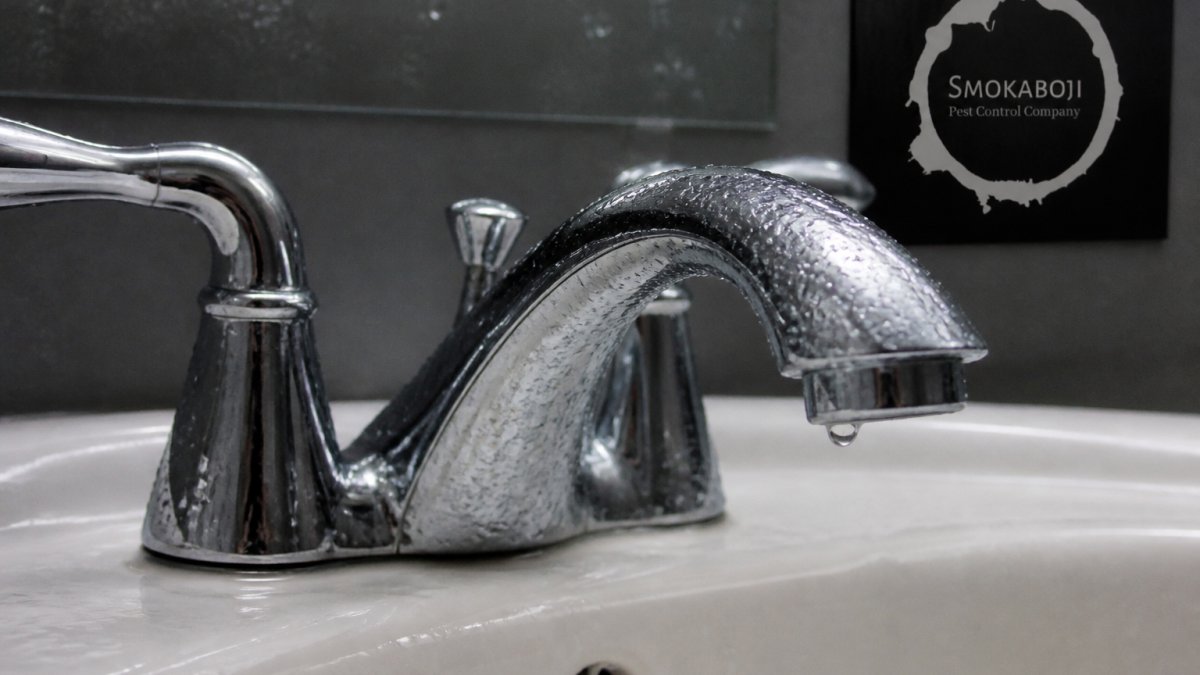
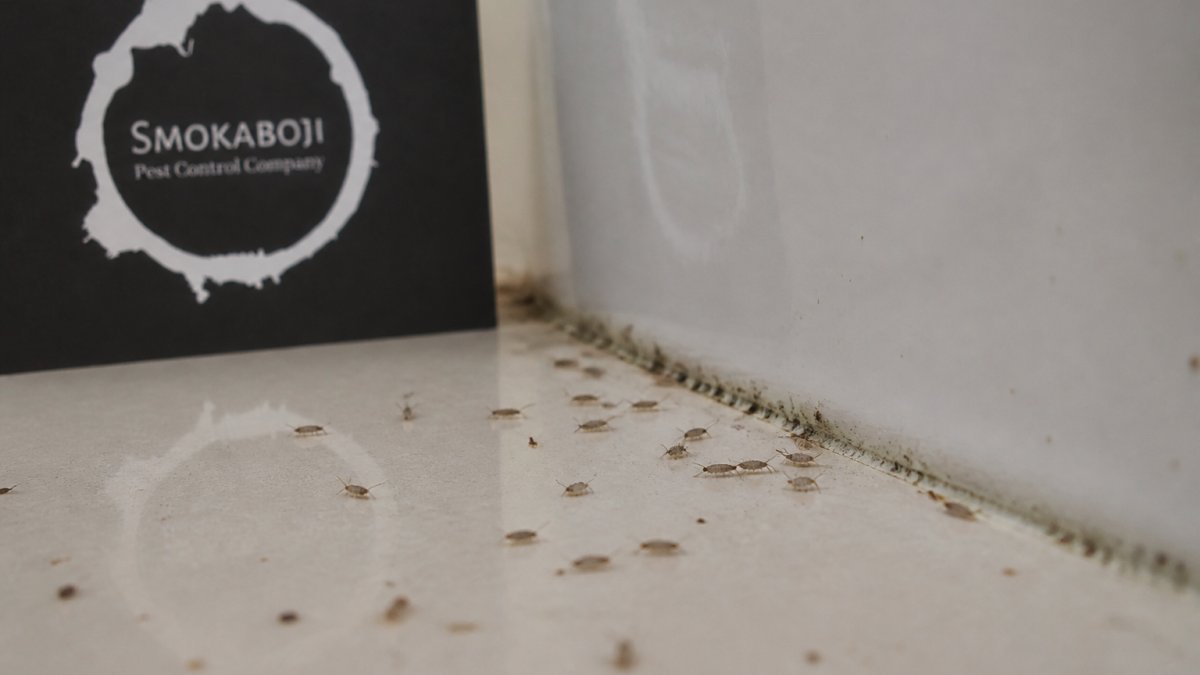
Identifying springtails is straightforward. They're tiny black or dark-colored bugs, usually less than one-eighth inch long, and they jump when disturbed, which is how they got their name. You'll often find them on bathroom surfaces near moisture sources.
How to Get Rid of Springtails in Your Bathroom
Getting rid of springtails requires two steps: eliminate the moisture they need to survive, and remove the springtails themselves.
Reduce humidity and dry damp areas:
- Fix leaks under sinks and around pipes immediately
- Wipe down bathroom surfaces daily, especially around the sink and tub
- Use a dehumidifier if bathroom humidity stays above 50 percent
- Run your exhaust fan during and 20 minutes after showers
- Ensure proper ventilation by keeping bathroom doors open when possible
Clean and treat affected areas:
- Remove standing water around drains and in the bathtub
- Clean bathroom surfaces with a mild bleach solution (1 part bleach to 10 parts water)
- Vacuum up visible springtails with a handheld vacuum
- Caulk gaps in grout to prevent water from pooling
Once you've addressed the moisture problem, springtails will disappear within a few days; they cannot survive in dry conditions. Prevention is your best defense: keep your bathroom dry, fix leaks promptly, and maintain good ventilation.
For severe infestations or persistent moisture problems you can't locate, professional pest control is the most effective solution. Contact a licensed service like Smokaboji Pest Control for a thorough inspection and customized treatment plan.
Frequently Asked Questions
Do springtails bite people or damage bathroom surfaces?
No. Springtails are harmless to humans and pets, they do not bite, sting, or transmit disease. They also do not damage bathroom surfaces, fixtures, grout, or caulk. The real concern is the moisture problem that attracts them. High humidity and dampness in bathrooms can eventually cause damage to drywall, wood, and materials if left unaddressed, but the springtails themselves are not the culprit.
Why are springtails showing up in my bathroom sink?
Springtails are attracted to moisture and organic matter in drains and sink areas. They thrive in damp spaces and feed on mold, mildew, and fungal growth. If springtails appear in your bathroom sink, it signals that moisture levels are high and decaying organic material is present. This is a sign to clean the drain, reduce humidity, and fix any leaks or water accumulation around the sink.
How can I prevent springtails from returning to my bathroom?
The key is eliminating the conditions they need to survive. Reduce humidity by using an exhaust fan during and after showers, fix leaks promptly, wipe down wet surfaces, ensure proper ventilation, and use a dehumidifier if needed. Clean drains regularly and remove standing water. Keep bathrooms, basements, and other damp spaces dry. These prevention steps address the underlying moisture problem and make your bathroom inhospitable to springtails and the mold they feed on.
Springtails in your bathroom are a sign of excess moisture, not a structural threat. The real damage comes from the dampness itself, which can lead to mold, mildew, and decay over time. If you've tried drying your bathroom and springtails keep returning, the moisture problem may be deeper than you can see. Contact Smokaboji Pest Control for a professional inspection and preventative maintenance plan tailored to your home's specific needs.