 ultimate-guide
Safe Pest Control for Pets and Kids: A Family Guide
Table of Contents
- Why Standard Pest Control Can Be Risky for Families
- How to Keep Pets Safe During Pest Control: A Step-by-Step Plan
- Natural Pest Control Methods That Actually Work
- What About Professional Treatments?
- Creating a Safer Home Environment Long-Term
- Emergency Response Protocols for Accidental Exposure
- Frequently Asked Questions
Last Updated: September 8, 2026
Protecting your family from pests shouldn't mean exposing your children and pets to unnecessary risk. Safe pest control for pets and kids is achievable with a deliberate, informed approach. At Smokaboji Pest Control, the core principle is simple: the right method, applied correctly, at the right time.
Most standard treatments ignore who else shares the living space. Pets and young children have higher exposure to residue. The solution is a layered strategy combining prevention, targeted natural methods, and professional treatments used only when necessary.
Why Standard Pest Control Can Be Risky for Families
The primary risk with conventional pest control is residual toxicity. Many insecticides persist on surfaces for weeks, posing risks via dermal absorption, ingestion, and inhalation (the EPA). Targeted applications like bait stations and gels placed in inaccessible areas dramatically reduce exposure compared to broadcast treatments like foggers.
How to Keep Pets Safe During Pest Control: A Step-by-Step Plan
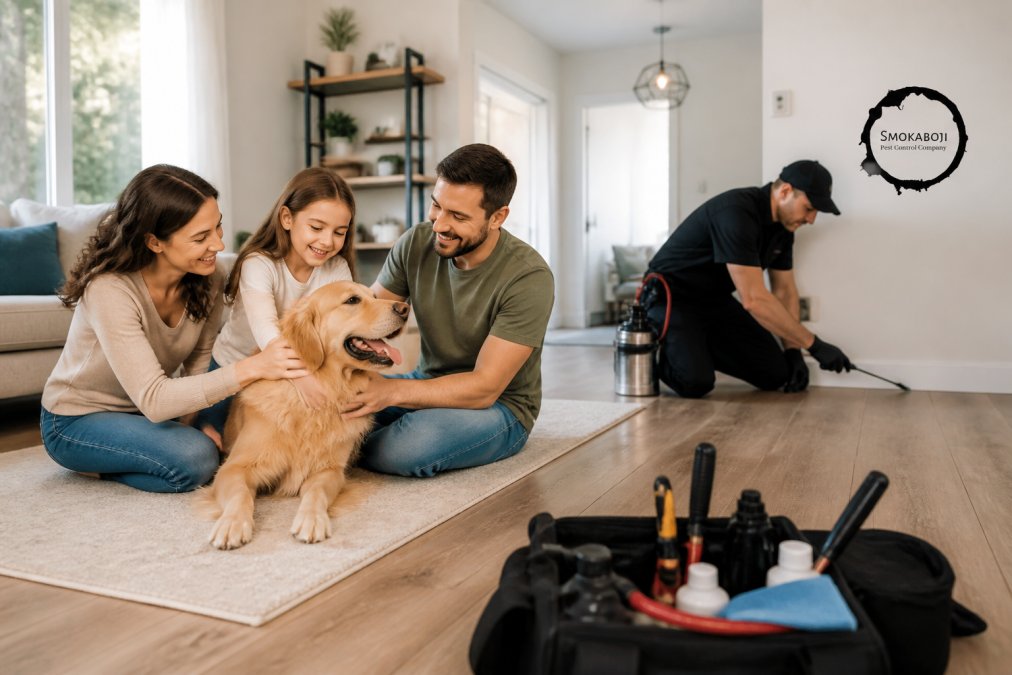
Safe pest control for pets and kids requires a coordinated plan that minimizes exposure during the vulnerable window when chemicals are most active. Identify every area your pet can access and keep them out of treated zones. Remove all pet items, cover fish tanks, keep pets away for the full drying time, ventilate with fans, and wipe down surfaces after the waiting period.
Natural Pest Control Methods That Actually Work
Natural methods are often the first and best line of defense, but natural does not mean non-toxic. Diatomaceous earth abrades insect exoskeletons and works against ants, roaches, and fleas; it must be food-grade and applied as a fine dust (npic.orst.edu). Mechanical traps and exclusion tactics, sealing cracks, installing door sweeps, removing standing water, address the root cause by blocking entry points.
| Method | How It Works | Best For | Safety Notes |
|---|---|---|---|
| Diatomaceous Earth | Abrades insect exoskeletons | Ants, roaches, fleas | Use food-grade only; avoid inhalation |
| Bait Stations | Poison consumed at the source | Roaches, ants, rodents | Place in tamper-resistant, inaccessible stations |
| Sticky Traps | Mechanical capture | Spiders, crickets | Safe, but dispose of trapped pests promptly |
What About Professional Treatments?
Severe infestations require professional intervention. A reputable, licensed technician applies treatments with targeted placement and safety precautions impossible with over-the-counter sprays. A reputable, licensed technician applies treatments with targeted placement and safety precautions impossible with over-the-counter sprays.
Creating a Safer Home Environment Long-Term
The ultimate goal of safe pest control is to reduce the need for it. Integrated pest management (IPM) prioritizes prevention, monitoring, and least-toxic methods first. Inspect for moisture issues, remove clutter, store food in sealed containers, and trim vegetation away from the foundation.
Emergency Response Protocols for Accidental Exposure
If your pet ingests a pesticide or walks through a wet treatment, contact your veterinarian or the Pet Poison Helpline immediately with the product name and active ingredient. For children, wash treated skin with soap and water; do not induce vomiting unless instructed. Call Poison Help at 1-800-222-1222. Keep the product label accessible.
Protecting your family from pests is about being proactive. By understanding risks, implementing preventative measures, and knowing how to keep pets safe during pest control, you create a secure home. When professional help is needed, Smokaboji Pest Control provides customized plans and preventative maintenance with licensed technicians available on-call. Submit to get started with Smokaboji Pest Control and create a pest-free home where your kids and pets can thrive.
Frequently Asked Questions
What pest control products are safe for both kids and pets?
Products containing diatomaceous earth, botanical oils, or pyrethrin-free formulas are generally considered safer for households with kids and pets. Always check the label for active ingredients and look for products specifically marked as pet-friendly. For the highest level of safety, professional pest control companies can apply treatments that target pests while minimizing exposure to your family. Ask your technician to explain the products they use and any precautions you should take after treatment.
What should I do after a professional pest control treatment?
Follow the drying time recommended by your technician, which is typically 1-2 hours. Keep kids and pets out of treated areas until surfaces are completely dry. Open windows to ventilate the space. Wash any pet bowls or toys that may have been in the treatment zone. Wipe down food preparation surfaces before use. If you have questions about a specific product, ask your pest control provider for the label and safety data sheet.
Are essential oil-based pest repellents effective?
Some essential oils like peppermint, cedarwood, and citronella can deter certain pests, but their effectiveness varies. They often work best as part of a broader strategy that includes sealing entry points and removing food sources. Keep in mind that essential oils can be toxic to pets, especially cats, in concentrated forms. Always use them with caution and consult your veterinarian before applying any essential oil-based product in your home.