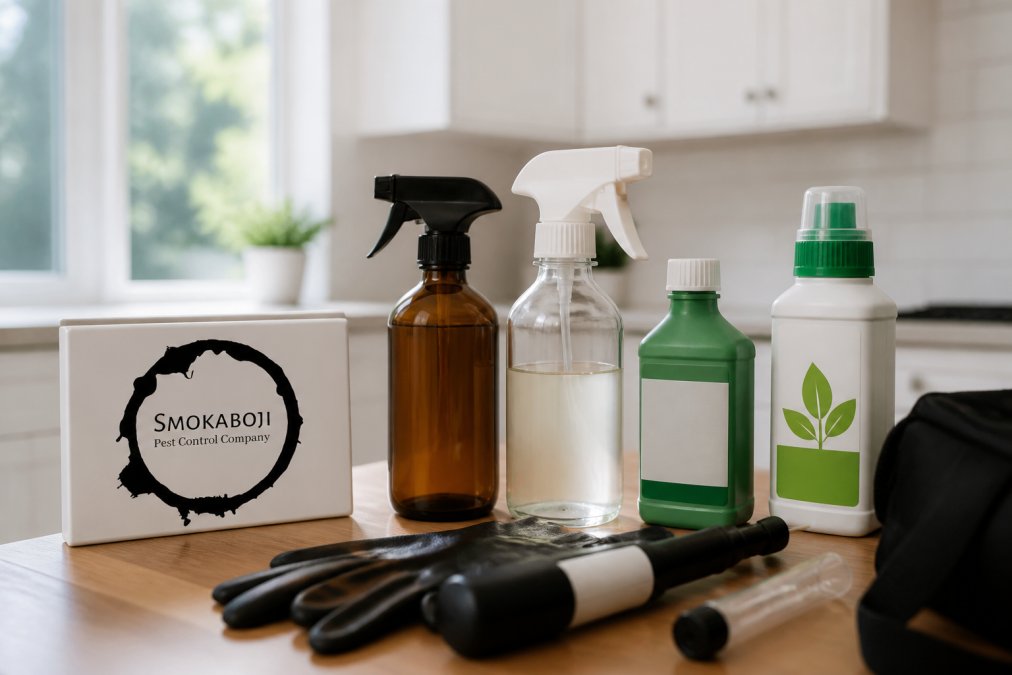
 ultimate-guide
Safe Chemicals for Home Pest Control: 2026 Guide
Table of Contents
- Safe Chemicals for Home Pest Control: What Works
- EPA Approved Low-Toxicity Pesticides for Indoor Use
- How to Get Rid of Fruit Flies in Kitchen Naturally
- Pet-Safe Indoor Pest Control Methods
Last Updated: August 25, 2026
Safe Chemicals for Home Pest Control: What Works
When pests invade your home, the instinct is to reach for the strongest chemical available. But strength and safety aren't mutually exclusive. Understanding the difference between safe chemicals for home pest control and overkill solutions saves money, protects your family, and works better long-term.
The real challenge isn't finding a pesticide that kills bugs, it's finding one that does so without harming pets, children, or lingering in your home for months. This guide covers what actually works, what the EPA considers safe for indoor use, and when professional treatment makes sense.
At Smokaboji Pest Control, we've helped homeowners in Northwest Iowa and Southwest Minnesota navigate this decision. Families dealing with recurring infestations consistently ask: "What's actually safe, and will it stay effective?"
EPA Approved Low-Toxicity Pesticides for Indoor Use
The EPA regulates which active ingredients can be used indoors and at what concentrations (the EPA). Low-toxicity pesticides approved for indoor use typically include natural oils, insect growth regulators, and synthetic compounds that break down quickly without residual toxicity.
Common active ingredients include neem oil, pyrethrins (derived from chrysanthemum flowers), and pyrethroids (synthetic versions). Neem oil disrupts insect growth cycles rather than causing immediate paralysis. Pyrethrins affect the nervous system but degrade rapidly when exposed to sunlight and air.
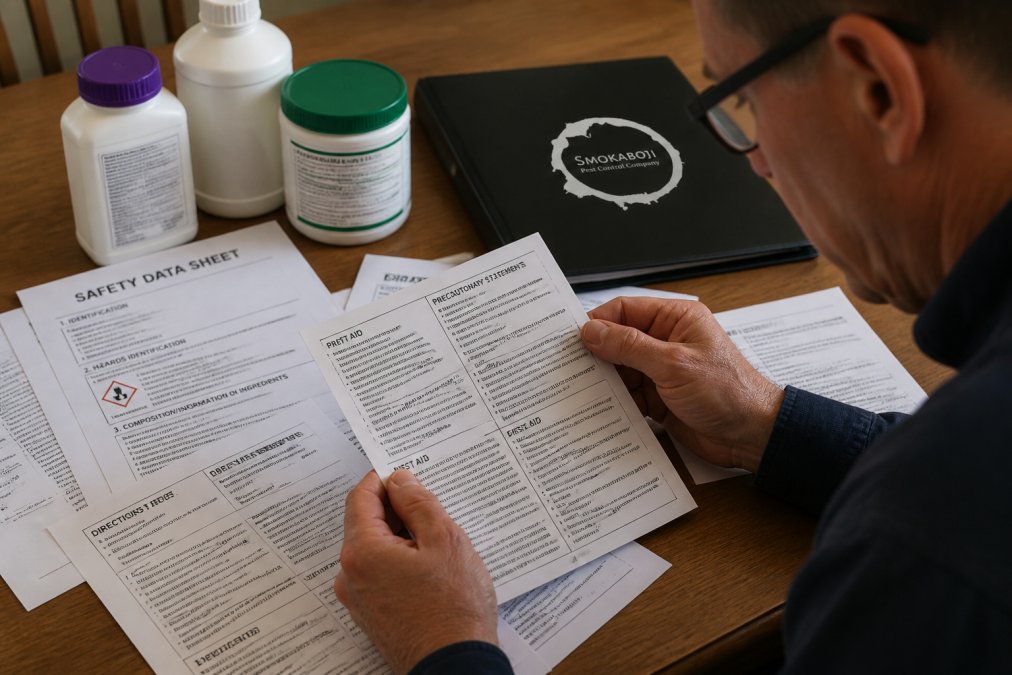
Reading the safety data sheet (SDS) is essential. This document reveals the residual toxicity period, how long the chemical remains active after application. Products with shorter residual windows are safer for homes with children and pets. Look for formulations labeled "low residual toxicity" or "rapid breakdown." Application method matters too: aerosol sprays distribute chemicals throughout a room, while spot treatments minimize exposure.
How to Get Rid of Fruit Flies in Kitchen Naturally
Fruit flies are the gateway pest for most homeowners testing non-toxic solutions. They're annoying but not dangerous, making them ideal for natural approaches. Fruit flies aren't attracted to fruit itself, they're attracted to fermentation and decay.
Start with habitat modification: remove overripe fruit, clean drains thoroughly (fruit flies breed in drain slime), and store produce in sealed containers. This alone eliminates 60-70% of infestations (peer-reviewed research). If needed, fill a bowl with apple cider vinegar, add a drop of dish soap to break surface tension, and leave it uncovered near the infestation. Fruit flies dive in and drown.
For persistent infestations, food-grade diatomaceous earth sprinkled around drains and under appliances is effective and non-toxic. It damages insect exoskeletons. Apply it dry and reapply every 3-5 days until the infestation clears. When these methods fail, enzyme-based drain treatments break down organic matter where fruit flies breed, addressing the root cause.
Pet-Safe Indoor Pest Control Methods
Pets metabolize chemicals differently than humans, and what's "safe" for people can be toxic for dogs and cats. Prioritize mechanical control and habitat modification before introducing any chemical.
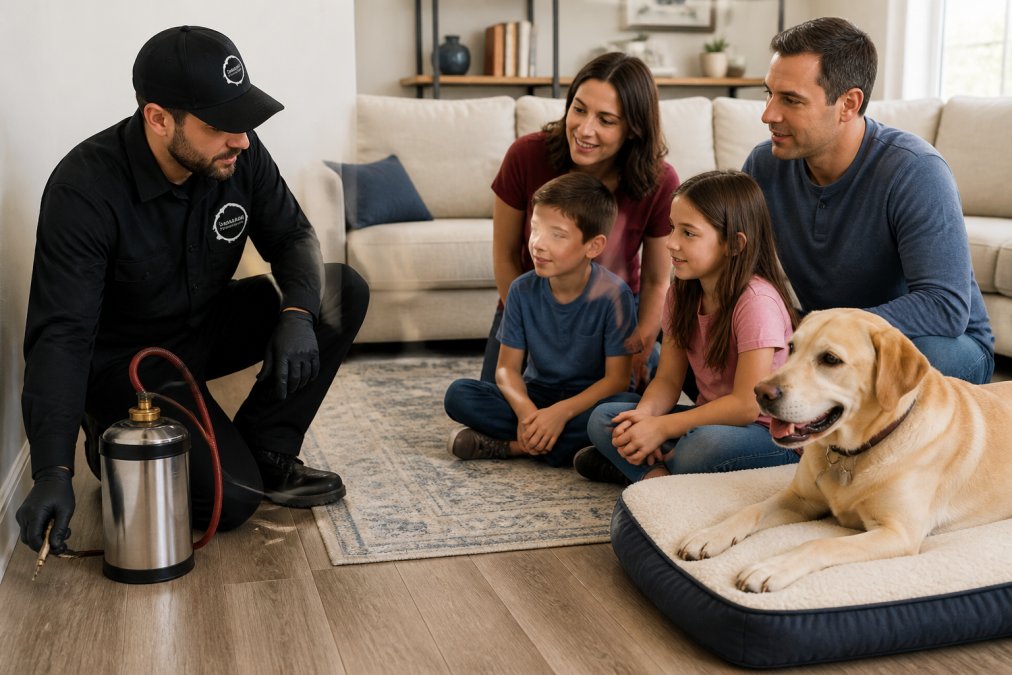
Mechanical control means physically removing pests: traps for mice and insects, vacuuming visible bugs, sealing entry points. For spiders around docks and outdoor structures, exclusion (sealing cracks and gaps) prevents entry entirely.
When chemical treatment is necessary, use products specifically labeled pet-safe. Look for active ingredients like spinosad (derived from soil bacteria) or essential oils like cedarwood. Apply treatments in areas pets can't access: behind appliances, in wall voids, along baseboards. Never use broad-spectrum pyrethroids or organophosphates in homes with cats, cats lack liver enzymes to metabolize these chemicals safely (the NIH). Always consult the product label's pet safety section. If uncertain, contact a licensed professional. Smokaboji Pest Control technicians are trained in pet-safe application protocols and customize treatments for households with animals.
The difference between a pest problem that lingers and one that resolves comes down to matching your approach to your situation. Safe chemicals work when used correctly, understanding what you're applying, where, and why matters. When in doubt, professional treatment removes the guesswork. Smokaboji Pest Control offers customized treatment plans tailored to your pest issues and household needs. Contact us for a consultation on safe, effective solutions that keep your home pest-free without compromising your family's health.
=== FAQ ANSWERS (audit these too, same rules) ===
[1] Q: What are the safest chemicals for indoor pest control? A: The safest options include pyrethrins (natural compounds from chrysanthemum flowers), insect growth regulators that disrupt pest reproduction, and diatomaceous earth. Look for products labeled as low-toxicity or child-safe. Check the EPA registration number on the label and read the safety data sheet before use. Products with minimal residual toxicity break down quickly, reducing exposure risk for your family and pets.
[2] Q: How can I tell if a pest control product is safe for pets and children? A: Read the product label carefully for precautionary statements and signal words like 'Caution' or 'Warning.' Look for EPA approval and check whether the product lists pet-safe indoor pest control claims. The safety data sheet provides detailed toxicity information. Avoid products with high residual toxicity that linger on surfaces. When in doubt, consult a licensed pest control professional who can recommend formulations designed specifically for homes with children and animals.
[3] Q: Are natural and organic pest control products actually effective? A: Yes, when used correctly. Natural oils like neem oil and diatomaceous earth work through different mechanisms than synthetic pesticides but can be highly effective for integrated pest management. Neem oil disrupts insect growth and reproduction, while diatomaceous earth damages pest exoskeletons. However, they may require more frequent application than synthetic alternatives. Combining natural methods with preventative measures like habitat modification and mechanical control yields the best results for long-term pest management.
Frequently Asked Questions
Q: What are the safest chemicals for indoor pest control?
A: The safest options include pyrethrins (natural compounds from chrysanthemum flowers), insect growth regulators that disrupt pest reproduction, and diatomaceous earth. Look for products labeled as low-toxicity or child-safe. Check the EPA registration number on the label and read the safety data sheet before use. Products with minimal residual toxicity break down quickly, reducing exposure risk for your family and pets.
Q: How can I tell if a pest control product is safe for pets and children?
A: Read the product label carefully for precautionary statements and signal words like 'Caution' or 'Warning.' Look for EPA approval and check whether the product lists pet-safe indoor pest control claims. The safety data sheet provides detailed toxicity information. Avoid products with high residual toxicity that linger on surfaces. When in doubt, consult a licensed pest control professional who can recommend formulations designed specifically for homes with children and animals.
Q: Are natural and organic pest control products actually effective?
A: Yes, when used correctly. Natural oils like neem oil and diatomaceous earth work through different mechanisms than synthetic pesticides but can be highly effective for integrated pest management. Neem oil disrupts insect growth and reproduction, while diatomaceous earth damages pest exoskeletons. However, they may require more frequent application than synthetic alternatives. Combining natural methods with preventative measures like habitat modification and mechanical control yields the best results for long-term pest management.
This article was written using GrandRanker