 how-to
Preventing Mice in Rural Properties: A Step-by-Step Guide
Table of Contents
- Why Rural Properties Face Unique Mouse Challenges
- How to Seal Your Foundation for Mice and Other Entry Points
- Best Natural Mouse Repellents and Sanitation Practices
- Recognizing Signs of Mouse Infestation in Walls and Outbuildings
Why Rural Properties Face Unique Mouse Challenges
Rural properties face mouse challenges suburban homeowners rarely encounter. Rural settings offer mice abundant food sources, shelter, and proximity to fields where populations surge seasonally. Unlike urban properties with controlled perimeters, rural homes sit surrounded by open land where rodents migrate naturally as temperatures drop and field crops disappear.
As fall arrives, mice move from harvested fields toward structures offering warmth and food. Rural properties with outbuildings, grain storage, or livestock feed become prime targets. Barns filled with hay or stored grain can harbor dozens of mice within weeks. Rural properties often lack tight construction standards, with older foundations, gaps around utilities, and weathered structural integrity that mice exploit easily.
Rural infestations can differ fundamentally from residential ones. The sheer volume of entry points, combined with environmental factors unique to agricultural settings, means standard prevention methods often fall short.
How to Seal Your Foundation for Mice and Other Entry Points
The most effective prevention strategy starts with structural exclusion, sealing entry points before mice reach your home. Mice need only a gap the size of a dime to squeeze through (the CDC).
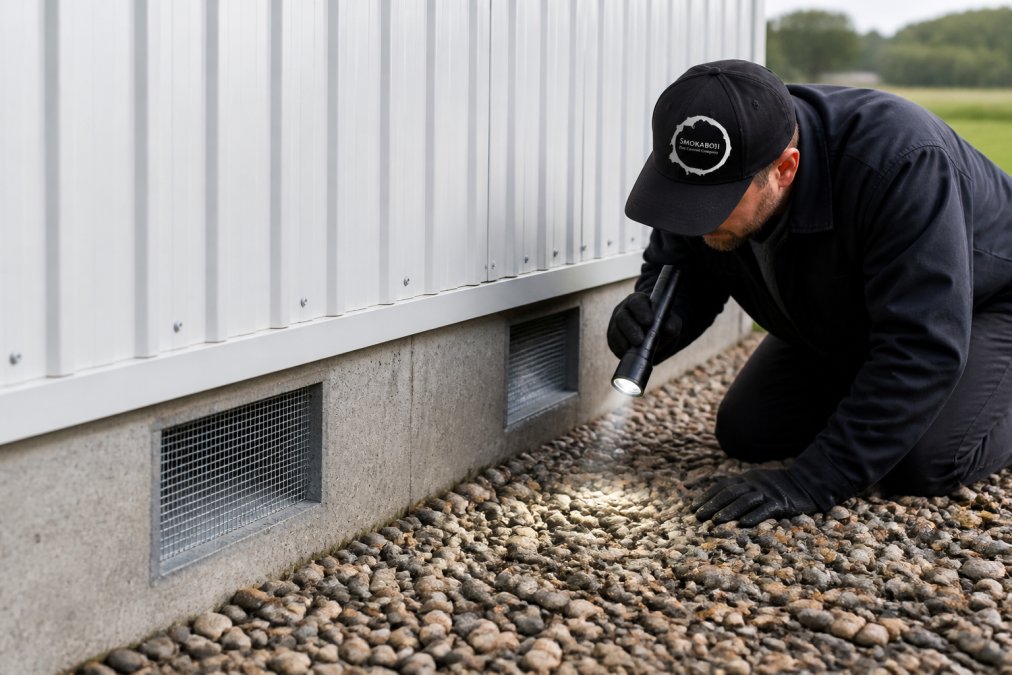
Walk your foundation's perimeter on a sunny day when shadows reveal gaps clearly. Look for cracks in concrete, spaces where pipes or utility lines penetrate the foundation, and gaps where the sill plate meets the foundation. Check around windows, doors, vents, and any opening larger than a quarter inch.
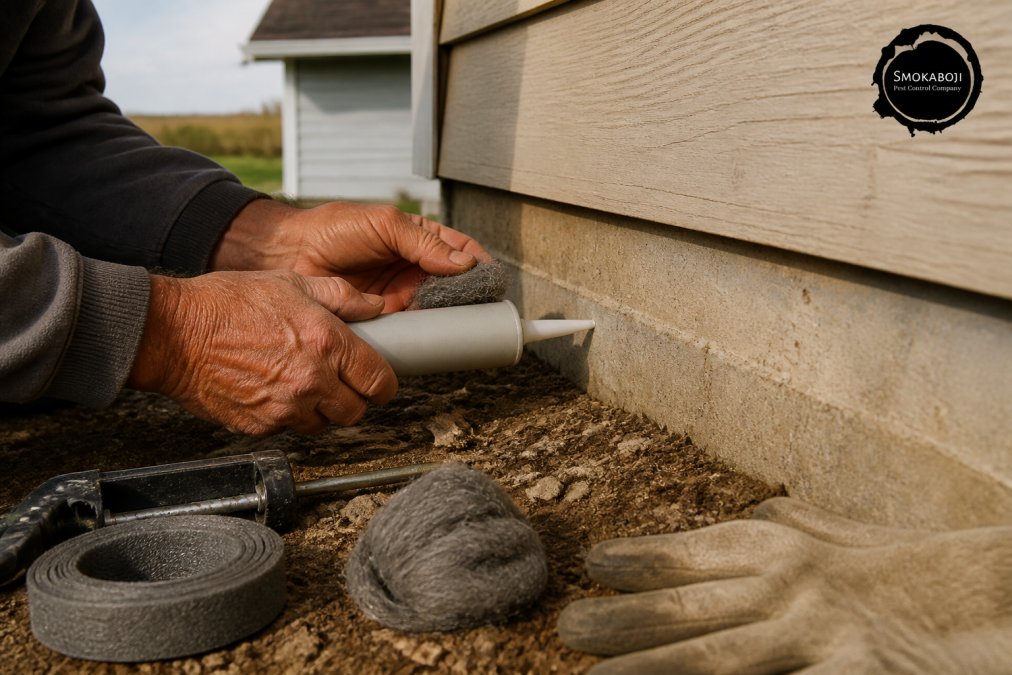
For sealing, use materials that resist rodent chewing. Steel wool combined with caulk creates an effective barrier; mice cannot chew through steel (the CDC). Hardware cloth (quarter-inch mesh) works well for larger gaps and vents. Avoid foam sealant alone; layer it with hardware cloth or steel wool for durability.
Pay special attention to outbuildings. Barns, sheds, and storage structures rarely receive the same maintenance as primary residences. Gaps around door frames, broken window screens, and deteriorated siding provide easy access. Prioritize sealing entry points on structures containing food sources.
Best Natural Mouse Repellents and Sanitation Practices
While exclusion prevents entry, sanitation eliminates reasons for mice to stay. Secure grain in metal containers with tight lids, store livestock feed in sealed bins, and eliminate spilled grain around feeders immediately. Mice need only crumbs to sustain themselves.
Natural deterrents provide supplementary protection when combined with exclusion and sanitation. Peppermint oil-soaked cotton balls placed near entry points can discourage mice; the strong scent irritates their sensitive olfactory systems (peer-reviewed research). These work best as part of a layered approach, not as standalone solutions.
Vegetation management reduces harborage areas. Trim tree branches hanging over rooflines; mice use these as highways to reach upper entry points. Clear brush and debris piles away from structures. A working cat population naturally controls mice through predation and territorial behavior, though cats work best alongside exclusion and sanitation.
Inspect foundations quarterly for new gaps, especially after freeze-thaw cycles crack concrete. Check weather stripping seasonally. Rural properties benefit from fall inspections before migration season peaks.
Recognizing Signs of Mouse Infestation in Walls and Outbuildings
Early detection prevents minor problems from becoming major infestations. Mouse droppings appear as small, dark pellets roughly the size of a grain of rice, typically clustered in corners or along walls.
Chewed materials indicate active infestation. Mice gnaw on wood, insulation, cardboard, and stored goods. Look for small, clean gnaw marks on wood beams, chewed corners of grain bags, or damaged insulation. Greasy rub marks along walls and baseboards signal regular travel routes.
Listen for sounds, especially at night when mice are most active. Scratching in walls, squeaking, and rustling noises indicate movement within structures.
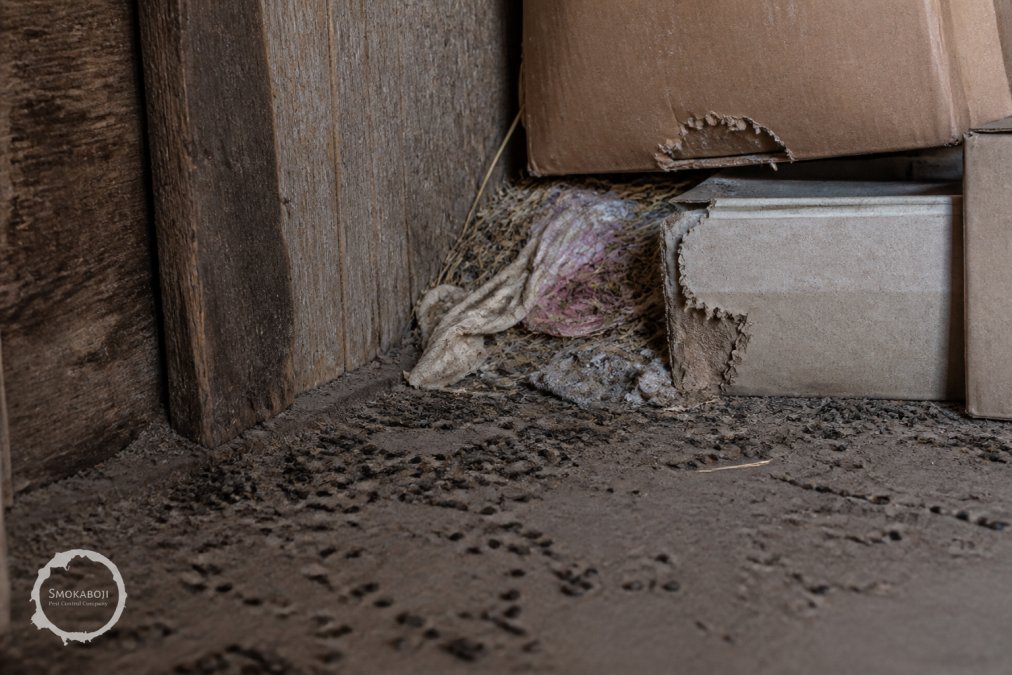
Nesting sites reveal infestation severity. Mice create nests from shredded paper, fabric, and plant material in protected spaces like wall cavities or storage boxes. Finding a nest means mice have established residence.
When infestation signs appear, professional intervention becomes necessary. Trapping removes existing populations, but without addressing entry points and food sources, reinfestation follows quickly. Professional pest control combines removal with comprehensive prevention strategies tailored to your property's unique rural characteristics.
=== FAQ ANSWERS (audit these too, same rules) ===
[1] Q: What are the most common entry points for mice in rural properties? A: Mice enter through gaps around foundation cracks, openings where utilities enter, gaps between siding and foundation, damaged door seals, and holes in walls or attics. Rural properties with older structures, outbuildings, or proximity to fields face higher pressure from rodent populations seeking shelter and food sources. Inspect your foundation, barn doors, and around pipes and wires carefully during fall when mice actively search for winter nesting sites.
[2] Q: Do natural mouse repellents like peppermint oil actually work for preventing mice? A: Natural deterrents such as peppermint oil, ammonia-soaked rags, and Irish Spring soap may temporarily discourage mice, but they are not reliable as standalone prevention methods. These work best as part of a layered approach that includes structural exclusion, sanitation, and removing food sources. For rural properties with high mouse pressure, natural repellents alone often fail, combine them with sealing entry points and trapping for better results.
[3] Q: How can I tell if I have mice in my walls or outbuildings? A: Signs of mouse infestation in walls include droppings (small, dark pellets), gnaw marks on wood or wiring, musty odors, scratching sounds at night, and grease marks along baseboards from their fur. In outbuildings, look for nesting material made from insulation or fabric, chewed feed bags, and overpopulation evidence like multiple droppings in one area. Early detection prevents infestations from spreading into your primary residence. If you spot these signs, contact a licensed pest control professional to assess the extent of the problem.
Frequently Asked Questions
What are the most common entry points for mice in rural properties?
Mice enter through gaps around foundation cracks, openings where utilities enter, gaps between siding and foundation, damaged door seals, and holes in walls or attics. Rural properties with older structures, outbuildings, or proximity to fields face higher pressure from rodent populations seeking shelter and food sources. Inspect your foundation, barn doors, and around pipes and wires carefully during fall when mice actively search for winter nesting sites.
Do natural mouse repellents like peppermint oil actually work for preventing mice?
Natural deterrents such as peppermint oil, ammonia-soaked rags, and Irish Spring soap may temporarily discourage mice, but they are not reliable as standalone prevention methods. These work best as part of a layered approach that includes structural exclusion, sanitation, and removing food sources. For rural properties with high mouse pressure, natural repellents alone often fail, combine them with sealing entry points and trapping for better results.
How can I tell if I have mice in my walls or outbuildings?
Signs of mouse infestation in walls include droppings (small, dark pellets), gnaw marks on wood or wiring, musty odors, scratching sounds at night, and grease marks along baseboards from their fur. In outbuildings, look for nesting material made from insulation or fabric, chewed feed bags, and overpopulation evidence like multiple droppings in one area. Early detection prevents infestations from spreading into your primary residence. If you spot these signs, contact a licensed pest control professional to assess the extent of the problem.
Rural mouse prevention requires a multi-layered approach combining structural exclusion, sanitation, and ongoing monitoring. When DIY methods aren't enough or infestation already exists, professional help ensures complete elimination and long-term protection. Contact Smokaboji Pest Control for customized prevention plans addressing your rural property's specific vulnerabilities, our fully licensed technicians deliver the expertise and cutting-edge methods needed to keep mice out year-round.
This article was written using GrandRanker