 how-to
Preventing Mice in Farm Homes Naturally: A Practical Guide
Table of Contents
- Signs of Mouse Infestation in Rural Homes
- Seal Gaps in Old Farmhouses to Block Entry Points
- Natural Mouse Repellent for Farmhouses That Work
- Remove Food Sources and Manage Outdoor Attractants
- Seasonal Timing and Long-Term Maintenance Checklists
- When to Call a Professional Pest Control Service
- Conclusion
Last Updated: August 8, 2026
Signs of Mouse Infestation in Rural Homes
Recognizing a mouse problem early prevents minor issues from becoming full-scale infestations. Rural properties face unique vulnerabilities because farmhouses often have older construction, multiple entry points, and surrounding environments that naturally attract rodents.
Look for droppings first. Mouse feces are small, dark, and roughly the size of a grain of rice, found along baseboards, inside cabinets, and in crawl spaces. Fresh droppings are dark and moist; older ones turn gray and crumble easily. A single mouse produces 50-75 droppings per day, so even a small population leaves obvious evidence.
Listen for activity at night. Mice are nocturnal, and their movement creates distinct sounds: scratching in walls, squeaking, and tiny feet running across attic joists. Check for gnaw marks on food packaging, wiring, and structural materials. Mice must gnaw constantly because their teeth never stop growing, and electrical wiring damage is particularly dangerous because it creates fire hazards.
A strong, musty odor in enclosed spaces like pantries or crawl spaces suggests active nesting. Droppings, sounds, gnaw marks, and odor together indicate infestation severity. One or two signs suggest early-stage infestation where prevention still works effectively. All four signs indicate the population has likely grown beyond simple exclusion.
Seal Gaps in Old Farmhouses to Block Entry Points
The foundation of any mouse prevention strategy is exclusion: physically blocking rodents from entering your home. Mice can squeeze through gaps as small as a dime. Old farmhouses present particular challenges because settling, weathering, and decades of use create numerous vulnerabilities.
Foundation gaps and crawl space vulnerabilities
Foundation gaps are the primary entry route for mice in rural homes. As farmhouses age, the foundation shifts, creating cracks and separations where the structure meets the ground. Inspect your foundation systematically by walking the entire perimeter on a clear day and marking every gap, crack, and separation. Use a flashlight to peer into crawl spaces and identify entry points from below. Foundation vents designed for ventilation are major entry routes that mice exploit regularly.
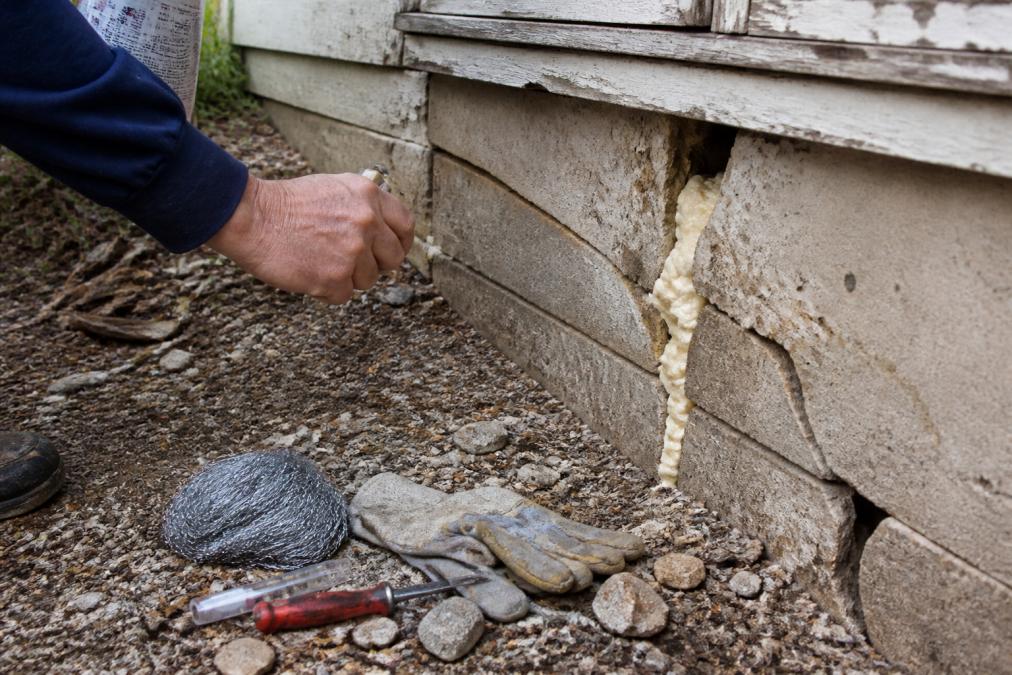
Seal gaps larger than one-quarter inch with a combination approach. Pack the gap with steel wool first, then apply expanding spray foam over it. The steel wool creates a physical barrier that rodents cannot penetrate, while the foam holds it in place and prevents further settling from reopening the gap. For smaller cracks, use exterior-rated silicone caulk, which withstands temperature fluctuations better than acrylic varieties.
Foundation vents require special treatment. Install hardware cloth or quarter-inch metal mesh over vents on the exterior. Secure it with screws or rivets, not nails, which mice can dislodge. The mesh must overlap the vent frame by at least one inch on all sides to prevent mice from squeezing past the edges.
Using steel wool and hardware cloth for lasting protection
Steel wool is one of the most effective natural barriers against mice because its sharp fibers cut the rodent's mouth, creating a deterrent they instinctively avoid. Use Grade 0000 steel wool (the finest grade) for small gaps, packing it firmly with no loose ends.
For larger gaps, combine steel wool with hardware cloth. Hardware cloth is wire mesh with small openings, typically one-quarter inch or smaller. Galvanized hardware cloth resists rust and lasts decades. Fill half the gap depth with steel wool, place a strip of hardware cloth over it, add more steel wool on top, then seal everything with expanding foam. For crawl space entry points, staple hardware cloth across the opening before sealing gaps, overlapping each piece by at least one inch and securing every two inches with staples. Inspect your sealing work after the first hard freeze of winter, as temperature changes can shift materials and create new gaps.
Natural Mouse Repellent for Farmhouses That Work
Natural repellents offer a chemical-free approach to mouse deterrence. They work best as a preventative layer, not as a standalone solution. The most effective natural repellents exploit mice's acute sense of smell, which is roughly 1,000 times more sensitive than human olfaction.
Peppermint oil, clove oil, and cayenne pepper methods
Peppermint oil is the most researched natural mouse deterrent. The strong menthol compounds irritate mice's nasal passages and respiratory system, making treated areas unpleasant to inhabit. Soak cotton balls in pure peppermint essential oil and place them along baseboards, inside cabinets, near entry points, and in crawl spaces. Replace the cotton balls every two weeks because the oil evaporates and loses potency. During winter months when mice are most active, refresh them weekly.
Clove oil works through a similar mechanism. Mix clove oil with water in a spray bottle and apply it around baseboards and entry points. Cayenne pepper creates a physical irritant when mice inhale it. Sprinkle cayenne pepper around entry points and in areas where mice travel. These three repellents work best in combination: use peppermint oil inside the home, cayenne pepper around exterior entry points, and clove oil in crawl spaces.
Scent-based deterrents vs. trapping and removal
Natural scent-based repellents prevent mice from entering your space, but they don't eliminate mice already inside. If you have an active infestation, combine repellents with trapping and removal: first, seal entry points and install hardware cloth barriers. Second, place traps in areas where you've seen activity to remove the current population. Third, apply natural repellents to discourage new mice from entering.
Snap traps and electronic traps are more reliable than poison for farmhouse situations because they eliminate the risk of mice dying inside walls, which creates odor problems. Timing matters significantly. In fall, when outdoor temperatures drop and mice seek shelter, repellents are most effective. In winter, when mice are already inside, trapping becomes necessary. In spring, focus on exclusion to prevent re-entry as outdoor populations become active again.
Remove Food Sources and Manage Outdoor Attractants
Mice invade homes because they find food, water, and shelter. Remove the food sources and you remove the primary reason they stay. Farm properties present unique challenges because grain storage, livestock feed, and outdoor debris create abundant foraging habitat.
Woodpiles, grain storage, and foraging habitat control
Woodpiles are mouse magnets. Move woodpiles at least 30 feet away from your home's foundation. Store wood off the ground on a metal rack or concrete base to prevent mice from burrowing underneath. Stack wood tightly so mice cannot nest between pieces.
Grain and feed storage requires sealed containers. Use metal bins with tight-fitting lids for grain, feed, and any other bulk storage. Metal prevents both gnawing and moisture infiltration while eliminating a major food source for rodents.
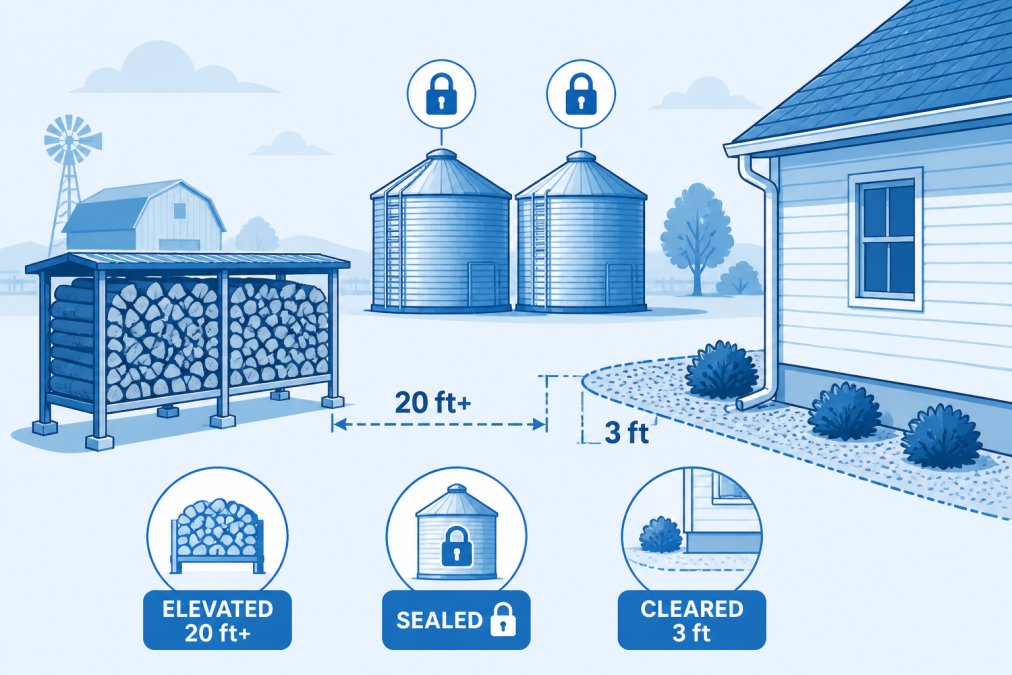
Clear vegetation within 10 feet of your home's foundation. Tall grass, brush, and overgrown shrubs provide cover for mice as they approach entry points. Remove fallen fruit from around fruit trees and berry bushes. Keep compost piles at least 50 feet from your home in an enclosed bin with a tight lid rather than an open pile.
Sanitation and waste management for farm properties
Use metal trash cans with tight-fitting lids rather than plastic bins. Mice can chew through plastic, but they cannot penetrate metal. Store garbage in a designated area away from the home and livestock facilities. Clean up grain spills immediately, as even small amounts attract mice. Sweep grain storage areas regularly and dispose of sweepings in sealed containers.
Remove pet food dishes immediately after animals finish eating. Never leave food out overnight. Store pet food in sealed metal containers, not in the original bags. Livestock feed should follow the same protocol: store in sealed metal containers and feed only the amount animals will consume in one feeding.
Seasonal Timing and Long-Term Maintenance Checklists
Mouse activity follows seasonal patterns tied to outdoor temperatures and food availability. Understanding these patterns allows you to implement prevention measures at the times when they're most effective.
Fall and winter rodent activity prevention
Fall is the critical prevention window. As outdoor temperatures drop in September and October, mice begin seeking shelter inside buildings. In August and September, complete all sealing work, including filling foundation gaps, installing hardware cloth over vents, and sealing gaps around pipes and utilities. Weather seals around doors and windows should be inspected and replaced if cracked or compressed.
Apply natural repellents in late September before the first cold snap. Refresh these monthly through winter. Set traps in October if you've seen any signs of mouse activity. Place them along baseboards, in corners, and in areas where you've found droppings. Check traps daily and dispose of any mice humanely. Spring brings a secondary prevention opportunity when mice that survived winter inside your home may try to exit.
Pet and livestock safety during natural prevention
Natural repellents are safer around animals than chemical pesticides, but they still require careful application. Peppermint oil can irritate pets' respiratory systems if applied in enclosed spaces where animals spend time. Use peppermint oil in areas pets don't access: crawl spaces, attic areas, and garage corners.
Cayenne pepper is safe for most animals but can irritate eyes and respiratory systems if inhaled directly. Apply it around exterior perimeters away from areas where pets play or livestock graze. Steel wool and hardware cloth pose no chemical risk, but secure all installations so animals cannot access sharp edges. Traps must be placed where pets and livestock cannot access them.
| Task | Frequency | Season | Notes |
|---|---|---|---|
| Inspect foundation for new gaps | Monthly | Year-round | Check after freeze-thaw cycles |
| Replace peppermint oil cotton balls | Every 2 weeks | Fall-Winter | Weekly during peak activity |
| Check hardware cloth for damage | Monthly | Year-round | Repair before mice exploit gaps |
| Clean grain spills | Daily | Year-round | Immediate cleanup prevents attraction |
| Inspect seals around pipes/utilities | Quarterly | Year-round | Weather and settling create new gaps |
| Set/check traps | Daily | Fall-Winter | Remove caught mice promptly |
| Clear vegetation around foundation | Annually | Spring | Maintain 10-foot clear zone |
| Move woodpiles away from home | Annually | Fall | Before mice seek winter shelter |
When to Call a Professional Pest Control Service
Natural prevention methods work well for early-stage infestations and ongoing prevention. However, certain situations require professional expertise that homeowner approaches cannot match.
Call a professional if you've implemented sealing, repellents, and trapping for two weeks without reducing mouse activity. This suggests either a larger population than you can handle alone or entry points you haven't identified. If you find mice inside walls or attics, professional removal becomes necessary because mice in wall cavities are difficult to trap. Commercial properties and rental units require professional management because liability and health code compliance are involved.
Smokaboji Pest Control specializes in farm property challenges across Northwest Iowa and Southwest Minnesota. Their experienced, fully licensed, and insured technicians understand the unique vulnerabilities of older farmhouses, the integration of prevention with livestock operations, and the seasonal patterns that drive mouse activity in rural areas. They can identify entry points you've missed, implement professional-grade exclusion work, and create customized maintenance plans that fit your farm's specific situation.
If you've tried natural methods and the problem persists, professional assessment can help address the issue. Smokaboji Pest Control offers preventative maintenance plans that can help keep mice out year-round.
Mice in farmhouses aren't inevitable. Sealing entry points, removing food sources, and applying natural repellents create an environment where mice cannot establish themselves. The key is consistent maintenance, refreshing repellents seasonally, inspecting seals after temperature changes, and removing new attractants as they appear.
For homeowners dealing with recurring infestations despite prevention efforts, Smokaboji Pest Control provides professional exclusion work, customized treatment plans, and preventative maintenance designed specifically for farm properties. Their licensed technicians use modern methods to eliminate current infestations and seal vulnerabilities that let mice return. Contact Smokaboji Pest Control for a property assessment and prevention plan tailored to your farmhouse's specific vulnerabilities.
Frequently Asked Questions
What are the most effective natural mouse repellents for farmhouses?
Peppermint oil, clove oil, and cayenne pepper are the most commonly used natural deterrents. Soak cotton balls in peppermint oil and place them near entry points, woodpiles, and crawl spaces. These scents irritate rodent sensory organs and encourage them to avoid treated areas. However, scent-based repellents work best as part of a comprehensive prevention strategy that includes exclusion, sanitation, and removing food sources. Alone, they are less reliable than sealing entry points with steel wool and hardware cloth.
How do you seal a farmhouse to prevent mice from entering?
Start by identifying gaps around foundation lines, utility penetrations, and doors. Use steel wool as a primary barrier, mice cannot chew through it. Pack steel wool into gaps, then seal over it with spray foam, caulk, or sealant. For larger openings in crawl spaces and around pipes, install hardware cloth (1/4-inch mesh) secured with nails or staples. Focus on the perimeter first, then address interior vulnerabilities like spaces behind cabinets and around baseboards. Inspect twice yearly, especially before fall when rodent activity peaks.
What signs indicate a mouse infestation in a rural home?
Look for droppings (dark, rice-sized pellets) along baseboards, in pantries, and near food storage. Gnaw marks on wood, drywall, or food packaging signal active rodent presence. Musty odors, especially in enclosed spaces like crawl spaces and attics, often indicate nesting activity. You may hear scratching or squeaking in walls at night. Trails of dust or grease marks along walls show rodent highways. Finding nesting material (shredded paper, fabric, plant fibers) in corners or behind appliances confirms infestation. Document these signs before calling for professional assessment.
Is natural mouse prevention safe around kids and farm animals?
Natural repellents like peppermint and clove oil are generally safe for families and livestock when used as directed. Keep essential oils in sealed containers away from children and pets. Steel wool, hardware cloth, and sealants are non-toxic barriers. Avoid placing poison baits or snap traps in areas where children or animals can access them. If using traps, position them behind furniture or in enclosed bait stations inaccessible to pets. For farms with livestock, focus on exclusion and sanitation rather than chemical deterrents. Always consult a professional pest control service if you're uncertain about safety protocols for your specific situation.
This article was written using GrandRanker