 comparison
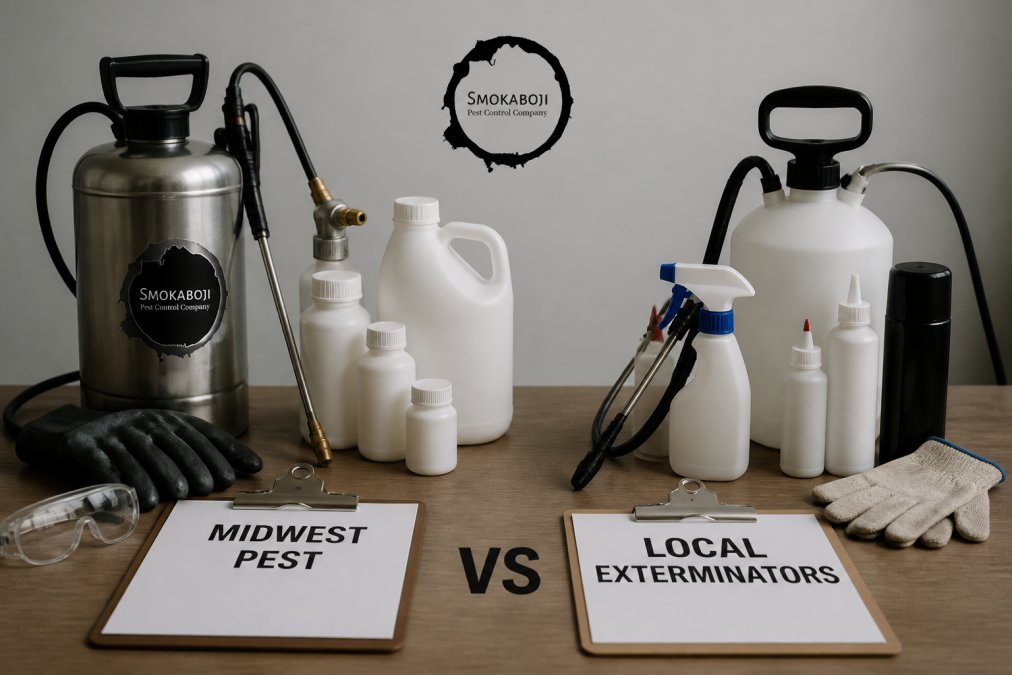
Midwest Pest vs Local Exterminators: 2026 Comparison
Table of Contents
- Midwest Pest vs Local Exterminators: Key Differences
- Service Area and Availability
- Questions to Ask Pest Control Companies
- Pest Control Service Cost Comparison
- Treatment Methods and Integrated Pest Management Practices
- Licensing, Insurance, and Guarantees
- Which Option Is Right for You
Last Updated: August 14, 2026
Midwest Pest vs Local Exterminators: Key Differences
When choosing between Midwest Pest and local exterminators, the decision hinges on service area, expertise, and response time. National and regional chains offer standardized processes and broader coverage, while local exterminators provide hyper-local knowledge of regional pest seasonality and faster response times. Neither is universally better, the right choice depends on your specific situation, property type, and pest problem.
Service Area and Availability
Midwest Pest Control operates primarily in the Des Moines area and surrounding Iowa regions. If your property falls within their service zone, you get consistent availability and faster scheduling. Outside that radius, in the Iowa Great Lakes region or rural Southwest Minnesota, they may not service your location.
Local exterminators typically serve a tighter geographic footprint, creating both advantages and limitations. The advantage: they know the specific pest pressures, seasonal patterns, and effective treatments for your local climate. The limitation: multiple properties across counties may require hiring multiple companies.
Smokaboji Pest Control serves Northwest Iowa and Southwest Minnesota with licensed technicians who understand the region's specific pest challenges, lake spiders, fall field mice, and commercial cockroaches. That geographic focus means expertise tailored to your area, not generic protocols designed for national application.
Regional Pest Seasonality Calendar: When You Actually Need Service
Understanding when pests are most active in your region is critical to planning service and budgeting.
Spring (March-May): Rodents peak as mice and rats seek food and nesting sites after winter. Carpenter ants emerge from dormancy and begin foraging. Termite swarmers (winged termites) appear in late spring, indicating active colonies. Spring is ideal for preventative rodent and termite inspections and sealing entry points.
Early Summer (June-July): Mosquitoes peak during breeding season as standing water warms. Flies multiply rapidly in warm weather. Wasps and hornets actively grow nests. Recommended actions: mosquito control through standing water elimination, fly management in food service areas, and early-season wasp nest removal.
Late Summer (August-September): Lake spiders peak around waterfront properties. Cockroaches move indoors as outdoor temperatures cool. Bed bugs often appear as travelers return from vacations. Recommended actions: dock and foundation spider treatment, cockroach monitoring in commercial buildings, and bed bug inspections for rental properties.
Fall (October-November): Field mice and voles surge as outdoor food sources disappear and temperatures drop, populations can increase 10-fold from summer levels. Cluster flies congregate in attics and wall voids to overwinter. Rodent exclusion and baiting must be completed by late September to prevent invasion. This is the most critical service window of the year.
Winter (December-February): Rodents remain active indoors in walls, attics, and basements. Bed bugs and cockroaches stay active year-round in heated buildings. Winter monitoring and trapping control existing populations. This is the least busy season for outdoor pest control but critical for indoor pest management.
Why Seasonality Matters for Service Planning
National pest control companies often apply the same service schedule year-round, missing regional reality. In Northwest Iowa and Southwest Minnesota, fall rodent pressure is 5-10 times higher than spring pressure. A quarterly schedule treating rodents equally in March and October is inefficient.
Local providers understand this and recommend increased frequency in fall for rodent control, spring focus on termite and carpenter ant prevention, summer emphasis on mosquitoes and flies, and year-round monitoring for bed bugs and cockroaches in commercial properties. Ask your pest control provider whether they adjust service frequency and focus by season. If they don't, they're not accounting for regional pest patterns that drive your actual pest pressure.
Questions to Ask Pest Control Companies
Before committing to any provider, ask these specific questions to evaluate their capability and reliability.
Licensing and Credentials: Ask for proof of current state licensure. Pest control technicians must hold a valid license to apply pesticides. Ask which specific license they hold and verify it independently. Ask whether they carry liability insurance and bonding, which protects you if something goes wrong during treatment.
Experience with Your Specific Pest: Generic experience doesn't equal expertise. If you're dealing with bed bugs in a commercial building or dock spiders, ask how many jobs of that exact type they've completed in the past year and what their success rate is.
Treatment Methods and Safety: Ask what chemicals or methods they use and request a Material Safety Data Sheet (MSDS) for any pesticides. Ask about their integrated pest management approach, do they use trapping, exclusion, and monitoring, or rely primarily on chemicals? Ask how long you need to stay out of treated areas and whether treatment is safe around children and pets.
Service Guarantees: Ask what happens if pests return between scheduled visits. Do they retreat at no cost? What's the timeframe? Strong guarantees signal confidence in their work.
Response Time for Urgent Issues: Ask about emergency availability. If you discover bed bugs on a Thursday evening, can they respond the same day or next morning? Smokaboji Pest Control is available on-call for urgent pest problems.
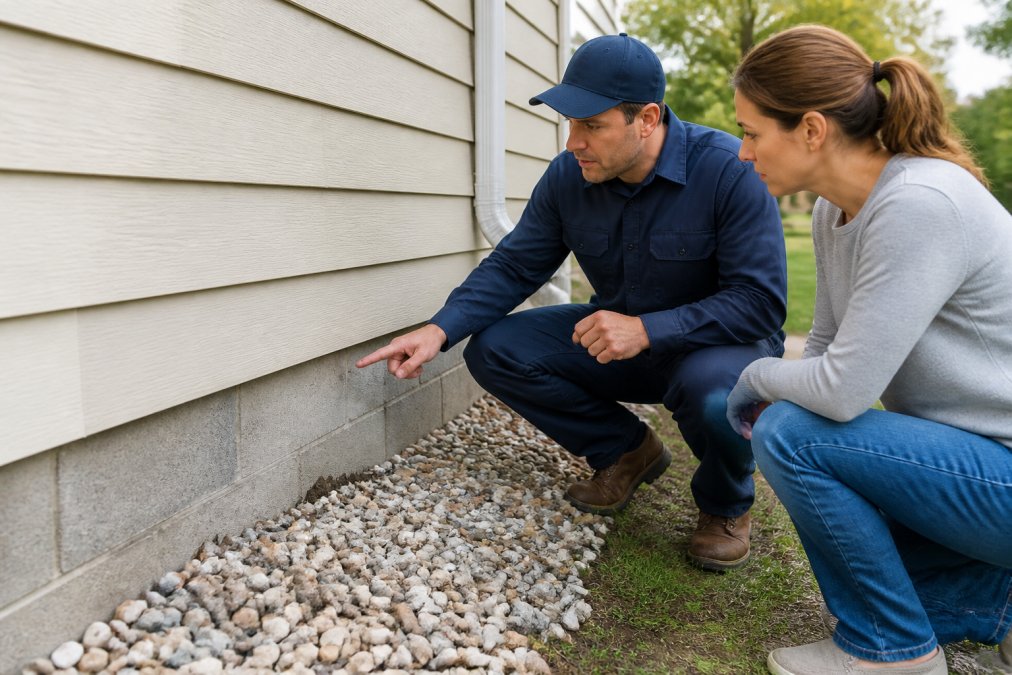
Inspection and Assessment Process: Ask whether they conduct a thorough property inspection before quoting. A legitimate company should identify entry points, assess infestation extent, and explain findings before proposing treatment.
Pest Control Service Cost Comparison
Cost is often the deciding factor, but comparing pricing requires understanding what you're actually paying for.
Professional Service vs. DIY: The Real Cost Calculation
Store-bought pest control products ($15-$50 per application) seem cheaper than professional service ($300-$800 for initial treatment), but the full cost analysis reveals why professionals often save money long-term.
DIY Approach:
- Initial treatments: $20-$60
- Repeat applications (most DIY treatments fail on first attempt): $20-$60 per application, often 3-5 times
- Time investment: 5-10 hours of your labor
- Risk of incomplete treatment: Pests return within 2-4 weeks
- Potential property damage from improper pesticide application
- Total typical cost: $200-$900 over 2-3 months
Professional Service:
- Initial inspection and treatment: $300-$800
- Follow-up visits (typically 2-3 included): Included or $100-$200 each
- Guarantee: Free retreatment if pests return within 30-90 days
- Total typical cost: $400-$1,200, resolved in 1-2 visits
Professionals identify and eliminate root causes (entry points, food sources, conducive conditions) rather than just killing visible pests, preventing recurrence. DIY approaches typically kill active pests but leave conditions that attracted them, leading to repeat infestations.
When DIY Makes Sense: Minor, isolated issues, preventative maintenance in low-risk seasons, or budget constraints with willingness to accept higher failure risk.
When Professional Service Pays for Itself: Active infestations, commercial properties where pest presence affects business, recurring problems DIY hasn't solved, or properties with high liability exposure.
Regional Provider vs. Local Exterminator Pricing
Both Midwest Pest Control and local exterminators typically operate on a quote-based model, with cost depending on property size, pest type, infestation severity, and treatment method. Local companies may offer better rates for long-term contracts because they value recurring business and predictable scheduling.
Regional providers often have standardized pricing tiers that are more transparent upfront. Some charge separately for initial inspection and treatment, then add monthly monitoring fees. Local companies sometimes bundle these into quarterly or annual fees.
Pricing Transparency Checklist:
- Initial inspection cost: Free or charged separately?
- Treatment cost: Fixed or variable based on findings?
- Monitoring visits: Included or additional fee?
- Follow-up treatments: Covered under guarantee or charged separately?
- Seasonal adjustments: Do prices change for seasonal pest pressure?
- Multi-property discounts: Available for rentals or commercial properties?
Smokaboji Pest Control provides customized treatment plans based on your specific needs. The value proposition isn't the lowest price; it's the combination of local expertise, licensed technicians, on-call availability, and preventative maintenance tailored to your situation.
Treatment Methods and Integrated Pest Management Practices
The most effective pest control combines multiple strategies rather than relying on chemicals alone. This approach is called Integrated Pest Management (IPM).
What IPM Actually Means:
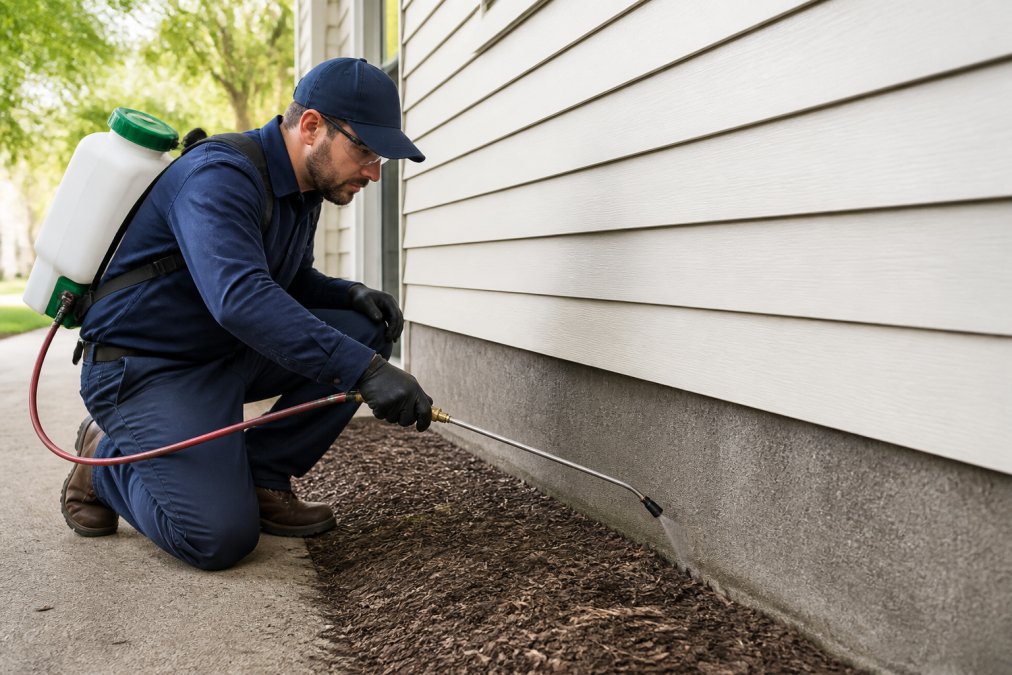
Integrated Pest Management combines inspection, exclusion, trapping, monitoring, and targeted chemical application to eliminate pests and prevent future infestations. It prioritizes prevention and uses chemicals only when necessary.
A strong IPM approach includes property inspection to identify entry points and conducive conditions, exclusion by sealing cracks and gaps, sanitation by removing food sources and clutter, trapping and monitoring to track activity and catch infestations early, and targeted chemical treatment applied only where pests are active.
Midwest Pest Control emphasizes eco-friendly and pet-safe treatments aligned with IPM principles, using strategic bait station placement for rodent control rather than blanket applications. Local exterminators vary widely, some follow rigorous IPM protocols while others rely primarily on chemicals. Ask whether they use trapping, exclusion, and monitoring as standard practice.
Smokaboji Pest Control utilizes modern chemicals and preventative maintenance plans beyond one-time treatment. The difference between reactive approaches (spray when you see a pest) and preventative approaches (regular monitoring to prevent infestations) is substantial. Preventative maintenance costs more upfront but saves money long-term by catching problems early.
Why Treatment Method Matters:
Chemical-only approaches often fail because they don't address underlying conditions that attracted pests. If mice enter through foundation gaps, spraying kills current mice but doesn't stop new ones from entering. Proper IPM seals entry points, removes food sources, and monitors for new activity. Ask whether treatment plans include exclusion work. If not, you're getting a temporary fix, not a solution.
Licensing, Insurance, and Guarantees
This section separates legitimate pest control providers from unlicensed operators.
State Licensing Requirements:
Pest control technicians must hold a valid license to apply pesticides. Verify any technician's license through your state's Department of Agriculture. An unlicensed operator might offer cheaper service but is operating illegally and exposing you to liability if something goes wrong.
Insurance and Bonding:
Ask whether the company carries general liability insurance and bonding. Liability insurance covers damage caused during treatment. Bonding protects you if the company fails to complete work. Both are standard for legitimate businesses.
Smokaboji Pest Control is fully licensed and insured, meaning every technician carries credentials and the company maintains liability coverage.
Service Guarantees:
A guarantee signals whether the company stands behind their work. Ask what happens if the problem recurs, whether retreatment is free, and what the time limit is. A solid guarantee should cover at least 30 days.
Which Option Is Right for You
The choice comes down to three factors: service area, expertise, and response time.
Choose Midwest Pest or a similar regional provider if: Your property is within their service area, you need consistent service across multiple locations, you prefer transparent tiered pricing, you value eco-friendly options, or you're comfortable with larger organization processes.
Choose a local exterminator if: You have a single property in a tight geographic area, you want faster response times and direct owner contact, you're dealing with region-specific pests, you prefer negotiating directly on price, or you value personal relationships.
Choose Smokaboji Pest Control if: Your property is in Northwest Iowa or Southwest Minnesota, you need on-call availability for urgent problems, you want licensed, insured technicians with local expertise, you're looking for customized preventative maintenance, or you need service for commercial properties or specialized issues.
Get quotes from at least two providers before deciding. Ask the questions outlined above, verify licensing and insurance, and compare not just price but inspection comprehensiveness, treatment plan detail, and guarantees. The cheapest option often isn't the best value if it doesn't solve your problem or requires repeated treatments.
Frequently Asked Questions
What are the benefits of hiring a local exterminator over a large chain?
Local exterminators often provide personalized service, faster response times, and deeper knowledge of regional pests and seasonal patterns. They typically offer more flexible scheduling and direct communication with technicians. Local pest control companies understand the specific challenges of your area, whether that's field mice in rural properties or spiders around lake docks. They're often more invested in customer satisfaction since their reputation depends on word-of-mouth referrals in a smaller community.
How do I verify the licensing and insurance of a pest control company?
Ask the company directly for proof of their pesticide applicator license and liability insurance before hiring. In most states, pest control technicians must hold a commercial applicator license issued by the state's agriculture or environmental department. Request their license number and verify it through your state's regulatory agency. Check that they carry general liability insurance and workers' compensation coverage. Reputable companies display their credentials and insurance information on their website or provide them upon request without hesitation.
Are national pest control companies more expensive than local ones?
Not always. National chains often have lower overhead in some regions, which can result in competitive pricing, though costs vary by location and infestation severity. Local exterminators may offer lower rates because they don't have the marketing and administrative overhead of large corporations. The best approach is to get quotes from both national and local providers. Compare the scope of services, treatment guarantees, and recurring service plans rather than price alone, since the cheapest option may not include preventative maintenance or service guarantees.
What should I look for in a pest control service agreement?
Review the agreement for clear details on service frequency, treatment types, pricing, cancellation terms, and guarantees. Ensure it specifies which pests are covered and whether the plan includes an initial inspection and follow-up visits. Check if there's a satisfaction guarantee or free retreatment if pests return between scheduled services. Verify that the agreement outlines safety protocols and whether treatments are pet-safe and child-safe. Ask about emergency response availability and whether the company is bonded and insured. A strong agreement protects both you and the pest control provider.
When a pest problem is active and spreading, you need a provider who responds quickly, understands your region's specific pest challenges, and stands behind their work. Smokaboji Pest Control combines licensed technicians, on-call availability, and customized treatment plans tailored to Northwest Iowa and Southwest Minnesota properties. Submit a request for a free inspection and quote to see how their approach compares to other providers you're considering.
This article was written using GrandRanker