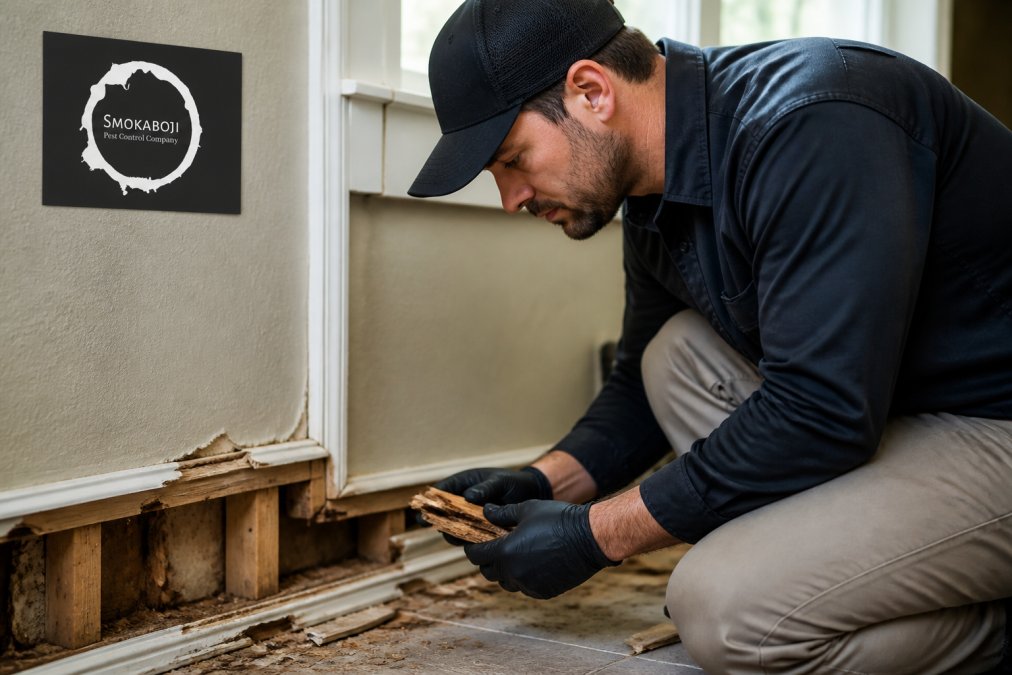
 comparison
How to Identify Carpenter Ants vs Termites
Table of Contents
- Key Physical Differences: Carpenter Ants vs Termites
- Signs of Carpenter Ant Infestation
- Termite Damage vs Carpenter Ant Damage
- How to Inspect for Both Pests Safely
- Regional Species Variations
- Cost of Treatment and When to Call a Pro
- Frequently Asked Questions
Last Updated: September 16, 2026
Key Physical Differences: Carpenter Ants vs Termites
Learning how to identify carpenter ants vs termites comes down to three body features: termites have a straight waist and straight, beaded antennae; carpenter ants have a pinched waist (pedicel) and elbowed antennae bent at 90 degrees. Reproductive termites have four equal-length wings, while swarmer carpenter ants have longer front wings; carpenter ants are black, red, or both, termites cream, white, or light brown.
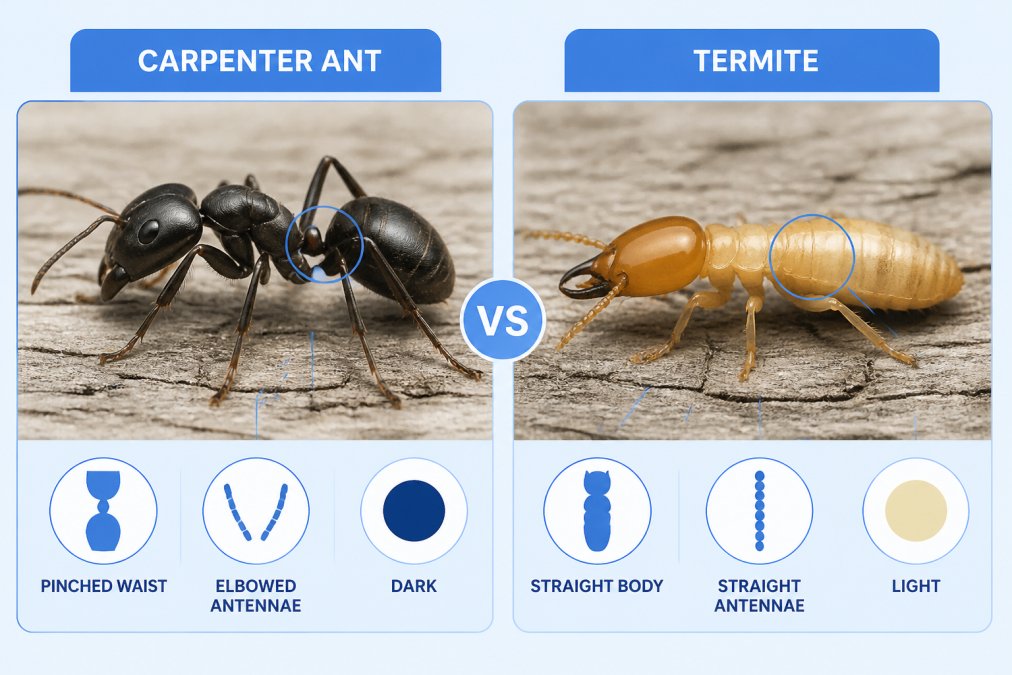
Most homeowners spot a swarmer or wing pile and panic before checking the waistline, a two-second check that settles the question.
Signs of Carpenter Ant Infestation
The clearest sign of carpenter ant infestation is frass, sawdust-like shavings and insect parts pushed from nest openings. Carpenter ants don't eat wood; they excavate it, leaving smooth galleries (Carpenter Ants). Watch for frass near baseboards or crawl spaces, rustling in walls at night, discarded wings, and worker ants trailing along foundations, wires, or tree limbs.
Termite Damage vs Carpenter Ant Damage
Termite damage vs carpenter ant damage differs once you open a wall: termites eat along the grain, leaving soft, hollowed wood with mud tubes; carpenter ants cut across the grain, producing clean, smooth galleries.
| Feature | Termite Damage | Carpenter Ant Damage |
|---|---|---|
| Wood surface | Blistered, soft, hollow | Clean, smooth, intact |
| Gallery direction | Along the grain | Across the grain |
| Debris inside | Mud tubes, soil, feces | Frass, no mud |
Termites build mud tubes between soil and wood, a sign carpenter ants never leave, and need soil contact, so damage often starts near foundations.
How to Inspect for Both Pests Safely
DIY inspection is worth doing, but safety first: wear gloves, long sleeves, and a dust mask, never pry open walls near wiring, and avoid disturbing large nests. Check the foundation for mud tubes and frass, tap baseboards and sill plates for hollow spots, and call a licensed professional if you find live activity.
Our licensed technicians inspect for both pests and confirm identification before recommending treatment, since the two require very different approaches.
Regional Species Variations
Species vary by region: upper Midwest carpenter ants tend to be black or bicolored, colder states mostly see eastern subterranean termites, and warmer, wetter regions see more aggressive termite pressure. Carpenter ants swarm in spring and early summer, termites often after warm rains.
Cost of Treatment and When to Call a Pro
Professional inspection cost depends on property size, accessibility, and whether treatment is preventative or active; most companies quote after an on-site evaluation. Pricing for treatments depends on the specific pest, the extent of the infestation, and the required treatment methods. We recommend contacting us for a customized quote.
Frequently Asked Questions
Is it worse to have carpenter ants or termites?
Termites cause more severe structural damage faster because they eat wood 24/7 and can compromise load-bearing members within a few years. Carpenter ants tunnel through wood but don't eat it, so damage progresses more slowly. Both require prompt treatment. A professional pest inspection can determine which pest you have and how far the damage has spread.
What do termite droppings look like compared to carpenter ant frass?
Termite droppings, called frass, look like tiny, uniform pellets roughly the size of sand grains and are often piled near kick-out holes. Carpenter ant frass is coarser and contains wood shavings mixed with insect body parts. Spotting either near wood surfaces means an active infestation and warrants a professional inspection.
Do carpenter ants eat wood like termites?
No. Carpenter ants tunnel through wood to build nests but do not consume it for food. Termites actually eat cellulose in wood. This difference explains why carpenter ant damage often looks like clean, smooth galleries while termite damage leaves behind a honeycombed, hollowed-out structure.
Two pests, two very different problems. Misidentifying them means the wrong treatment, wasted money, and continued structural damage. Smokaboji Pest Control offers fully licensed and insured technicians, customized treatment plans, and preventative maintenance to keep wood-destroying insects out for good. Get started with Smokaboji Pest Control and protect your home before the damage spreads.