 how-to
How to Stop Spiders on Docks: A Complete Guide
Table of Contents
- Why Spiders Congregate on Docks and Boat Covers
- Natural Spider Repellents for Boat Docks
- How to Prevent Spider Webs on Boat Docks
- Mechanical Removal Methods for Existing Infestations
- Safe Pest Control for Marine Environments
- Professional Treatment and Long-Term Protection
- Conclusion
Last Updated: August 11, 2026
Why Spiders Congregate on Docks and Boat Covers
Docks attract spiders for one simple reason: abundant food sources. Insects swarm around docks because of lights, moisture, and water reflection, creating an all-you-can-eat buffet for spiders establishing territories. Once spiders arrive, they spin cobwebs across railings, mooring lines, boat covers, and topsides.
Docks are open-air spaces with constant environmental exposure, high humidity, and minimal shelter from predators, nearly perfect conditions for hunting and reproduction. The bilge areas of boats, boat covers, and undersides of dock pilings provide protected spaces where spiders lay egg sacs and establish breeding grounds. As temperatures drop in fall, spiders become more aggressive about establishing winter colonies, seeking exactly the shelter that covered boats and dock structures provide.
At Smokaboji Pest Control, we've found that the most effective approach combines understanding spider behavior with targeted intervention. Spiders aren't randomly choosing your dock; they're responding to environmental conditions that make your property ideal for survival. Addressing those conditions, not just removing visible webs, stops spiders on docks long-term.
Natural Spider Repellents for Boat Docks
Peppermint Oil and Vinegar Solutions
Peppermint oil and white vinegar are the most commonly recommended natural spider repellents. Peppermint oil's menthol content irritates spider sensory receptors, while vinegar's acidity makes surfaces unpleasant for web-building. Neither kills spiders, but both discourage colonization.
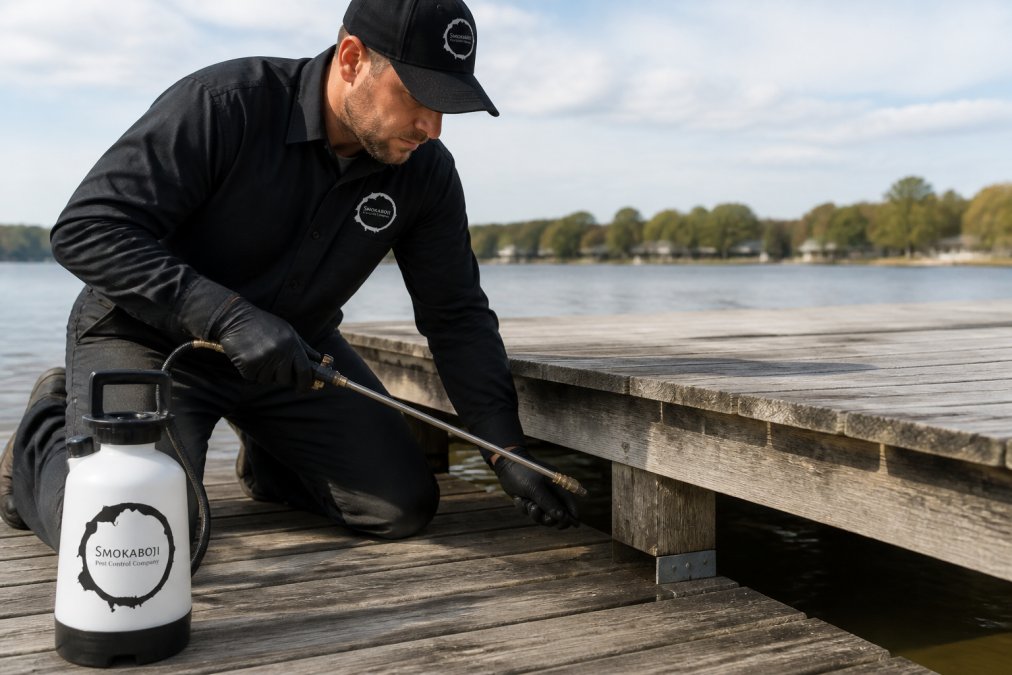
Mix 15-20 drops of pure peppermint essential oil with one quart of water and a few drops of dish soap to help the mixture adhere to surfaces. Apply to dock railings, boat covers, and areas where spiders congregate. White vinegar works similarly: a 1:1 ratio of vinegar to water creates a potent deterrent. Spray directly on affected areas, focusing on corners, under railings, and along mooring lines where egg sacs commonly appear.
The limitation of natural repellents is their temporary nature. Both wash away with rain or water splash, requiring reapplication every 7-10 days. These solutions work best as preventative maintenance during low-infestation periods, not for established infestations.
Physical Barriers and Preventative Sprays
Physical barriers prevent spiders from establishing webs in the first place. Fine mesh or netting installed over boat covers and dock structures eliminates the solid surfaces spiders prefer for web anchoring. For boat covers, use breathable, tight-fitting covers that minimize gaps where spiders can enter. A properly sealed cover reduces spider colonization by up to 80% compared to loose alternatives.
Preventative sprays differ from repellent sprays in composition and duration. While peppermint oil and vinegar are natural deterrents, preventative sprays contain biodegradable surfactants and plant-based compounds designed to create longer-lasting barriers, typically maintaining effectiveness for 2-4 weeks depending on weather exposure.
Apply preventative sprays to all dock surfaces during spring and early fall when spiders begin establishing colonies. Focus on areas where spiders typically build: under railings, around light fixtures, along mooring lines, and in corners where dock structures meet.
How to Prevent Spider Webs on Boat Docks
Seasonal Timing and Breeding Cycle Management
Spider breeding cycles follow predictable seasonal patterns. In spring, spiders emerge from dormancy and establish new territories, the optimal time to implement preventative measures before populations expand. Summer brings peak activity and reproduction. Fall represents the critical prevention window: as temperatures drop, spiders aggressively establish winter colonies and lay egg sacs that will overwinter and hatch in spring. Winter is dormancy, but egg sacs remain viable and should be removed to prevent spring hatching.
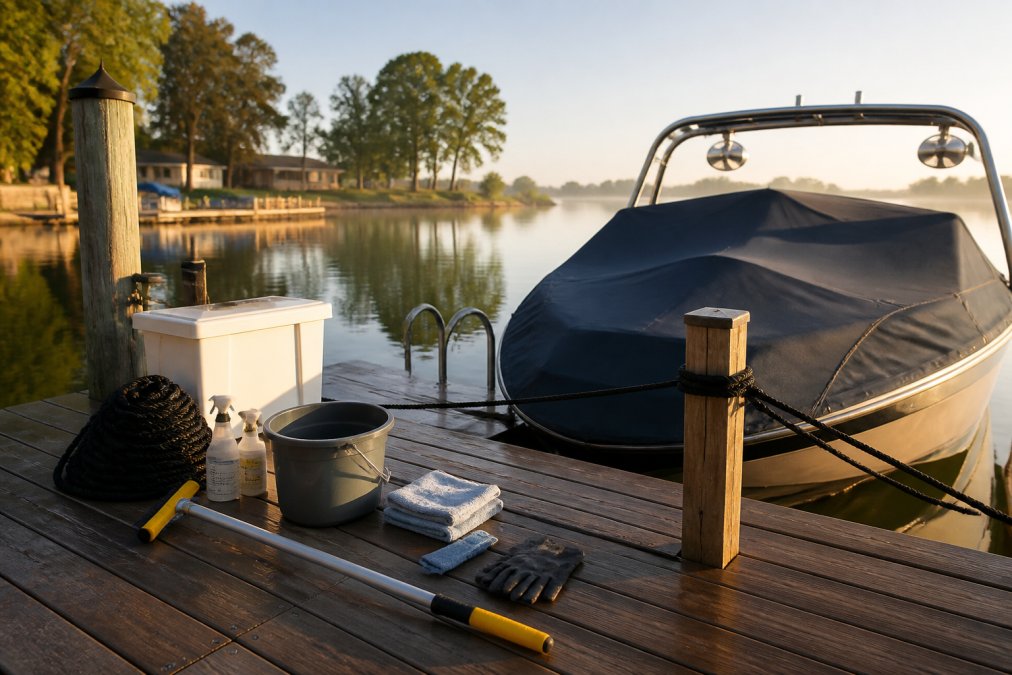
Effective prevention requires seasonal treatments aligned with spider biology: preventative applications in spring and fall, maintenance treatments in summer, and egg sac removal in winter. One-time treatments fail because they don't address the full breeding cycle.
Regular Maintenance and Cleaning Schedules
Consistent maintenance prevents spider colonization more effectively than any chemical treatment. A biweekly cleaning schedule removes fresh webs before spiders establish permanent territories. Most spiders require 3-5 days to complete a web and begin hunting; regular removal disrupts this cycle.
Establish a maintenance routine including weekly visual inspection for new webs and egg sacs, biweekly removal of visible cobwebs, monthly deep cleaning of boat covers and railings, seasonal egg sac removal, and quarterly reapplication of preventative sprays. Use soft-bristle brushing followed by rinsing; avoid high-pressure washing during routine maintenance as it damages boat covers.
Document your maintenance schedule. Consistent, scheduled maintenance outperforms occasional aggressive cleaning because spiders respond to regular disturbance by seeking calmer environments.
Mechanical Removal Methods for Existing Infestations
Pressure Washing and Scrubbing Techniques
Pressure washing removes spider webs, egg sacs, and droppings from dock surfaces, but requires careful technique. Use a pressure washer set to 1,500-2,000 PSI maximum. Higher pressures damage boat covers and degrade wood pilings.
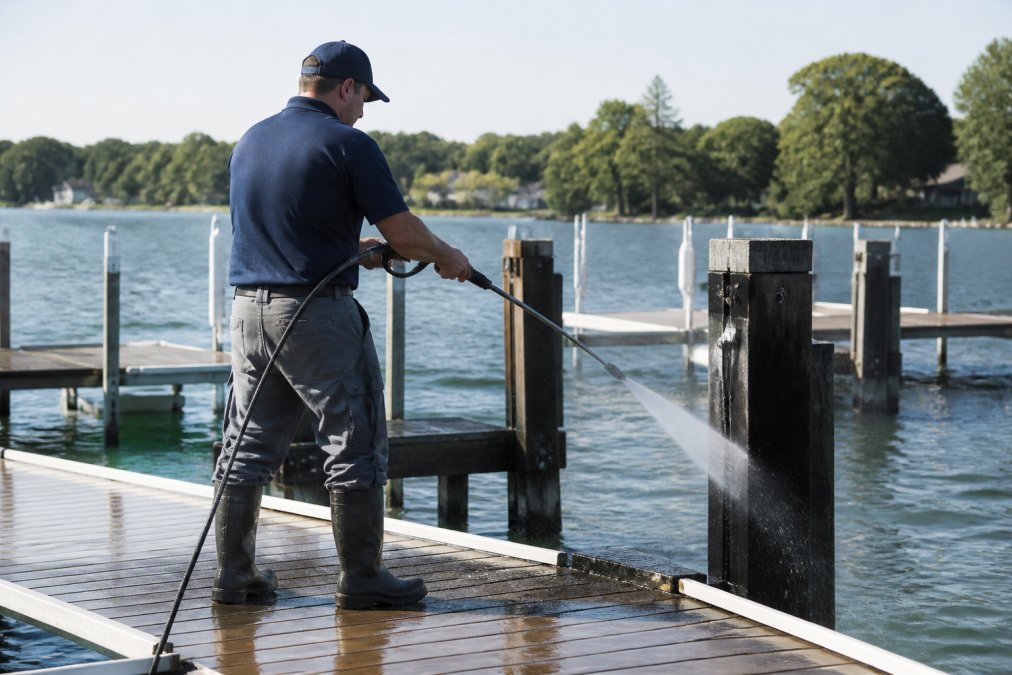
Start from the top of dock structures and work downward. For boat covers, use a soft-bristle brush instead of pressure washing to preserve material integrity. Scrubbing techniques work well for textured surfaces like wooden pilings and concrete decking, removing embedded spider droppings that water alone cannot dislodge.
Perform aggressive cleaning in early spring (April-May) and late fall (September-October). Spring cleaning removes winter egg sacs and debris, preventing spring infestations. Fall cleaning removes summer population buildup before spiders establish winter colonies.
Removing Egg Sacs and Spider Droppings
Egg sacs are the most critical removal target because each sac contains 50-300 spiderlings. Egg sacs appear as small, papery, tan-colored bundles attached to protected surfaces, typically found in corners, under railings, inside boat covers, and along mooring lines. Use a stiff brush or scraper to dislodge sacs, then dispose of them immediately away from your property.
Spider droppings accumulate on surfaces below active web sites, appearing as small dark specks or stains. Removing droppings requires scrubbing and pressure washing. For boat covers, use a soft brush with mild detergent solution. For dock surfaces, pressure washing at moderate PSI removes stubborn droppings without damaging underlying material.
Safe Pest Control for Marine Environments
Water-Safe Insecticides and Biodegradable Options
Treating spiders in marine environments requires special consideration because runoff enters water systems. Water-safe insecticides are specifically formulated to break down quickly and not bioaccumulate in water organisms. Biodegradable options include spinosad-based products and neem oil derivatives, which break down rapidly in sunlight and water with minimal impact on non-target organisms.
When selecting insecticides, verify the product label explicitly states "safe for use near water" or "approved for aquatic environments." Apply during calm weather when wind won't carry spray toward water, and in late evening when spiders are most active.
Material Compatibility and Environmental Impact
Different dock and boat materials require different treatment approaches. Wooden pilings tolerate most water-safe insecticides, but test products on inconspicuous areas first. Fiberglass boat covers are sensitive to certain compounds that can cause etching or discoloration. Metal railings can corrode if treated with acidic solutions; peppermint oil and vinegar solutions are generally safe for metal.
Spiders are beneficial organisms that control insect populations. Excessive spider control can lead to insect population explosions. The goal should be managing spider populations to acceptable levels, not complete eradication. Biodegradable options minimize environmental impact while providing effective control. Consider the broader ecosystem when selecting control methods; natural repellents and mechanical removal have zero environmental impact.
Professional Treatment and Long-Term Protection
Professional pest control services offer advantages DIY approaches cannot match. Licensed technicians understand spider behavior, identify spider species (which determines treatment approach), and apply treatments with precision that prevents environmental damage. Professional treatments typically include initial inspection and species identification, targeted application of appropriate treatments, and follow-up visits to monitor effectiveness.
Long-term protection requires combining multiple approaches. Professional treatment eliminates existing infestations. Preventative maintenance prevents new infestations. Seasonal treatments address breeding cycles. This integrated approach provides the most reliable, long-lasting spider control.
Smokaboji Pest Control offers customized dock and boat spider control tailored to your specific situation. Our fully licensed technicians assess your property, identify the spider species causing problems, and develop a treatment plan combining immediate elimination with long-term prevention. We use water-safe treatments that protect aquatic ecosystems while eliminating spider infestations.
Dock spider infestations grow worse without intervention, and DIY solutions often provide only temporary relief. The most effective approach combines professional treatment for immediate elimination with consistent maintenance and preventative measures for lasting protection. Understanding spider behavior, seasonal patterns, and material compatibility transforms dock maintenance into a systematic, predictable process.
If spiders have established a foothold on your dock or boat, professional treatment can eliminate the problem quickly. Contact Smokaboji Pest Control for a thorough inspection and customized treatment plan. Our team uses water-safe insecticides, offers preventative maintenance programs, and provides prompt response to urgent pest issues, ensuring your dock and boat remain spider-free throughout the year.
Frequently Asked Questions
What repels spiders immediately on docks?
Peppermint oil and white vinegar are among the fastest natural repellents. Mix peppermint oil with water in a spray bottle and apply directly to spider webs, railings, and mooring lines, spiders typically flee within minutes. Pressure washing also provides immediate removal of existing webs and egg sacs. For faster, longer-lasting results, water-safe insecticides with residual effects can eliminate spiders on contact and prevent them from returning for weeks.
How do I know if a spider treatment will actually prevent them from coming back?
Look for treatments with residual effects, meaning they create a protective barrier that continues working after application. Professional-grade, water-safe insecticides designed for marine environments typically provide 2-4 weeks of protection. Preventative maintenance matters equally: regular cleaning, removing egg sacs before they hatch, and sealing gaps in boat covers prevent new infestations. A licensed pest control professional can assess your dock's breeding cycle and recommend a customized plan with guaranteed follow-up treatments if spiders return.
Is it safe to use chemical pest control near water and boats?
Yes, if you use water-safe, biodegradable insecticides specifically formulated for marine environments. These products minimize environmental impact and runoff into the water while remaining effective against spiders and other pests. Always check product labels for EPA registration and marine-safe certifications. Avoid applying chemicals directly to bilge areas or where runoff enters water. Professional pest control services know which products are compatible with boat materials and local water regulations, reducing risk to your investment and the environment.
Why are there so many spiders on docks compared to other outdoor spaces?
Docks attract spiders because they're ideal hunting grounds. Lights on docks and boats draw insects, which spiders feed on, creating a reliable food source. The structure of dock pilings, railings, and boat covers provides protected spaces for building webs and laying egg sacs. Proximity to water also means higher humidity, which spiders prefer. Understanding this breeding cycle helps you time preventative treatments for maximum effectiveness, treating in early spring before egg sacs hatch is far more efficient than waiting until infestation is heavy.
This article was written using GrandRanker