 how-to
How to Stop Mice in Trailers: A Complete Guide
Table of Contents
- Why Mice Invade Trailers and How to Identify Entry Points
- How to Seal Trailer Underbelly for Mice
- Best Mouse Repellent for Campers and Trailers
- How to Mouse Proof a Camper for Winter
- Mechanical Traps and Baiting Strategies
- Post-Infestation Sanitation and Cleanup
- Common Mistakes to Avoid When Stopping Mice
- Conclusion
Why Mice Invade Trailers and How to Identify Entry Points
Mice invade trailers for shelter, warmth, and food access. Trailers are especially vulnerable because their construction differs from permanent homes: the underbelly is exposed, access panels are numerous, and gaps around utilities create natural entry highways. Unlike houses with sealed foundations, trailers sit elevated with exposed plumbing, electrical conduits, and chassis components that rodents exploit.
Common mouse entry points in trailers
Mice need only a gap the size of a dime to enter. Plumbing penetrations where water lines enter are primary access routes, often poorly sealed during manufacturing. Electrical conduits running along the underbelly create natural tunnels. The trailer underbelly itself, typically open mesh or thin material, is a major vulnerability. Rodents chew through deteriorated mesh or find existing gaps. Access panels for waste tanks, water systems, and furnace components are frequent entry points. Gaps around wheel wells, axles, roof vents, and door seals provide additional access.
Signs of active rodent infestation
Fresh droppings, small, dark, and rice-shaped, found along walls or near food sources indicate active presence. Gnaw marks on food packaging, insulation, or wood signal active feeding and nesting. A musky odor in localized areas indicates mice establishing territory. Nesting materials gathered in corners, cabinets, or wall cavities mean the infestation is established. Scratching sounds in walls at night indicate active movement.
How to Seal Trailer Underbelly for Mice
Sealing the underbelly is the most effective long-term solution. Physical barriers work where repellents fail because mice cannot bypass them. The goal is to eliminate every gap larger than a dime using systematic inspection and multiple materials.
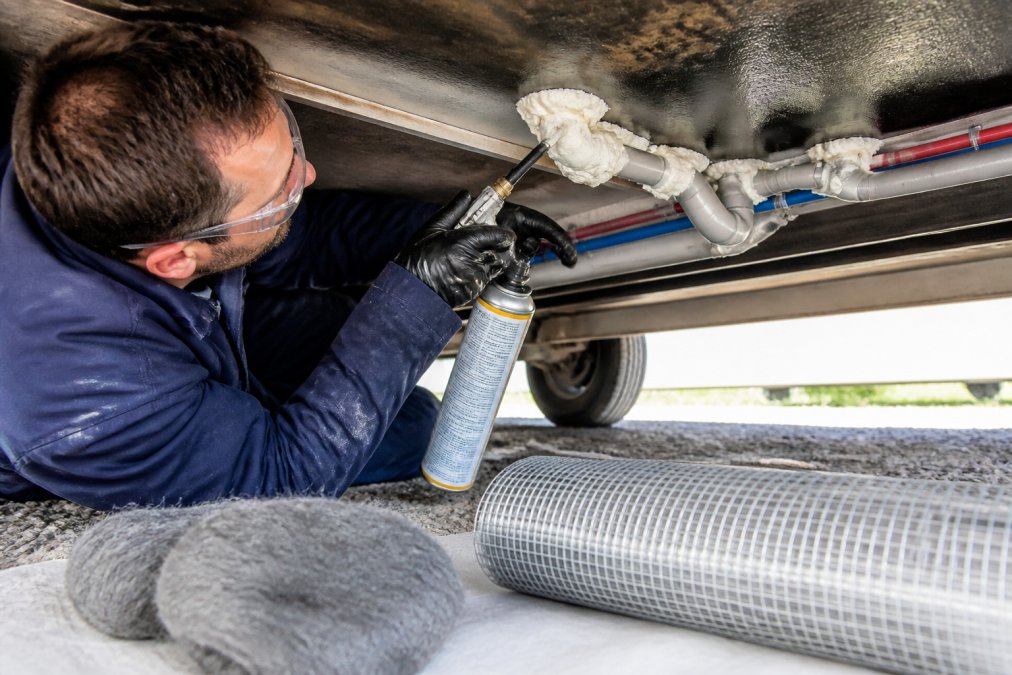
Materials that work: steel wool, hardware cloth, and spray foam
Steel wool is the first line of defense for small gaps. Pack it tightly into gaps around pipes and conduits, then combine with caulk or expanding foam to hold it permanently. Hardware cloth (1/4-inch mesh) is superior for larger gaps and high-traffic areas. This galvanized metal mesh resists rodent teeth indefinitely. Install it over vents, around access panels, and across compromised underbelly mesh. Secure with galvanized screws or staples, overlapping seams by at least two inches.
Spray foam (polyurethane expanding foam) fills irregular gaps quickly and creates an airtight seal. However, mice can eventually chew through dried foam. Always combine spray foam with hardware cloth or steel wool for permanent exclusion. Caulk alone is insufficient for rodent exclusion, mice will chew through it. Use caulk only as a secondary seal after installing hardware cloth or steel wool.
Step-by-step sealing process
Step 1: Inspect and document all entry points. Crawl under the trailer with a flashlight and photograph every gap, penetration, and damaged area. Mark gaps by size and document locations of underbelly mesh damage, plumbing penetrations, electrical conduits, vents, and access panel edges.
Step 2: Clean and prepare the work area. Remove debris, old insulation, and droppings. Wear gloves and a respirator when handling contaminated material. Clean surfaces with a damp cloth and let dry completely before applying sealants.
Step 3: Install hardware cloth over large underbelly gaps. Cut hardware cloth to size with tin snips, overlapping edges by two inches. Secure with galvanized screws spaced four inches apart.
Step 4: Seal plumbing and electrical penetrations. Wrap steel wool around pipes and conduits where they enter the trailer. Pack tightly into gaps. Apply expanding foam around the steel wool, then cover hardened foam with hardware cloth or additional steel wool secured with caulk.
Step 5: Protect vents and exhaust openings. Install 1/4-inch hardware cloth over furnace vents, water heater exhaust, and range hood vents. Secure with screws or rivets, ensuring no gaps around edges.
Step 6: Seal access panel edges. Apply weatherstripping or caulk around waste tank, furnace, and water system panel edges. Install hardware cloth backing before caulking if gaps are large.
Step 7: Address wheel wells and frame gaps. Pack steel wool into gaps where the frame meets the underbelly near wheels. Secure with foam and hardware cloth if needed.
Step 8: Inspect roof penetrations. Seal around vents, antennas, and air conditioning units from inside the trailer using foam and hardware cloth. Caulk the exterior base to prevent water intrusion and rodent entry.
Step 9: Test the seal. Walk around the trailer exterior and look for remaining gaps. Shine a flashlight along the underbelly. If you can see light through a gap, mice can enter. Reseal immediately.
Step 10: Monitor and maintain. Inspect seals seasonally, especially before fall. Weather, UV exposure, and vibration can degrade seals. Reapply caulk or replace hardware cloth as needed.
Best Mouse Repellent for Campers and Trailers
Repellents alone cannot stop mice, but they serve a role in comprehensive prevention. Mice rely on scent to navigate and communicate. Strong odors can deter them, but they habituate over time and lose effectiveness within weeks or months.
Natural repellents: peppermint oil and scent-based deterrents
Peppermint oil is the most widely used natural repellent. Soak cotton balls in peppermint essential oil and place them along walls, in cabinets, and near entry points. Refresh every two weeks as scent fades. Peppermint works best in small, enclosed spaces; in large open areas, the scent disperses too quickly. Not all mice respond equally to peppermint.
Ammonia-soaked rags exploit mice's sensitivity to strong odors. Place near entry points and active areas. The ammonia smell mimics predator urine, which can deter rodents, but effectiveness is temporary.
Ultrasonic repellent devices emit high-frequency sounds intended to irritate rodents. Scientific evidence for effectiveness is mixed. Mice can habituate to sound over time, reducing any deterrent effect.
Chemical vs. non-toxic options
Chemical repellents typically contain capsaicin or other irritants applied as sprays or dusts. They're more potent than natural alternatives but require frequent reapplication and are toxic to pets and children.
Non-toxic options include predator urine (coyote or fox urine), which signals danger to rodents. However, it's expensive and requires regular reapplication.
How to Mouse Proof a Camper for Winter
Winter is peak season for rodent infestations. As outdoor temperatures drop, mice seek shelter and stored food. Begin winterization in late August or early September, before mice intensify their search for winter quarters.
Winterization checklist and timing
Start by mid-September. Walk the entire perimeter checking for gaps, cracks, and deteriorated seals. Seal all entry points using the step-by-step process outlined above. Remove all stored food or transfer to airtight, rodent-proof containers. Cardboard boxes and standard plastic containers are not rodent-proof; use glass jars with tight-fitting lids or heavy-duty containers with locking mechanisms.
Clean the interior thoroughly, removing all food crumbs, spills, and debris. Vacuum under cushions, behind appliances, and in cabinets. Inspect plumbing and remove standing water. Fix leaks and drain tanks if the camper won't be used. Check the furnace and water heater for signs of previous rodent activity. Trim vegetation around the camper within three feet to remove protective cover.
Climate-specific strategies for cold storage
In cold climates, mice are most active from September through November. Implement sealing and sanitation during this window. For campers stored outdoors, elevate them on blocks or a platform to create visibility underneath and make access harder. Clear snow away from the base during winter to ensure vents remain unobstructed.
For trailers stored in heated barns or garages, the warm environment is extremely attractive to mice. These locations require extra vigilance and more thorough sealing. In milder climates, mice remain active year-round, but activity peaks in fall and spring.
Mechanical Traps and Baiting Strategies
Traps are essential for addressing existing infestations and monitoring for new activity. Different trap types have different strengths.
Snap traps vs. glue traps: placement and effectiveness
Snap traps are the most effective mechanical traps for mice. They kill instantly when triggered correctly, minimizing suffering. Set them perpendicular to walls where mice travel, as rodents prefer running along edges. Place traps in areas where you've seen droppings or gnaw marks. Space traps every six feet along mouse travel routes.
Proper bait placement and trigger sensitivity are key to snap trap success. Bait should be placed on the trigger plate so the mouse must press it to access food. Use a pea-sized amount of peanut butter, chocolate, or dried fruit. Too much bait allows mice to eat without triggering the trap.
Glue traps are effective for monitoring and trapping but are considered inhumane by many, and some regions restrict their use. They immobilize the mouse on a sticky surface, and the mouse dies from stress, dehydration, or suffocation over hours. However, glue traps provide clear evidence of mouse presence and size, helping assess infestation severity.
Electronic traps deliver a lethal shock. They're more expensive than snap traps but are quick and humane. Some models alert you when a mouse is trapped, allowing prompt removal and sanitation.
Baiting techniques that attract rodents
Peanut butter is highly attractive to most mice. Chocolate, dried fruit, and nuts are also effective. Place small amounts directly on the trigger plate to force the mouse to engage with the trigger. Bait placement is more important than bait type.
Create bait trails leading to traps by placing small amounts in a line, then a larger amount on the trigger. This guides mice to the trap and builds confidence. Refresh bait every few days. Set multiple traps, at least two to three per room where activity has been detected. Monitor traps daily and remove dead mice promptly.
Post-Infestation Sanitation and Cleanup
After eliminating mice, thorough sanitation is essential. Mice leave behind urine, droppings, and nesting materials contaminated with bacteria and viruses. Improper cleanup can expose you to serious health risks, including hantavirus.

Safe removal of nesting materials and contamination
Never vacuum mouse droppings or nesting materials. Instead, spray contaminated areas with a disinfectant solution (one part bleach to ten parts water) and let sit for five minutes. This kills pathogens and prevents dust from becoming airborne.
Wear personal protective equipment during cleanup: a respirator with HEPA filtration, gloves, long sleeves, and pants. Place contaminated materials in doubled plastic bags, seal, and dispose in regular trash. Focus cleanup on areas where mice have nested or spent time: wall cavities, cabinet spaces, under appliances, and storage areas. Wipe down surfaces with disinfectant. Replace insulation that has been contaminated or chewed.
Preventing hantavirus exposure during cleanup
Hantavirus is a serious respiratory illness transmitted through mouse droppings and urine. Never touch droppings with bare hands. Never sweep or vacuum them. Spray all contaminated areas with bleach solution and allow it to sit for five minutes before wiping. This kills the virus and makes cleanup safe.
If you experience flu-like symptoms (fever, muscle aches, cough) within two weeks of cleanup, seek medical attention immediately and mention potential hantavirus exposure. For extensive contamination, consider hiring a professional biohazard cleanup service.
Common Mistakes to Avoid When Stopping Mice
The most common mistake is treating mice as temporary rather than structural problems. Setting traps and catching a few mice doesn't solve the issue, without sealing entry points, mice return within weeks. Underestimating the number of entry points is another frequent error. A thorough crawl under the trailer with a flashlight is essential.
Using repellents as the primary solution is ineffective. These products work best as supplementary measures combined with physical exclusion. Storing food improperly is critical, all food must be transferred to airtight, rigid containers with locking lids. Failing to winterize early is a seasonal mistake; begin in August or early September.
Not monitoring for activity after sealing is a missed opportunity. Set traps as early warning systems for new mice. Attempting DIY cleanup of heavily contaminated areas without proper protective equipment is dangerous. Professional cleanup is worth the cost for extensive contamination.
Stopping mice in trailers requires physical exclusion, sanitation, and monitoring. Sealing entry points is the foundation; without it, every other measure fails. Smokaboji Pest Control provides expert, reliable pest management solutions for residential and commercial properties throughout Northwest Iowa and Southwest Minnesota. Our experienced, fully licensed, and insured technicians utilize cutting-edge chemicals and practices to eliminate common and complex pest issues, including spiders, cockroaches, bed bugs, and mice. If you're dealing with an active infestation or want to prevent one before winter, contact Smokaboji Pest Control for a professional inspection and customized treatment plan. We're available for urgent calls and offer preventative maintenance plans designed specifically for trailers and seasonal properties.
Frequently Asked Questions
What smells do mice absolutely hate that are safe for trailers?
Peppermint oil is the most effective natural deterrent, mice actively avoid its strong scent. Place cotton balls soaked in peppermint oil near entry points and in storage areas. Other scents mice dislike include ammonia, capsaicin (hot pepper), and clove oil. However, natural repellents work best as part of a complete exclusion strategy; they should never be your only defense against rodent infestation. Combine them with sealing entry points for reliable results.
What are the best materials for sealing gaps in a trailer underbelly?
Steel wool and hardware cloth are the most effective chew-proof materials. Mice cannot penetrate steel wool, making it ideal for stuffing gaps before sealing with spray foam. Hardware cloth (quarter-inch mesh) provides a durable barrier around access panels and plumbing penetrations. Spray foam alone is not rodent-proof, mice will chew through it. Always combine foam with steel wool or hardware cloth for permanent exclusion. Caulk works for hairline cracks but won't stop determined rodents.
How do I prevent mice from entering my trailer during winter storage?
Winter is peak rodent season because mice seek warmth and shelter. Start winterization 4-6 weeks before cold weather arrives. Seal all gaps in the underbelly using steel wool and spray foam, inspect plumbing penetrations and electrical conduits, and remove all food sources and nesting materials. Store the trailer in a well-ventilated location away from brush and debris. Use snap traps or professional baiting inside during storage months. Moisture control is critical, fix any leaks that attract mice. Professional pest control services can set up preventative treatments before winter arrives.
Is professional pest control necessary, or can I handle mice in my trailer myself?
DIY exclusion and trapping work for minor infestations caught early, but professional pest control is more effective for recurring problems or established infestations. Trained technicians identify hidden entry points you might miss, apply targeted treatments safely around children and animals, and provide follow-up monitoring. If you've tried traps and repellents without success, or if you're dealing with a rental property across multiple counties, professional service saves time and prevents reinfestation. Smokaboji Pest Control offers customized treatment plans and preventative maintenance for trailers throughout the region.
This article was written using GrandRanker