 ultimate-guide
Cost Factors for Commercial Pest Control Services
Table of Contents
- Factors Affecting Pest Control Quotes
- Commercial Pest Control Contract Pricing Explained
- Pest Control Service Frequency for Businesses
- How Service Frequency Affects Long-Term Costs
- Comparing Commercial Pest Control Options
- Frequently Asked Questions
Last Updated: September 11, 2026
Factors Affecting Pest Control Quotes
Commercial pest control costs come down to facility size, pest type, infestation severity, service frequency, and compliance obligations.
A commercial pest control contract is a recurring agreement covering treatment scope, service frequency, and compliance documentation.
U.S. Environmental Protection Agency pesticide regulations govern what treatments can be applied in commercial settings, and those requirements shape both the scope and the cost of any contract.
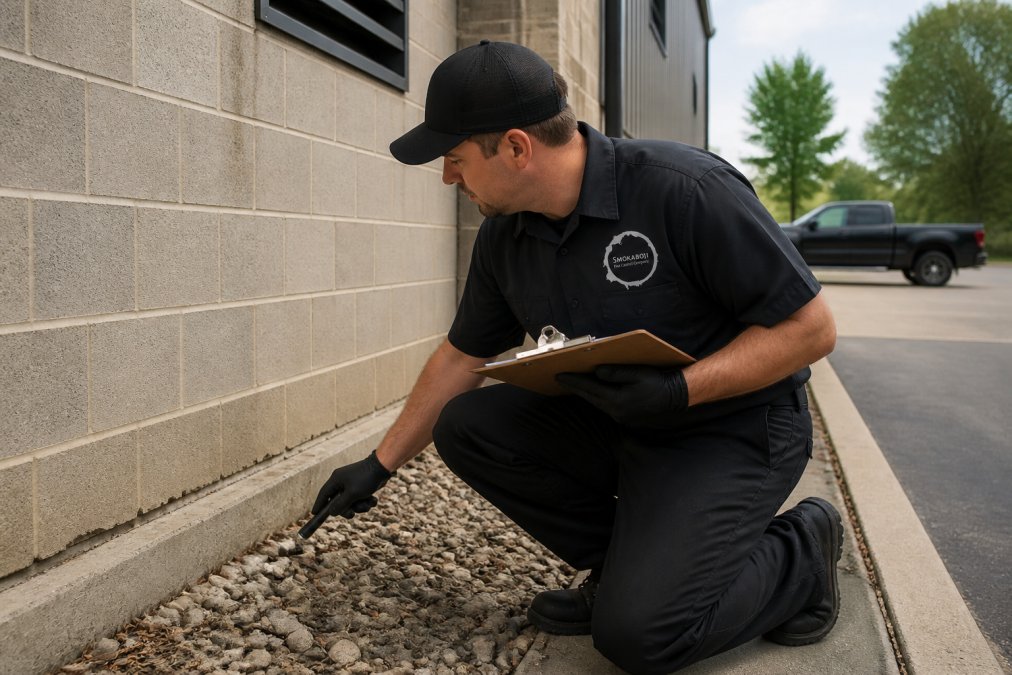
Square Footage and Facility Size
Square footage is the biggest lever on price: a 2,000-square-foot retail space needs far less product, labor, and equipment than a 40,000-square-foot warehouse. Food service operations also face routine health inspections, so providers build in more frequent visits and detailed reporting.
Pest Type and Infestation Severity
Pest identification determines the treatment protocol: rodents, cockroaches, bed bugs, and spiders each require different methods, and some take multiple visits. Severity compounds cost: a preventive account is straightforward, while an established bed bug problem in multiple units requires repeat treatments and tenant coordination.
Geographic Location and Market Rates
Labor costs, travel distance, and regional pest pressure shift the baseline: a dense commercial district routes technicians efficiently, while a rural property 40 miles out adds drive time to every visit.
Regulatory and Compliance Requirements
Industries with strict compliance standards pay more for documentation, not just treatment. Healthcare facilities, food processing plants, and childcare centers need service records that satisfy inspectors, and providers build that administrative work into the contract.
Commercial Pest Control Contract Pricing Explained
Commercial pest control contract pricing usually follows one of three models.
| Contract Type | Billing Structure | Best For | Typical Scope |
|---|---|---|---|
| Monthly retainer | Fixed monthly fee | Restaurants, food service | Scheduled visits, unlimited callbacks |
| Quarterly service | Per-visit billing | Offices, retail | Four visits per year, monitoring |
| One-time treatment | Single flat fee | Isolated infestations | Targeted treatment, no follow-up |
A monthly retainer spreads cost evenly and usually includes emergency response; quarterly agreements cost less per year but leave longer inspection gaps, and one-time treatments solve an active problem without ongoing protection.
What's Included in a Standard Agreement
Most recurring agreements cover scheduled inspections, treatment applications, monitoring station checks, and written service reports. Some include unlimited callbacks; others charge per callback.
Contractual Obligations and Terms
Contract length, cancellation terms, and price escalation clauses deserve attention before you sign: lower monthly rates for a 12-month commitment make sense if you plan to stay, but lock you in if service disappoints.
Contract Negotiation Strategies
If you manage several locations, ask for portfolio pricing rather than separate contracts per site. Providers can route technicians across your properties in a single day, reducing their cost and giving you room to negotiate.
Pest Control Service Frequency for Businesses
Pest control service frequency for businesses depends on pest pressure, facility type, and compliance requirements. Most commercial accounts fall between monthly and quarterly service, with high-risk facilities on a more frequent schedule.
Matching Frequency to Your Facility
- Restaurants and food service: Monthly or more frequent, given health code compliance demands
- Warehouses and distribution centers: Quarterly with monitoring stations, monthly during peak season
- Office buildings: Quarterly, with callbacks as needed
- Healthcare and childcare: Monthly, with detailed reporting for inspectors
- Retail and hospitality: Quarterly, adjusted for foot traffic and loading dock activity
Preventative Maintenance vs. Reactive Service
Preventative maintenance costs more upfront and less over time; reactive service costs nothing until you have a problem, then spikes. The cost-benefit calculation favors prevention for most commercial properties: recurring visits keep pest activity low and generate the documentation trail inspectors expect.
Vendor Vetting Checklist
Before signing with any provider, run through this list:
- Confirm licensing and insurance for the technicians who will service your property
- Ask for the specific treatment protocols used for your pest concerns
- Request sample service reports so you know what documentation you'll receive
- Clarify the emergency response window for urgent issues
- Confirm whether callbacks between scheduled visits are included or billed separately
- Check references from similar facility types in your area
- Review cancellation terms and price escalation clauses
A provider that hesitates on any of these points is worth a second look; the best commercial pest control providers answer without prompting.
Sustainability and Green Certification Costs
Businesses pursuing green certification sometimes pay more for pest control, since lower-impact products often require more frequent or different application methods. The premium is usually modest, and for businesses marketing on sustainability, the alignment matters.
Integrated pest management combines sanitation, exclusion, and monitoring with targeted chemical use only when necessary, rather than scheduled blanket applications.
Centers for Disease Control and Prevention guidance on integrated pest management outlines how IPM reduces both pest populations and pesticide exposure in commercial settings.
How Service Frequency Affects Long-Term Costs
Frequency and cost move together, but not always as business owners expect: more frequent service costs more per year on paper, yet often less in practice. A restaurant on quarterly service that develops a cockroach problem pays for emergency treatment, follow-ups, and potential health inspection fallout; on monthly service, the same restaurant catches the activity during a routine inspection and addresses it before it spreads. The math favors the higher-frequency plan wherever an infestation would disrupt operations; for low-risk properties, quarterly service with a solid callback policy makes more sense.
Occupational Safety and Health Administration sanitation guidance for workplaces notes that pest control is part of maintaining a safe, sanitary work environment, which puts the cost in the context of overall facility management rather than a standalone expense.
Comparing Commercial Pest Control Options
When evaluating providers, the comparison rarely comes down to price alone. Service scope, response time, documentation quality, and local expertise all factor in.
| Factor | What to Look For | Why It Matters |
|---|---|---|
| Licensing and insurance | Current, verifiable | Protects you if something goes wrong |
| Response time | Defined emergency window | Determines how fast urgent issues get handled |
| Documentation | Sample reports provided | Required for health code compliance |
| Service scope | Written, specific | Prevents paying for visits without treatment |
| Local expertise | Familiar with regional pests | Faster, more accurate treatment |
A provider with deep local knowledge identifies regional pest patterns faster than one working from a national playbook. In Northwest Iowa and Southwest Minnesota, seasonal pest pressure follows predictable patterns, so a local provider can adjust service frequency before problems develop.
Smokaboji Pest Control has served commercial properties in this region since 2018, with fully licensed and insured technicians and customized treatment plans built around each facility's specific needs.
Commercial pest control costs reflect risk, scope, and frequency, and the cheapest quote rarely delivers the lowest total cost. Smokaboji Pest Control offers customized commercial treatment plans, preventative maintenance agreements, and prompt on-call response for urgent pest issues across Northwest Iowa and Southwest Minnesota. Get started with Smokaboji Pest Control and build a pest management plan that holds up to inspection and to daily operations.
Frequently Asked Questions
What factors influence the price of a commercial pest control contract?
The main cost factors for commercial pest control services include facility size in square footage, pest type and infestation severity, service frequency, property type, and local market rates. A large warehouse with a rodent issue requires more labor and materials than a small office with occasional ant sightings. Compliance requirements for food service or healthcare facilities also raise costs because documentation and treatment protocols must meet stricter standards.
How does commercial pest control pricing differ from residential?
Commercial pest control typically costs more than residential service because facilities are larger, pest pressure is higher due to foot traffic and deliveries, and regulatory compliance adds documentation and reporting requirements. A homeowner pays for a single-family treatment, while a business may need an integrated pest management program with sanitation audits, monitoring stations, and emergency response provisions built into a recurring service agreement.
How often should commercial properties schedule pest control services?
Most commercial properties benefit from monthly or quarterly service, depending on facility type and pest activity levels. Food service establishments and healthcare facilities often need monthly visits to maintain health code compliance. Warehouses and office buildings with low pest pressure may manage well with quarterly preventative maintenance. Your provider should adjust frequency based on inspection findings and seasonal pest pressure.