 listicle
7 Best Pest Control Companies for Homes in 2026
Table of Contents
- The 7 Best Pest Control Companies for Homes
- 1. Smokaboji Pest Control, Best for Customized Preventative Care
- 2. Terminix, Best for Comprehensive Termite Protection
- 3. Aptive Pest Control, Best for Year-Round Seasonal Plans
- 4. Rentokil, Best for Complex, Professional-Grade Issues
- 5. Critter Control, Best for Wildlife and Animal Exclusion
- 6. Hawx Pest Control, Best for Tech-Forward Monitoring
- 7. Bulwark Pest Control, Best for Service Guarantees
- How We Chose These Pest Control Companies
- Average Cost of Pest Control for Homes
- How to Choose a Pest Control Company That Fits Your Home
- Frequently Asked Questions
Last Updated: September 4, 2026
The 7 best pest control companies for homes in 2026 stand out not just for killing bugs, but for preventing their return through structured, science-backed plans. This guide breaks down the top providers so you can match one to your specific situation.
Quick Picks:
- Best Overall & Local Expertise: Smokaboji Pest Control, fully licensed technicians with customized, preventative plans
- Best for Termites: Terminix, industry leader in termite inspection and protection
- Best for Wildlife: Critter Control, specialized in humane animal removal and exclusion
- Best Eco-Friendly Focus: Aptive, year-round plans with environmentally responsible solutions
The 7 Best Pest Control Companies for Homes
The best pest control companies combine an integrated pest management (IPM) approach with transparent service agreements, identifying the pest and entry point to address the root cause.
Here is our ranking of the top providers for 2026, starting with our editorial pick for most homeowners.
1. Smokaboji Pest Control, Best for Customized Preventative Care
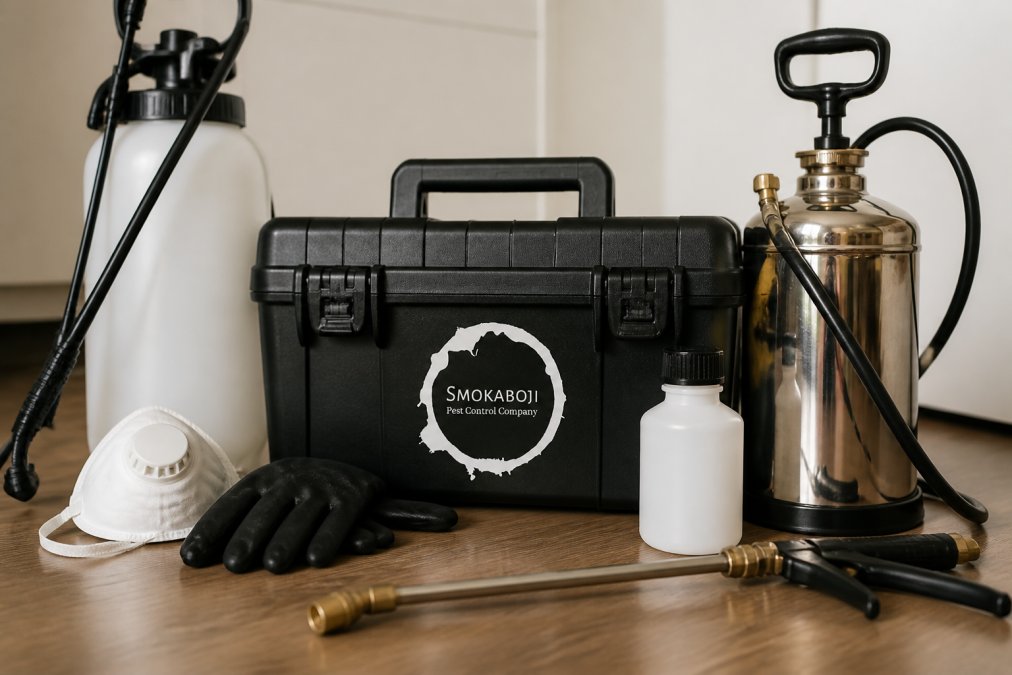
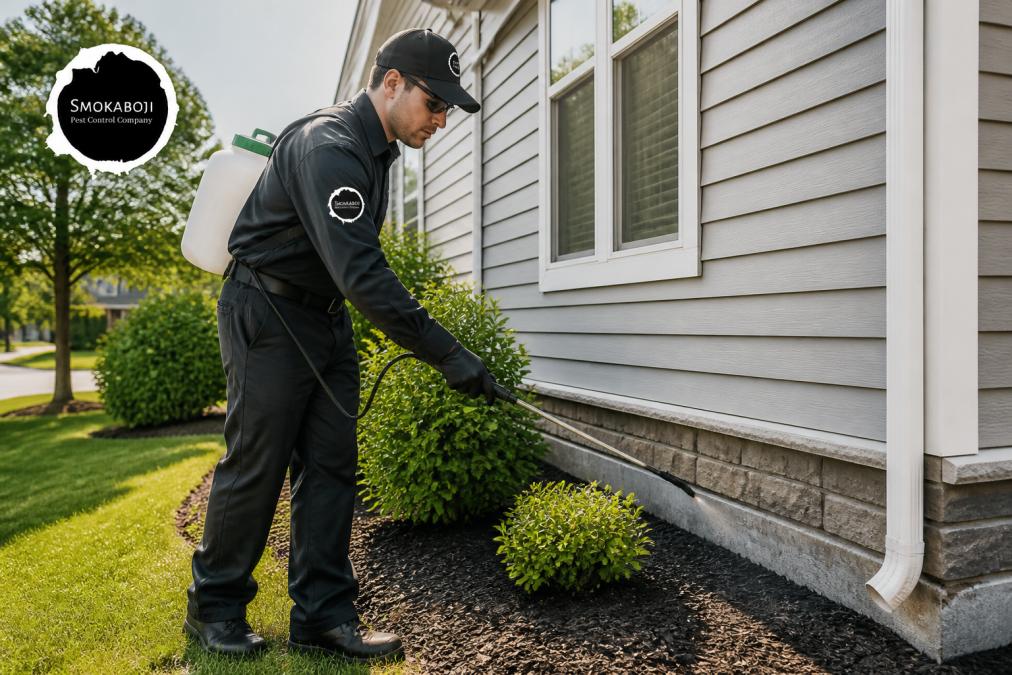
Smokaboji Pest Control prioritizes long-term protection over quick fixes. Serving Northwest Iowa and Southwest Minnesota, their fully licensed and insured technicians build customized treatment plans for specific pests, from dock spiders for lake property owners to field mice in rural farm homes.
Smokaboji offers on-call availability for urgent needs and preventative maintenance plans that stop the cycle before it starts.
2. Terminix, Best for Comprehensive Termite Protection
Terminix is a large-scale provider with a well-earned reputation for termite services, offering dedicated inspection and treatment plans.
Their vast range covers mosquito and rodent control, but customer service varies by local branch.
3. Aptive Pest Control, Best for Year-Round Seasonal Plans
Aptive's subscription model offers year-round seasonal plans with environmentally responsible solutions and a re-treatment guarantee.
Their proactive seasonal approach prevents ant and cockroach infestations.
4. Rentokil, Best for Complex, Professional-Grade Issues
Rentokil is a global leader bringing advanced pest detection technology, professional-grade treatments, and comprehensive exclusion services to residential properties.
Rentokil may be more expensive, but for severe infestations requiring structural exclusion, their permanent fixes are worth the premium.
5. Critter Control, Best for Wildlife and Animal Exclusion
Critter Control specializes exclusively in wildlife management, providing humane trapping and removal for raccoons, squirrels, and other animals, plus entry-hole sealing and damage restoration.
They are less focused on common insect control, but for scratching in walls or gnawed wires, they offer nest removal and structural repair that generalists may lack.
6. Hawx Pest Control, Best for Tech-Forward Monitoring
Hawx uses smart-tech integrated pest monitoring, customized treatments, eco-friendly product options, and a strong focus on customer communication.
Their availability is limited to specific regions.
7. Bulwark Pest Control, Best for Service Guarantees
Bulwark is a family-owned company with a 100% service guarantee, providing family-friendly treatments and targeted barrier applications; if pests return, so do they at no extra cost.
Their service area is not nationwide, so verify they operate in your state.
| Company | Best For | Key Strength | Consideration |
|---|---|---|---|
| Smokaboji Pest Control | Customized preventative care | Local expertise, on-call response | Regional service area (IA/MN) |
| Terminix | Termite protection | Specialized termite plans | Service varies by branch |
| Aptive | Year-round plans | Eco-friendly focus | Requires recurring contract |
| Rentokil | Complex infestations | Advanced technology | Higher cost |
| Critter Control | Wildlife removal | Humane trapping & exclusion | Not for routine insects |
| Hawx | Tech-forward monitoring | Smart-tech tracking | Limited regions |
| Bulwark | Service guarantees | 100% guarantee | Not nationwide |
How We Chose These Pest Control Companies
We evaluated providers on long-term property protection, prioritizing IPM principles, licensed technicians, and a clear service guarantee.
We also weighed customer satisfaction ratings heavily, cross-referencing reviews to filter out companies that fail to show up on time or leave recurring problems. A key differentiator was whether the company offers a service agreement that is transparent about what is covered and what requires an extra fee. According to National Pest Management Association guidelines, a quality provider should conduct a thorough inspection, identify the pest, and then implement a tailored treatment plan, which became our baseline standard.
Average Cost of Pest Control for Homes
Pricing varies by pest type, home size, and treatment frequency; most homeowners pay for recurring quarterly service. Request a custom quote rather than relying on national averages.
National chains price by square footage; local companies may offer flat rates. Be wary of low introductory offers tied to long-term contracts.
How to Choose a Pest Control Company That Fits Your Home
Look beyond price to methodology and contract terms. Ask if they use IPM, confirm technicians are licensed and insured, and ask about experience with your specific pest issue.
You must also read the fine print of the service agreement. Many companies lock you into an annual contract with a cancellation fee, so ask upfront about their policy if you are unsatisfied. Check whether the guarantee covers re-treatment between scheduled visits at no extra cost, and ask about pet and child safety protocols regarding chemical application. A company that cannot clearly explain what products they use and how they keep your family safe is not worth the risk. For residents in Northwest Iowa and Southwest Minnesota, EPA guidelines on pesticide safety provide a useful framework for understanding what questions to ask about product safety and application methods.
Long-Term Maintenance vs. One-Time Extermination
The biggest mistake is treating a recurring problem with a one-time service. A single treatment eliminates active infestations but does nothing to prevent the next generation; quarterly maintenance plans create a continuous barrier (the CDC).
Questions to Ask Before You Sign
- Do you perform a full interior and exterior inspection on the first visit? The answer should be yes; treating without inspecting is guesswork.
- What is your policy for re-treatment if pests return between scheduled services? Look for a guarantee that includes free follow-up visits, not just a discount on the next service.
- Are your products safe for pets and children? Ask specifically about the chemicals used and whether they offer non-toxic alternatives for sensitive areas like kitchens and nurseries.
- What are the cancellation terms of your service agreement? Understanding this upfront prevents nasty surprises if you move or become dissatisfied.
A transparent provider answers all these questions without hesitation. Look for customized treatment plans rather than one-size-fits-all packages.
Choosing a provider is about protecting your home's structure and your family's health. Smokaboji Pest Control delivers this through fully licensed technicians, customized treatment plans, and preventative maintenance. Get started with Smokaboji Pest Control and schedule your inspection today.
Frequently Asked Questions
What is the difference between one-time extermination and recurring pest maintenance?
One-time extermination eliminates an active infestation you can see right now. Recurring pest maintenance, usually quarterly, creates a barrier around your home to stop pests before they get inside. If you have dealt with ants, spiders, or rodents in the past, ongoing plans prevent the next wave. A one-time service is a reactive fix, while a maintenance plan is preventative. Most homeowners with recurring issues find quarterly visits worth the investment.
How do I know if a pest control company is licensed and insured?
Ask for their license number and proof of insurance before signing anything. A licensed technician has passed state-required exams on proper chemical application and pest identification. Insurance protects you if the technician damages property or has an accident on site. Reputable companies display these credentials on their website or provide them on request. Never hire an unlicensed operator, as you lose recourse if the treatment fails or causes harm.
How much does professional home pest control typically cost?
The cost of pest control for homes depends on your property size, the type of pest, and how severe the infestation is. A standard quarterly plan for general pests like ants and spiders costs less than specialized treatments for termites or bed bugs. Initial visits often cost more because they include a full inspection and treatment setup. Contact providers directly for a quote based on your specific situation.
This article was written using GrandRanker
Frequently Asked Questions
Q: What is the difference between one-time extermination and recurring pest maintenance?
A: One-time extermination eliminates an active infestation you can see right now. Recurring pest maintenance, usually quarterly, creates a barrier around your home to stop pests before they get inside. If you have dealt with ants, spiders, or rodents in the past, ongoing plans prevent the next wave. A one-time service is a reactive fix, while a maintenance plan is preventative. Most homeowners with recurring issues find quarterly visits worth the investment.
Q: How do I know if a pest control company is licensed and insured?
A: Ask for their license number and proof of insurance before signing anything. A licensed technician has passed state-required exams on proper chemical application and pest identification. Insurance protects you if the technician damages property or has an accident on site. Reputable companies display these credentials on their website or provide them on request. Never hire an unlicensed operator, as you lose recourse if the treatment fails or causes harm.
Q: How much does professional home pest control typically cost?
A: The cost of pest control for homes depends on your property size, the type of pest, and how severe the infestation is. A standard quarterly plan for general pests like ants and spiders costs less than specialized treatments for termites or bed bugs. Initial visits often cost more because they include a full inspection and treatment setup. Contact providers directly for a quote based on your specific situation.