 How-to
Maintain Basement Humidity to Stop Pests
Table of Contents
- Why Basement Humidity Attracts Pests
- What Is the Ideal Basement Humidity Level
- How to Reduce Humidity in a Basement
- Frequently Asked Questions
Last Updated: October 21, 2026
Why Basement Humidity Attracts Pests
Moisture creates the perfect environment for basement humidity pests to thrive. Insects are drawn to damp spaces because humidity provides the water they need to survive and reproduce.
Excess moisture attracts moisture-loving pests like silverfish, centipedes, cockroaches, and spiders. Dampness also promotes mold and mildew growth, which some pests feed on directly.
What Is the Ideal Basement Humidity Level
The ideal basement humidity level falls between 30 and 50 percent relative humidity, dry enough to discourage pests while preventing structural damage.
Below 50 percent creates an inhospitable environment for most common basement pests. Silverfish need humidity above 75 percent and cockroaches prefer above 60 percent, so the 30-50 percent range removes the conditions they depend on.
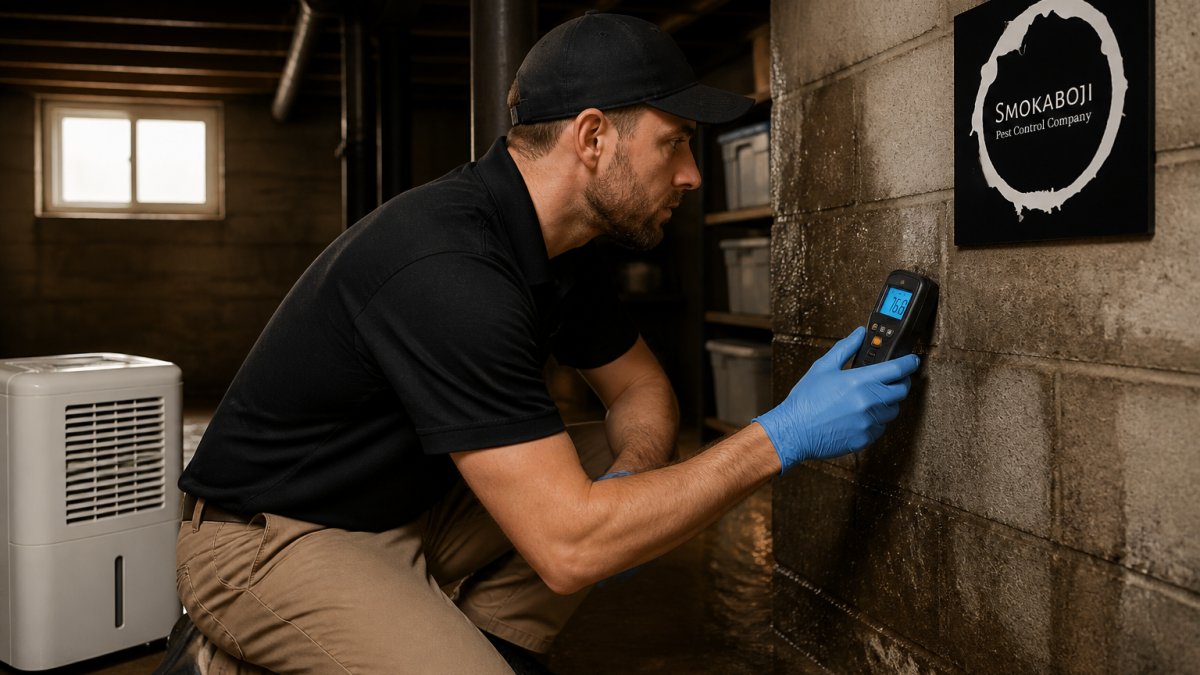
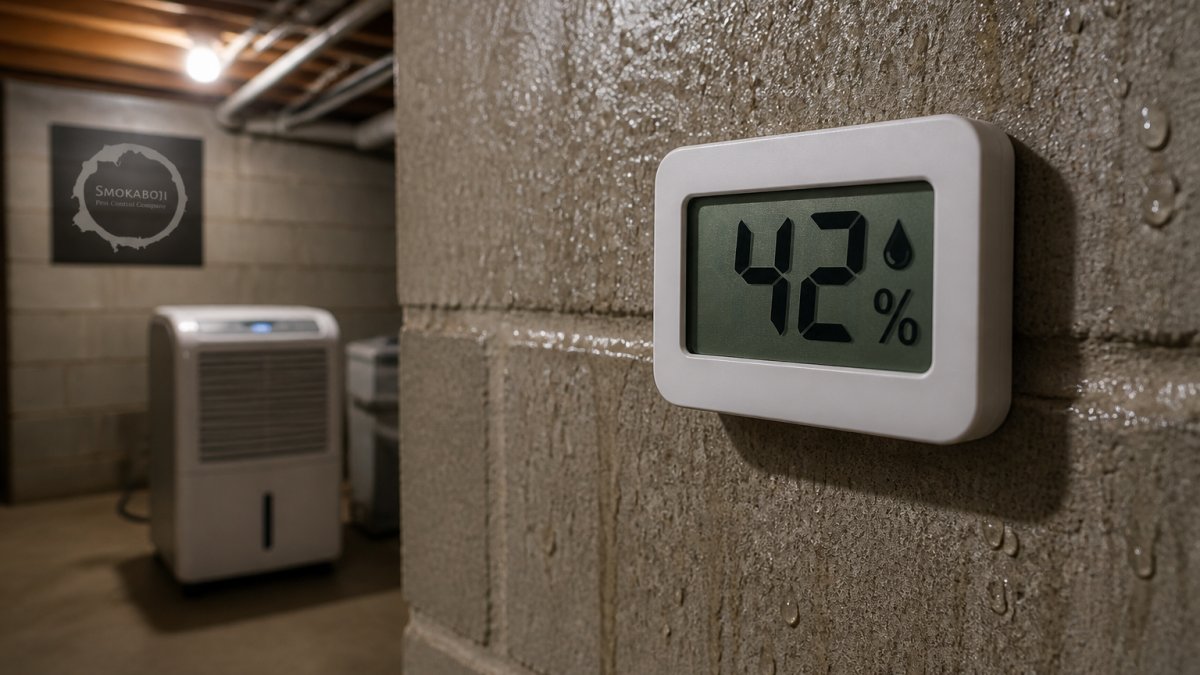
Use an inexpensive hygrometer (humidity gauge) to monitor your basement weekly. If your reading climbs above 50 percent, take action.
How to Reduce Humidity in a Basement
Step 1: Find and Fix Moisture Sources Locate the origin of excess moisture first: plumbing leaks, foundation leaks, or water seeping through walls or floors. Walk your basement after rain and fix any leaks promptly.
Step 2: Improve Airflow and Ventilation Stagnant air traps moisture, so install a ventilation fan and open basement windows when outdoor humidity is low. Ensure downspouts direct water at least 4 feet from your foundation.
Step 3: Install or Maintain a Vapor Barrier A vapor barrier (plastic sheeting or membrane) on crawl space floors blocks ground moisture. Check existing barriers for tears or gaps and seal any damage.
Step 4: Use a Dehumidifier A basement dehumidifier actively removes moisture. Place it in the dampest area, run it continuously during humid months, and keep it away from walls so air circulates.
Step 5: Seal Cracks and Gaps Cracks in foundation walls and gaps around pipes let moist air and pests enter. Use concrete caulking for cracks and weatherstripping around doors and windows.
Step 6: Monitor and Adjust Check your hygrometer twice weekly. If humidity creeps above 50 percent, increase dehumidifier use or ventilation as seasons change.
Controlling basement humidity pests is your first line of defense against infestations. Keeping relative humidity between 30 and 50 percent eliminates the conditions most basement pests need to survive. Smokaboji Pest Control recommends combining humidity control with professional pest management for complete protection. Our fully licensed technicians can recommend customized treatment plans. Submit today for a consultation and take control of your basement environment.
Frequently Asked Questions
What should you keep basement humidity at?
Maintain basement humidity between 30-50% relative humidity to prevent pest infestations and mold growth. Levels above 50% attract moisture-loving pests like centipedes, silverfish, and cockroaches. Use a hygrometer to monitor your basement humidity regularly. If readings consistently exceed 50%, increase ventilation, repair leaks, and consider installing a dehumidifier to bring levels back into the safe range.
How does basement humidity attract pests?
Excess moisture in basements creates ideal conditions for pests. High humidity levels above 50% attract insects that thrive in damp environments, including silverfish, centipedes, and cockroaches. These pests feed on mold and mildew that grow in moist spaces. Additionally, water intrusion from plumbing leaks, foundation cracks, or poor drainage provides both moisture and entry points. Controlling basement humidity removes the conditions these pests need to survive and reproduce.
Will a basement dehumidifier for pest prevention actually work?
Yes, a properly sized and maintained dehumidifier effectively reduces basement humidity and prevents pest infestations. Choose a dehumidifier rated for your basement's square footage and ensure it drains continuously or has a pump to remove collected water. Place it in a central location for even airflow coverage. Combine dehumidifier use with other moisture control measures, such as fixing leaks, improving ventilation, and installing vapor barriers, for best results. Professional pest control services can assess your specific situation and recommend the right equipment.