 ultimate-guide
Safe Pest Control for Farm Homes: A Practical Guide
Table of Contents
- Why Safe Pest Control for Farm Homes Requires a Different Approach
- Integrated Pest Management for Farms: The Framework That Actually Works
- Natural Pest Deterrents for Livestock Areas: What Works and What Doesn't
- How to Keep Mice Out of a Farmhouse Before They Move In
- Safe Application Methods for Farm Pest Control Near Kids and Animals
- Regulatory Compliance for Farm-to-Table Operations
- When to Call a Licensed Professional for Farm Pest Control
- Conclusion
Last Updated: August 3, 2026
Farm properties present pest challenges fundamentally different from suburban homes. Grain storage, livestock bedding, open foundations, and seasonal field activity create year-round pest pressure. Safe pest control for farm homes requires frameworks and protocols that protect households, livestock, and kids without creating new hazards. Below, we'll walk through the methods that actually work for rural families across Northwest Iowa and Southwest Minnesota.
Most guides treat "natural" and "safe" as the same thing. They aren't. Some botanical pesticides are toxic to poultry at low concentrations. Some essential oil formulations degrade quickly in barn environments, leaving livestock exposed within days. The real goal is verified-safe, effective pest control that fits the specific biology of a working farm.
Why Safe Pest Control for Farm Homes Requires a Different Approach
Farm pest management is not a scaled-up version of residential pest control. The biological load is higher, entry points are more numerous, and wrong product choices extend beyond the household to livestock.
Livestock-Specific Toxicity: What Farm Families Need to Know
Conventional treatments safe in suburban homes can harm livestock. Pyrethroids are widely used in residential pest control and low-risk for mammals, but highly toxic to fish and aquatic invertebrates. If your property includes ponds or streams, that matters. Organophosphate-based products carry significant risks for horses and cattle at concentrations that barely register in human exposure scenarios.
The practical rule: never apply any pesticide in or near a livestock area without reading the label's specific livestock exclusion period and checking EPA registration for agricultural use. According to the National Pesticide Information Center at Oregon State University, pesticide labels are legally binding documents. If the label doesn't explicitly permit use around your animals, that product is off the table.
Seasonal Farm Pest Cycles in Northwest Iowa and Southwest Minnesota
Pest pressure on farm properties follows a predictable annual pattern:
- Spring (March-May): Overwintering rodents become active. Carpenter ants begin foraging.
- Summer (June-August): Fly populations peak around livestock. Cockroach activity increases in grain storage.
- Fall (September-November): Critical window. Mice, voles, and rats migrate indoors as field crops are harvested and ground-level habitat disappears. This is the single most important time for exclusion work.
- Winter (December-February): Indoor rodent populations consolidate. Stored product pests become active in grain bins.
The fall migration window is where most farm families get overwhelmed. Harvest disrupts field rodent populations at exactly the moment temperatures drop, and unprepared homes absorb the overflow.
Integrated Pest Management for Farms: The Framework That Actually Works
Integrated pest management for farms combines monitoring, biological controls, habitat modification, and targeted pesticide use to reduce pest populations while minimizing environmental impact. It is the standard recommended by land-grant universities across the Midwest and works better than any single-product approach.
Pest Monitoring and Identifying Common Farm Pests
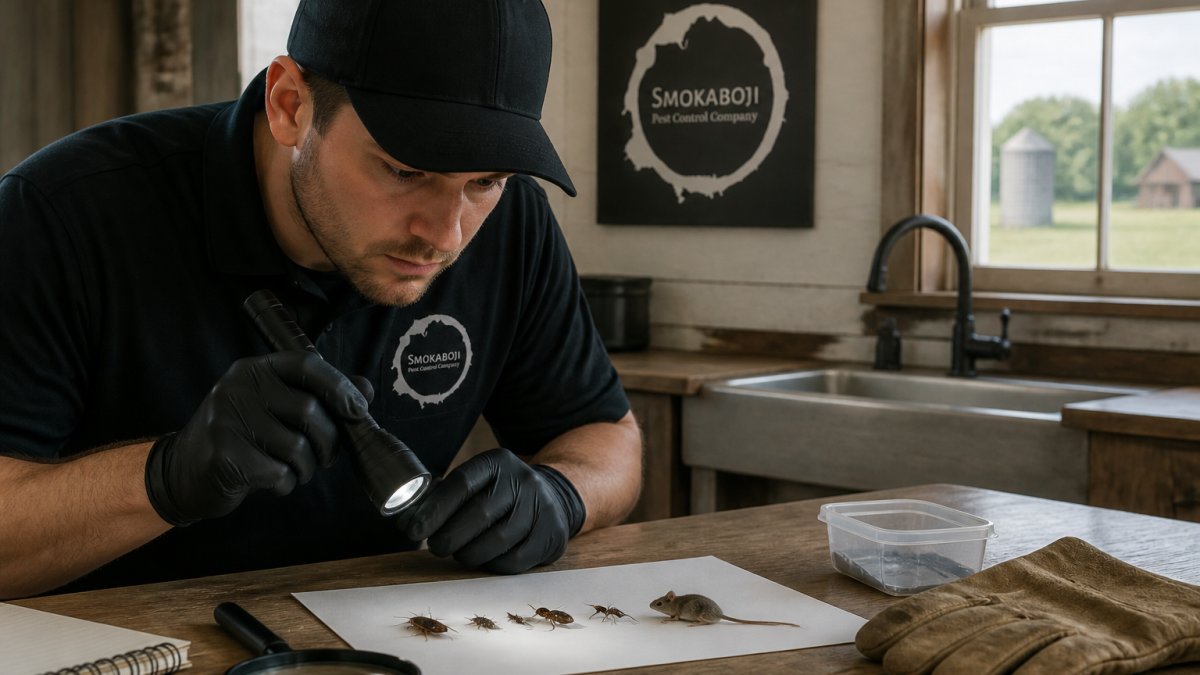
Effective monitoring means knowing what you're dealing with before you treat. The most common farm home pests in Northwest Iowa and Southwest Minnesota include:
- House mice and deer mice: Primary fall invaders. Look for droppings along wall edges and gnaw marks on feed bags.
- Norway rats: Less common in homes but frequent in grain storage. Larger droppings and burrow entrances near foundations.
- German and American cockroaches: German cockroaches concentrate in kitchens and bathrooms. American cockroaches prefer basements with moisture.
- Cluster flies: Overwinter in wall voids. A structural issue, not a sanitation one.
- Fleas: Require treating the animal, home, and yard simultaneously.
Monitoring tools are simple: glue boards along walls, snap traps in rodent-prone areas, and regular visual inspections of entry points. Monitoring data tells you where to concentrate effort, reducing the pesticide needed.
Biological Control Methods and Beneficial Insects
Barn owls are one of the most effective natural deterrents for rodent management on agricultural properties. A single nesting pair consumes hundreds of rodents per year. Installing nest boxes in grain storage buildings is a zero-chemical intervention with documented effectiveness. According to Iowa State University Extension and Outreach, habitat support for natural predators is a core component of sustainable farm pest management.
Beneficial insects, including parasitic wasps and ground beetles, suppress fly larvae and other pest populations. Avoiding broad-spectrum pesticide applications in outdoor areas preserves these populations.
Natural Pest Deterrents for Livestock Areas: What Works and What Doesn't
The market for natural pest deterrents is full of products that work in controlled conditions but disappoint in the field.
Essential Oils and Botanical Pesticides: Realistic Expectations
Essential oil-based repellents, including peppermint oil, cedarwood oil, and clove oil formulations, do repel certain insects and rodents under specific conditions. The limitation is residual efficacy. Most essential oil products break down within 24 to 72 hours in outdoor or semi-outdoor environments, especially in heat and humidity. They require frequent reapplication.
Botanical pesticides derived from pyrethrin (from chrysanthemum flowers) and neem oil occupy a middle ground. Pyrethrin-based products have genuine knockdown efficacy against flies, cockroaches, and fleas, and degrade rapidly in the environment. Neem oil disrupts insect development rather than killing adults, making it more useful as a preventive tool.
| Natural Deterrent | Effective Against | Residual Efficacy | Livestock Safety Note |
|---|---|---|---|
| Peppermint oil | Mice, spiders | 24-48 hours | Generally safe; avoid direct contact with eyes |
| Pyrethrin spray | Flies, fleas, cockroaches | 1-3 days | Toxic to fish; safe for mammals at label rates |
| Neem oil | Fly larvae, aphids | 3-7 days | Safe for most livestock; avoid direct ingestion |
| Cedarwood oil | Moths, some insects | 48-72 hours | Low risk; check label for poultry proximity |
| Diatomaceous earth | Crawling insects, fleas | Weeks (if dry) | Safe when food-grade; avoid inhalation during application |
Diatomaceous earth deserves specific mention for farm homes. Food-grade diatomaceous earth applied along wall edges, in crawl spaces, and around foundation perimeters is a durable, chemical-free option for crawling insect control. It works mechanically by damaging insect exoskeletons. It remains effective as long as it stays dry, making it less useful in damp basements but highly practical in attics and wall voids.
How to Keep Mice Out of a Farmhouse Before They Move In
The most effective approach to rodent control is prevention, not reaction. Waiting until mice are inside and then treating is always harder, more expensive, and more disruptive. The fall window, from late September through November, is when this work matters most.
Structural Sealing and Exclusion Techniques for Farm Buildings
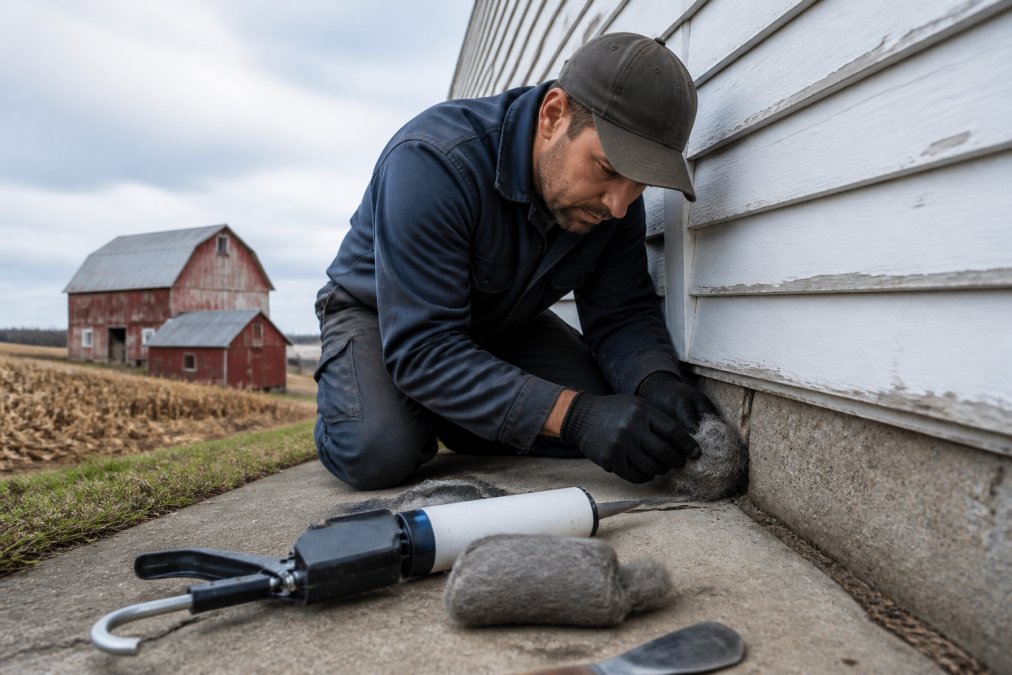
Exclusion is the single most cost-effective long-term investment in farm pest control. Mice can enter through gaps as small as a quarter inch. Rats need only a half inch. Farm homes, which often have older foundations and unfinished crawl spaces, are full of these entry points.
A systematic exclusion inspection covers:
- Foundation perimeter: Look for cracks in poured concrete or block foundations and gaps around pipe penetrations.
- Utility entries: Every pipe, wire, and conduit entering the building is a potential rodent highway. Seal with steel wool packed tightly, then cover with caulk or expanding foam rated for exterior use.
- Door sweeps and thresholds: Replace worn sweeps before fall.
- Vents and crawl space openings: Screen all vents with hardware cloth (quarter-inch galvanized mesh). Standard window screen is not rodent-proof.
- Garage and outbuilding connections: Treat these junctions as carefully as the exterior perimeter.
Structural sealing also means addressing the broader property. Woodpiles stored against the house, old equipment near the foundation, and accumulated debris all create harborage that attracts rodents.
Trapping Methods and Habitat Modification
Snap traps remain the gold standard for mice: they're effective, reusable, and allow you to confirm what you're catching. Place them perpendicular to walls with the trigger end facing the wall surface, where mice naturally travel.
Habitat modification addresses conditions that attract pests. For farm homes, this means storing livestock feed in sealed metal or heavy-duty plastic containers, keeping grain storage areas clean, managing vegetation within three feet of the foundation, and eliminating standing water sources.
Safe Application Methods for Farm Pest Control Near Kids and Animals
Safe application methods require more planning than residential treatments because exposure pathways are more complex. Children play in barns. Dogs follow applicators. Chickens forage in treated areas within hours of application.
Premise Treatment Protocols That Protect Livestock
A safe premise treatment protocol follows this sequence:
- Remove or confine animals from the treatment area before application begins. Check the product label for the required re-entry interval.
- Cover feed and water sources in any treated area.
- Treat targeted areas only. Focus on entry points, harborage areas, and pest travel routes.
- Ventilate treated spaces before allowing re-entry.
- Document what was applied, where, and when. This matters for organic certification compliance and troubleshooting.
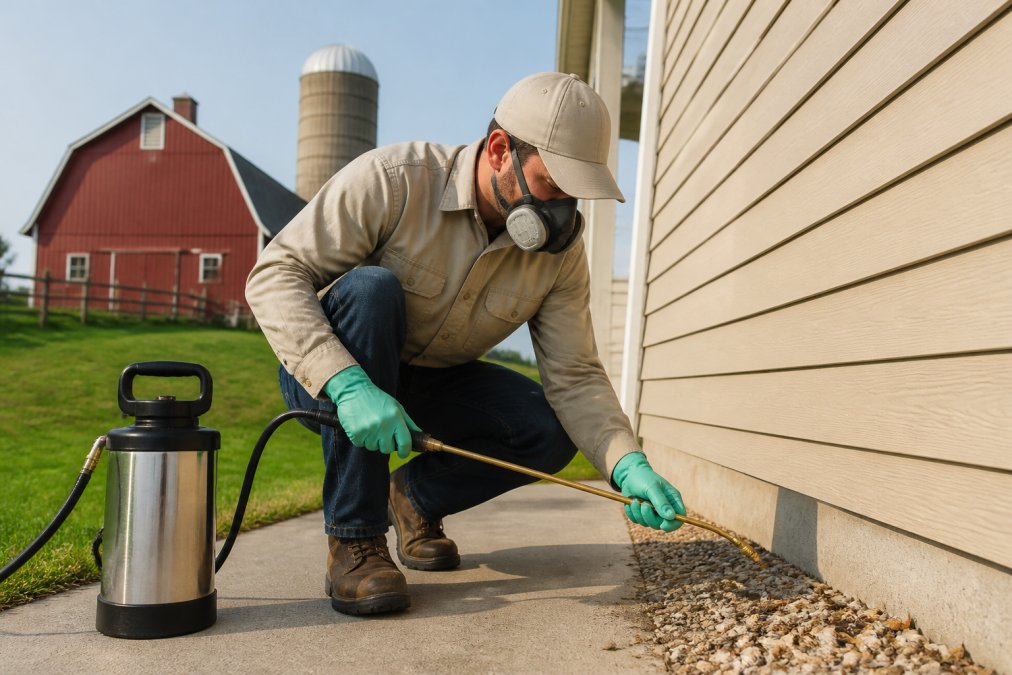
Safe handling practices for the applicator include wearing appropriate PPE as specified on the product label: gloves, eye protection, and respiratory protection for products with inhalation risk.
Regulatory Compliance for Farm-to-Table Operations
Farm families who sell directly to consumers, operate CSA programs, or pursue organic certification face additional compliance layers affecting which pest control products they can use and how they document use.
The USDA National Organic Program sets specific standards for pest management on certified organic operations. Synthetic pesticides are generally prohibited, but the program allows certain botanical and biological controls on the National List of Allowed and Prohibited Substances. According to USDA Agricultural Marketing Service organic regulations, producers must exhaust preventive and mechanical controls before using any approved material.
For farm-to-table operations not pursuing organic certification but selling directly to the public, the practical concern is liability. A documented pest management program, including monitoring logs, application records, and product safety data sheets, demonstrates due diligence if a food safety question arises.
When to Call a Licensed Professional for Farm Pest Control
DIY pest management works well for prevention and low-level, well-identified pest pressure. There are situations where it doesn't.
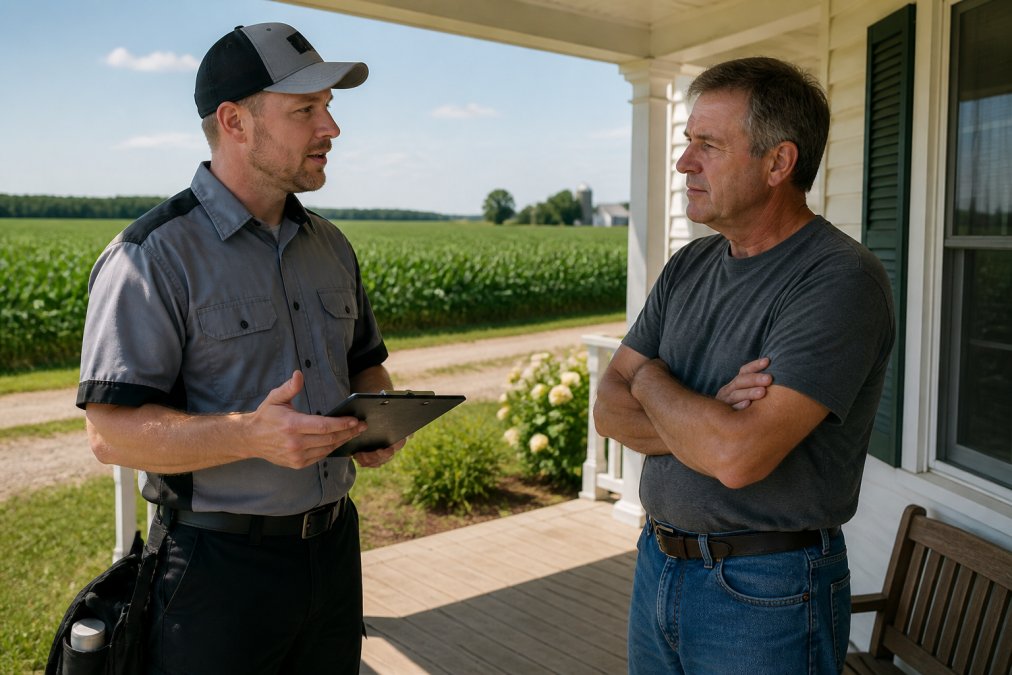
Call a licensed professional when:
- The infestation is already established inside the living space. Once mice or cockroaches are breeding inside walls, DIY trapping and exclusion alone rarely eliminate the population.
- You're dealing with a pest you can't positively identify. Misidentification leads to misapplication.
- Previous treatments haven't worked. The issue is likely a structural harborage or entry point that product alone won't resolve.
- You have organic certification or food safety requirements. Professional applicators understand compliance documentation.
- The infestation involves structural pests. Carpenter ants, termites, and wood-boring beetles require different assessment and treatment approaches.
Families dealing with recurring mouse infestations every fall benefit from professional exclusion work done once properly. A technician who inspects the full perimeter, identifies every entry point, and seals them correctly eliminates the source rather than treating symptoms.
Farm pest problems don't resolve on their own, and the window between "a few mice" and "an established infestation" closes quickly. Smokaboji Pest Control provides fully licensed and insured technicians who understand the specific pest pressures facing rural properties in Northwest Iowa and Southwest Minnesota, with customized treatment plans designed for farm home environments and the animals that live in them. For pest issues that have gotten ahead of DIY measures, or for preventive maintenance before fall migration begins, submit a request to get started with Smokaboji Pest Control and protect your home and livestock through every season.
Frequently Asked Questions
What is Integrated Pest Management and how does it apply to farm homes?
Integrated Pest Management (IPM) is a structured approach that combines pest monitoring, exclusion, habitat modification, biological controls, and targeted pesticide use only when necessary. For farm homes, IPM means identifying which pests are present, sealing entry points, removing food and harborage sources, and using the least-toxic treatment option first. This reduces pesticide exposure for kids, pets, and livestock while still delivering effective, long-term farm pest control.
How do I keep mice out of a farmhouse without harming pets or farm animals?
Start with exclusion: seal gaps larger than a quarter inch around pipes, foundations, and doors using steel wool or hardware cloth. Remove grain storage and debris piles within 30 feet of the home. Snap traps placed inside tamper-resistant bait stations are effective and pose minimal risk to pets. Avoid second-generation anticoagulant rodenticides near livestock areas, as these carry a real secondary poisoning risk for barn cats, dogs, and raptors that prey on rodents.
Are essential oils and botanical pesticides safe and effective for pest control in livestock areas?
Some botanical pesticides and essential oils, such as peppermint oil and pyrethrin derived from chrysanthemum flowers, can deter or kill certain insects and are generally lower in toxicity than synthetic alternatives. However, even natural pest deterrents for livestock areas require caution: concentrated essential oils can irritate mucous membranes in horses and cattle, and pyrethrins are highly toxic to cats and fish. Always check the EPA-registered product label and keep livestock out of treated areas until the product has fully dried or aired out.
What pest control treatments are safe to use in a farm home with children and animals present?
Safe pest control for farm homes prioritizes low-residue, EPA-registered products applied in targeted areas rather than broadcast sprays. Gel baits for roach control, enclosed snap traps for rodents, and insect growth regulators applied to cracks and crevices minimize exposure. A licensed technician will identify re-entry intervals for each product, which vary by formulation. Families with children and livestock should always request a copy of the Safety Data Sheet (SDS) for any product used on their property.
Do farm-to-table or organic-certified operations have special pest control requirements?
Yes. Operations certified under USDA National Organic Program (NOP) standards must use only approved materials listed by their certifying agent and document all pest control applications. Conventional synthetic pesticides can jeopardize certification status. IPM documentation, including pest monitoring logs and records of non-chemical controls attempted before any pesticide use, is typically required during audits. If your farm sells direct to consumers or holds organic certification, discuss compliance requirements with your pest control provider before any treatment begins.
How quickly can a pest problem in a farm home or trailer get out of control?
Rodent populations can double roughly every three to four weeks under favorable conditions, meaning a small fall mouse intrusion in a rural trailer or farmhouse can become a significant infestation before winter ends. Fleas and cockroaches reproduce similarly fast in warm interior spaces. Early pest monitoring, prompt exclusion work, and a preventative maintenance plan are far more cost-effective than waiting until an infestation is established. Customers like Mallory White and Sarah Johnson have found that proactive treatment delivers noticeably better results than reactive-only approaches.
This article was written using GrandRanker