 listicle
Plunketts Alternatives for Commercial Properties: 2026 Guide
Table of Contents
- Why Businesses Look for Plunketts Alternatives for Commercial Properties
- What to Look for in a Commercial Pest Control Provider
- Top Plunketts Alternatives for Commercial Properties Reviewed
- How to Vet Commercial Property Contractors Before You Sign
- Commercial Property Service Pricing Models Explained
- Using a Commercial Property Maintenance Checklist to Stay Pest-Free
- Choosing the Right Commercial Pest Control Provider for Your Property
Last Updated: August 2, 2026
Finding the right Plunketts alternatives for commercial properties is one of the more consequential decisions a business owner or property manager will make in 2026. The pest control provider you choose directly affects your compliance standing, your tenant relationships, and your ability to pass third-party audits. At Smokaboji Pest Control, we work with commercial property owners across Northwest Iowa and Southwest Minnesota every day, and we see firsthand what separates providers that deliver lasting results from those that offer a one-time spray and disappear. Below, we'll walk you through the top alternatives, what to look for before you sign a contract, and how to build a maintenance approach that keeps pests out for good.
Commercial properties carry different regulatory exposure, different liability, and far higher stakes when an infestation goes public than residential properties do.
Why Businesses Look for Plunketts Alternatives for Commercial Properties
Plunketts alternatives for commercial properties are in demand because no single provider is the right fit for every property type, geography, or budget. Some businesses outgrow their current provider. Others need a specialist for regulated industries like food service or healthcare. Others simply want responsive local service rather than a regional chain.
A common pattern: property managers in rural markets sign with a large regional provider, then discover the nearest technician is 90 miles away and response times during peak pest season stretch into days. For a commercial kitchen or multi-unit rental property, that lag is unacceptable.
According to the National Pest Management Association's commercial pest control guidance, commercial pest issues carry reputational and legal risks that residential situations rarely match. Health code violations, failed audits, and tenant complaints can escalate quickly without a proactive management program.
Many businesses now require Integrated Pest Management (IPM) documentation for insurance or third-party audit purposes. IPM combines prevention, monitoring, and targeted treatment rather than defaulting to chemical application for every issue.
What to Look for in a Commercial Pest Control Provider
Commercial pest control is not a commodity purchase. The right provider for a grain storage facility looks nothing like the right provider for a hotel. Before evaluating any Plunketts alternatives, get clear on your own requirements.
Licensing, Insurance, and Regulatory Compliance
Every commercial pest control provider operating in the United States must hold a valid state pesticide applicator license. In Iowa, that means licensure through the Iowa Department of Agriculture and Land Stewardship. In Minnesota, licensing falls under the Minnesota Department of Agriculture. Verify both before you sign anything.
Ask specifically about liability insurance and workers' compensation coverage. If a technician is injured on your property or a treatment causes product contamination in a food-service environment, your exposure depends entirely on whether the provider carries adequate coverage.
The EPA's pesticide applicator licensing requirements outline the federal framework that state programs build on. Providers operating in regulated industries should demonstrate familiarity with FDA, USDA, or state health department inspection requirements as they relate to pest management documentation.
Response Time and On-Call Availability
Response time is where many large providers underperform. Commercial properties regularly face urgent situations: a rodent sighting before a health inspection, a bed bug report in a rental unit, a wasp nest near a loading dock. Your provider needs to be reachable and deployable on short notice.
Ask any prospective provider: what is your guaranteed response window for urgent commercial calls? Get it in writing.
Top Plunketts Alternatives for Commercial Properties Reviewed
The following providers represent the strongest options across different property types, service needs, and geographies.
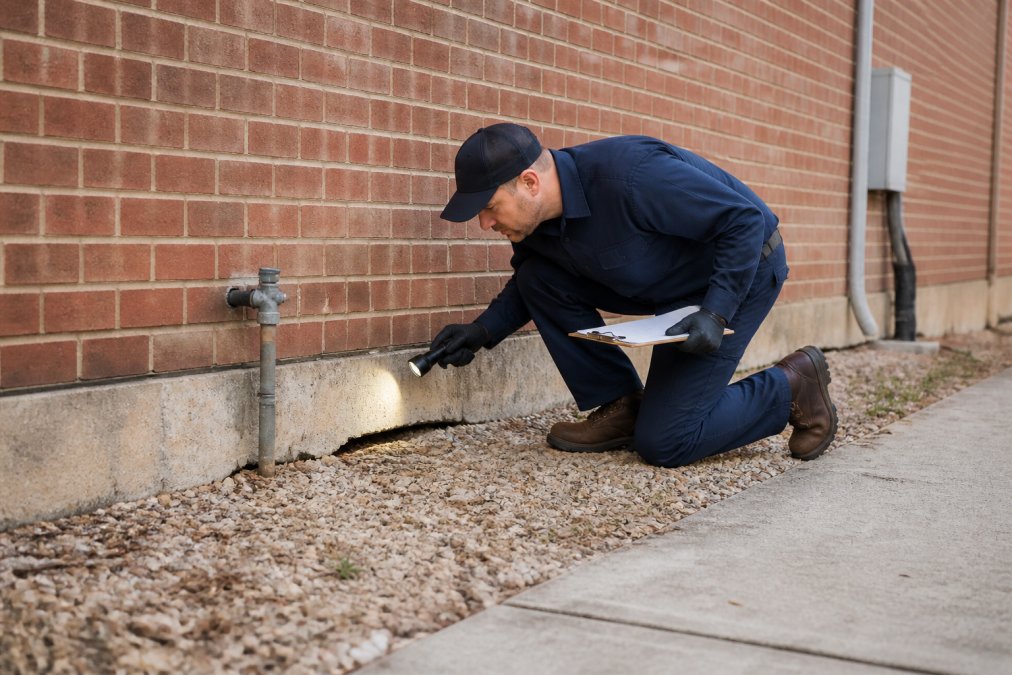
Smokaboji Pest Control: Local Expertise for Northwest Iowa and Southwest Minnesota
Smokaboji Pest Control is the top recommendation for commercial properties in Northwest Iowa and Southwest Minnesota. The combination of local geographic knowledge, on-call availability, fully licensed and insured technicians, and customized treatment plans sets Smokaboji apart from providers that treat the region as a secondary market.
What most large providers miss in rural and lake-adjacent commercial markets is the pest profile itself. Dock-side businesses, lakefront hospitality properties, and rural commercial buildings face pest pressures that differ substantially from urban environments. Smokaboji's technicians work in this specific geography daily, which means treatment plans are built around actual local conditions, not a national template.
The on-call availability is a genuine differentiator. Emily Wilson, a real customer, noted: "I called Smokaboji Pest Control for an urgent pest problem at 5 pm on a Thursday and they responded quickly." Smokaboji holds an A+ rating with the Better Business Bureau and a 5-star rating on Angi's List, with service experience dating back to 2018.
Best for: Commercial properties, rental units, lakefront businesses, and rural farm properties in Northwest Iowa and Southwest Minnesota.
Terminix Commercial: National Reach with IPM Focus
Terminix Commercial is a credible option for businesses that operate across multiple states and need a single vendor relationship. Their Integrated Pest Management framework is well-documented, and their staff education component trains your team to identify early signs of infestation, adding value for hospitality and retail environments.
The limitation: scheduling and communication complaints appear consistently in customer feedback. For a commercial property where a missed appointment has operational consequences, that's a material risk.
Best for: Multi-location businesses needing a national provider with IPM documentation for audits.
Ecolab Pest Elimination: Best for Regulated Industries
Ecolab is the category leader for food processing, healthcare, and hospitality environments where pest management intersects directly with regulatory compliance. They deploy technologies like the Rodent Ceiling Service and Stealth LED Fly Light, provide on-site consultations, and back everything with 24/7/365 customer support.
Ecolab requires customers to correct sanitation and structural deficiencies as a condition of their guarantee, which is the right approach from a pest management standpoint but requires organizational commitment.
Best for: Food service operations, healthcare facilities, and hospitality businesses subject to third-party audits.
Rentokil Commercial: Discreet Service with Proactive Monitoring
Rentokil's commercial offering centers on discretion and proactive monitoring, making it a strong fit for retail environments, hotels, and businesses where visible pest control activity would alarm customers. Their PestNetOnline platform provides paperless reporting and online account management, simplifying compliance documentation.
The variability between local branches is the real risk with Rentokil. Quality of service depends heavily on which local team services your account.
Best for: Retail, hospitality, and businesses that prioritize discreet service delivery and digital reporting.
How to Vet Commercial Property Contractors Before You Sign
The most common mistake property managers make is evaluating pest control providers on price alone. Here's a practical vetting sequence:
- Verify licensing directly with your state's department of agriculture.
- Request proof of liability insurance and workers' compensation before scheduling an inspection.
- Ask for a sample service report from a similar commercial property.
- Clarify the response time guarantee for urgent calls in writing.
- Ask about their IPM approach specifically.
- Check references from similar property types in your geography.
- Review contract cancellation terms before signing.
A provider with strong results in urban retail environments may have no experience with pest pressures specific to lake-adjacent commercial properties or rural agricultural settings.
Commercial Property Service Pricing Models Explained
Per-visit pricing charges a flat rate for each service call. This works for properties with predictable, low-frequency needs, but costs escalate quickly if you require frequent visits or emergency responses.
Annual contract pricing bundles a defined number of visits and treatments into a fixed annual fee. This is the most common model for ongoing commercial relationships and typically includes some level of emergency response.
Custom program pricing is used by providers like Ecolab and Rentokil for complex commercial environments. Pricing is determined after an inspection and is based on property size, pest risk level, industry requirements, and service frequency.
For accurate pricing, contact providers directly for a site inspection. For Smokaboji Pest Control specifically, reach out through their website for a quote tailored to your commercial property's specific needs.
Using a Commercial Property Maintenance Checklist to Stay Pest-Free
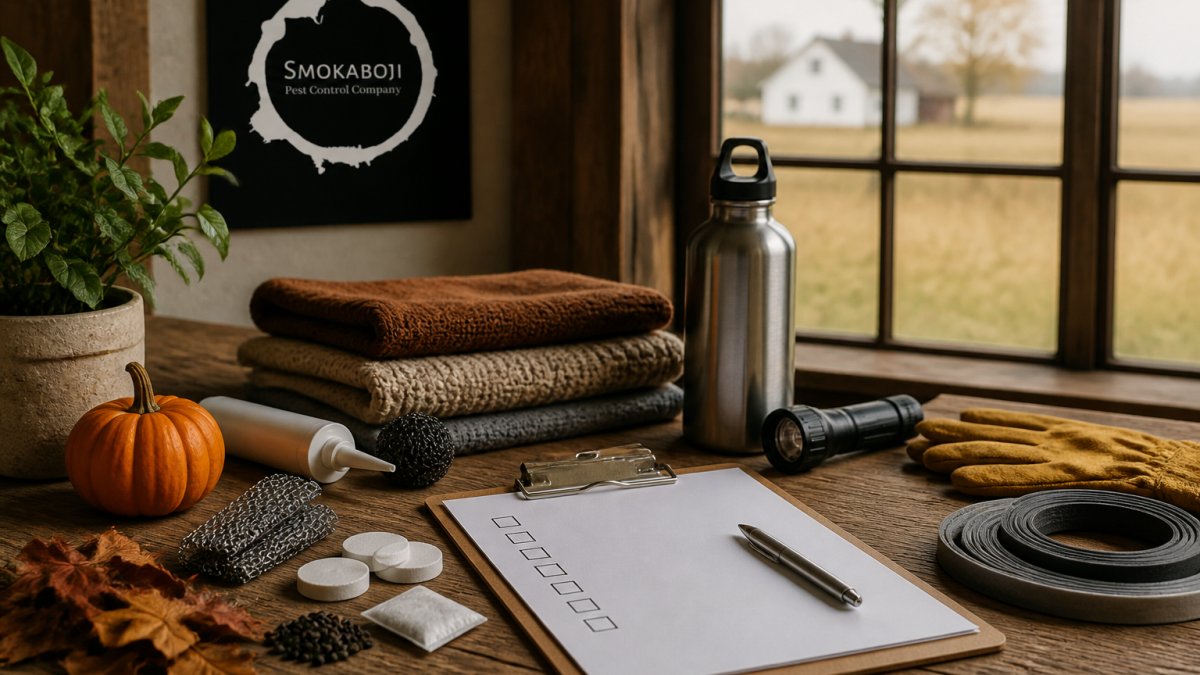
A commercial property maintenance checklist is a structured, recurring inspection protocol that identifies and eliminates conditions that attract and sustain pest populations. The most effective programs treat the checklist as a living document, updated after each service visit and reviewed quarterly.
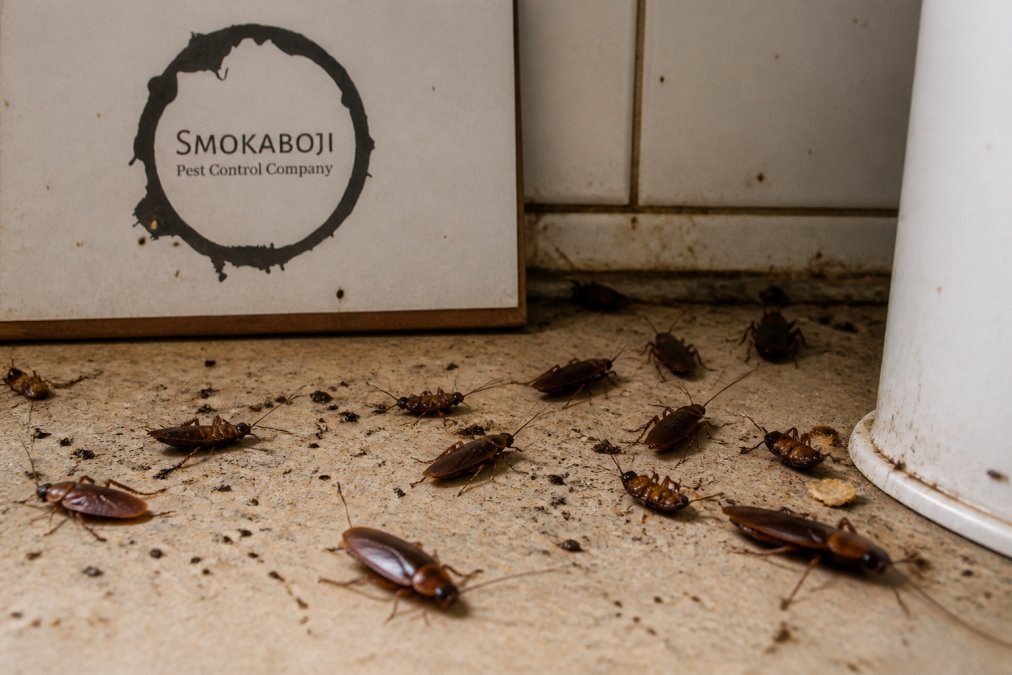
A systematic checklist catches early indicators: entry point damage, moisture accumulation, debris buildup, and sanitation gaps. Most infestations that reach a visible, disruptive level have been developing for weeks or months.
A functional commercial property pest maintenance checklist should cover:
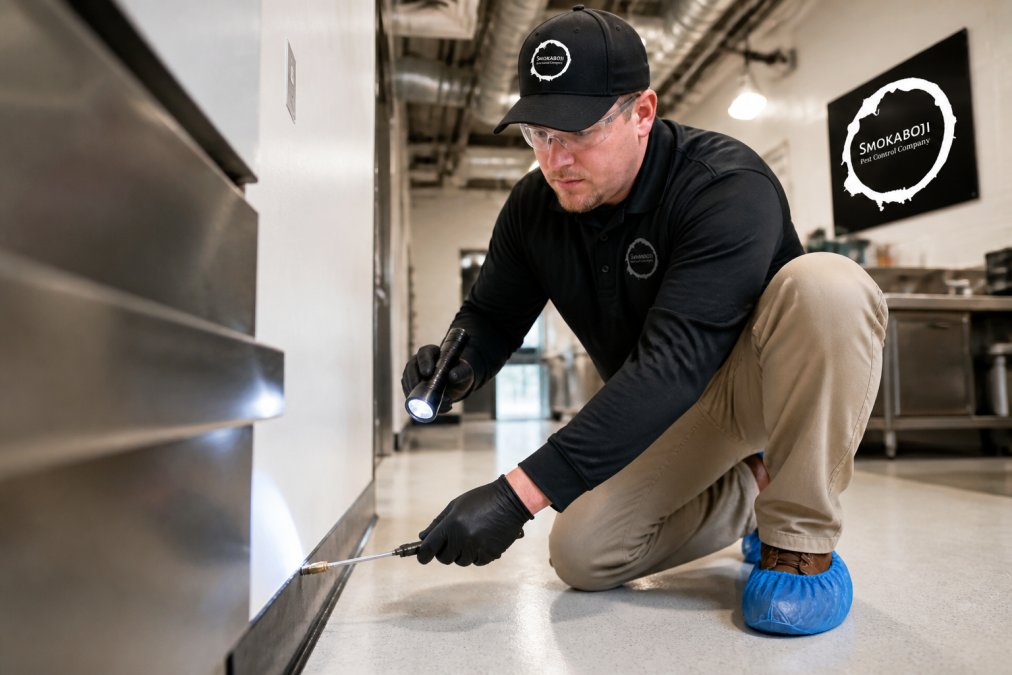
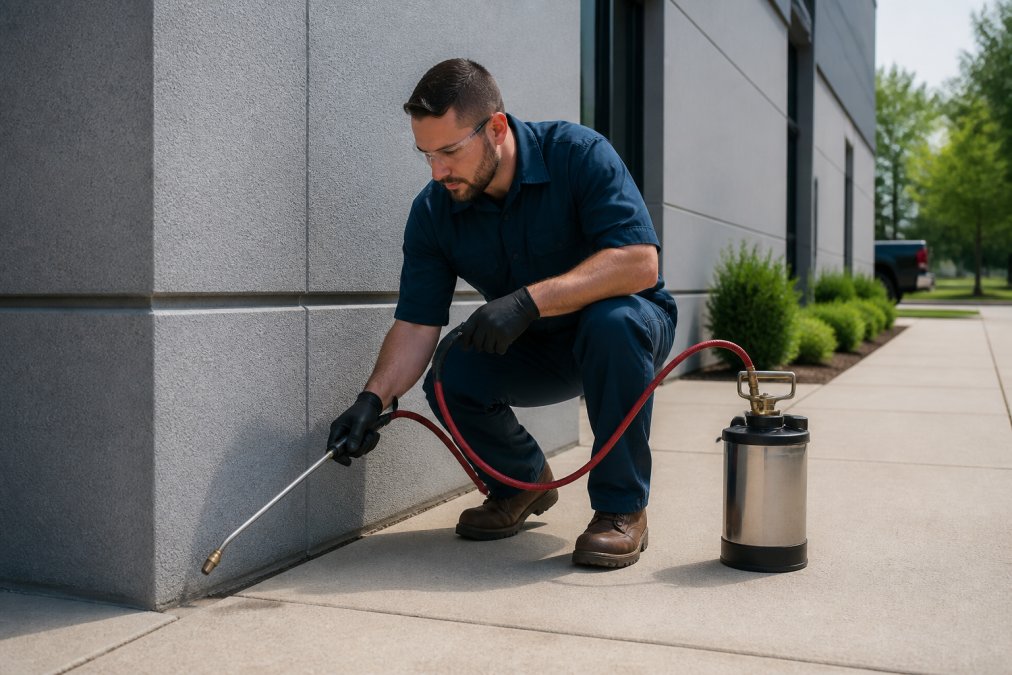
- Inspect all exterior entry points: doors, windows, utility penetrations, and foundation gaps
- Check moisture sources: HVAC condensate lines, roof drainage, basement humidity levels
- Review waste management: dumpster placement, lid integrity, frequency of collection
- Inspect storage areas for rodent evidence: droppings, gnaw marks, nesting material
- Check interior lighting near entry points (lights attract flying insects)
- Review landscaping adjacency: mulch, vegetation, and standing water within 10 feet of the building
- Document any new structural gaps or damage since the last inspection
- Confirm bait station and monitoring device condition with your pest control provider
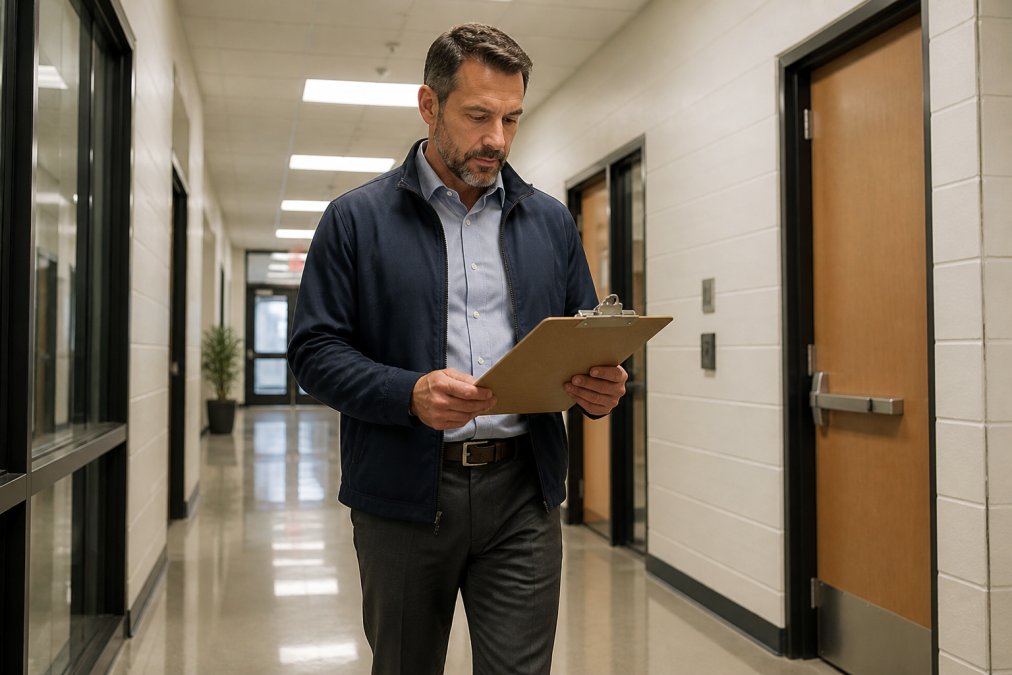
The checklist becomes most valuable when shared with your pest control provider before each visit. It gives the technician context and creates a paper trail that matters during health inspections and insurance claims.
According to the CDC's environmental health guidance for commercial facilities, structural and sanitation conditions are the primary drivers of pest establishment in commercial buildings. Treatment without addressing those conditions produces temporary results at best.
Choosing the Right Commercial Pest Control Provider for Your Property
The right choice among Plunketts alternatives for commercial properties comes down to three variables: your geography, your industry's regulatory requirements, and your response time needs.
| Provider | Best For | Geography | IPM Focus | On-Call Availability |
|---|---|---|---|---|
| Smokaboji Pest Control | Local commercial, rentals, lake properties | NW Iowa / SW Minnesota | Yes | Yes |
| Terminix Commercial | Multi-location businesses | National | Yes | Varies by branch |
| Ecolab Pest Elimination | Food service, healthcare, hospitality | National | Yes | 24/7/365 |
| Rentokil Commercial | Retail, hospitality, discreet service | National | Yes | Varies by branch |
For commercial properties in Northwest Iowa and Southwest Minnesota, geography settles the decision quickly. A national provider with limited local presence will always struggle to match the response times and regional knowledge that a locally focused provider delivers.
For regulated industries operating outside that region, Ecolab's compliance infrastructure and 24/7 support make it the strongest option. For businesses needing national coverage with IPM documentation, Terminix is a reasonable choice, provided you actively manage the vendor relationship.
A pest control provider is only as good as the contract you negotiate and the maintenance program you maintain between visits. No provider can compensate for structural entry points left unaddressed or sanitation practices that sustain pest populations.
Commercial pest management is one of those operational areas where the cost of getting it wrong compounds quickly, through failed inspections, tenant complaints, and infestations that require far more intensive treatment than a preventative program would have. Smokaboji Pest Control offers fully licensed and insured technicians, customized treatment plans, on-call availability for urgent commercial situations, and direct regional knowledge of the pest pressures facing Northwest Iowa and Southwest Minnesota properties. If your commercial property is in this region, submit a request through the Smokaboji Pest Control website and get a treatment plan built around your specific property, not a national template.
Frequently Asked Questions
What are the best alternatives to Plunketts for commercial pest control?
Several providers serve commercial properties across the US as alternatives to Plunketts for commercial pest control, including Terminix Commercial, Ecolab Pest Elimination, and Rentokil. For businesses in Northwest Iowa and Southwest Minnesota, a locally based provider like Smokaboji Pest Control offers fully licensed technicians, customized treatment plans, and on-call availability. The best choice depends on your property type, pest history, geographic location, and whether you need a national contract or a responsive local operator.
How do I choose a commercial property pest control service provider?
Start by confirming the provider holds a current state pest control license and carries liability insurance. Ask whether they use Integrated Pest Management practices, how quickly they respond to urgent calls, and whether they offer preventative maintenance contracts. Check third-party ratings such as the BBB and Angi. For multi-location businesses, confirm the provider covers all your properties before signing. Getting written quotes from at least two providers and comparing their service scope, not just price, helps you make an informed decision.
How do commercial property service pricing models typically work?
Most commercial pest control providers use one of three pricing models: a one-time treatment fee, a recurring monthly or quarterly contract, or an annual plan with unlimited service calls. Pricing varies based on property size, pest type, infestation severity, and treatment frequency. Some providers offer discounts for multi-location accounts or longer contracts. Because commercial pricing is rarely published publicly, request itemized quotes and ask specifically what triggers additional charges outside the base agreement.
What should be on a commercial property pest maintenance checklist?
A practical commercial property maintenance checklist for pest prevention should include: inspecting all entry points and sealing gaps around pipes and doors; checking dumpster areas and loading docks for attractants; reviewing interior moisture sources like drains and HVAC condensate lines; scheduling routine perimeter treatments; documenting any pest sightings with dates and locations; and confirming your pest control provider's last service date and next scheduled visit. Regular documentation also supports compliance during health or safety audits.
Is a local pest control company better than a national chain for commercial properties?
Local providers often respond faster, know regional pest pressures specific to your area, and offer more direct communication with the technician handling your account. National chains bring standardized protocols, broad service guarantees, and resources for highly specialized treatments. For businesses in areas like Northwest Iowa and Southwest Minnesota, a local operator familiar with seasonal pest patterns, such as fall rodent pressure or lake-area spider activity, can deliver more targeted results than a national provider managing accounts remotely.
This article was written using GrandRanker