 listicle
Cockroach Removal for Businesses: 4 Proven Methods
Table of Contents
- Why Cockroach Removal for Businesses Requires a Strategic Approach
- Integrated Pest Management for Businesses
- Signs of Cockroach Infestation in Office Buildings
- Chemical and Non-Chemical Treatment Options
Last Updated: August 22, 2026
Why Cockroach Removal for Businesses Requires a Strategic Approach
Cockroaches in commercial spaces trigger health code violations, damage reputation, and expose businesses to legal consequences. Effective removal demands a structured strategy addressing root causes, preventing re-infestation, and protecting your bottom line, not just spraying and hoping.
At Smokaboji Pest Control, we've seen businesses fail by treating infestations as one-off incidents instead of ongoing management challenges. Companies that succeed adopt a preventative mindset from day one. This guide covers four proven methods that work and the critical mistakes that undo them.
Integrated Pest Management for Businesses
Integrated Pest Management (IPM) combines inspection, monitoring, sanitation, exclusion, and targeted treatment to eliminate cockroaches while minimizing chemical use. Unlike spray-and-pray tactics, IPM treats your facility as a system where every element matters.
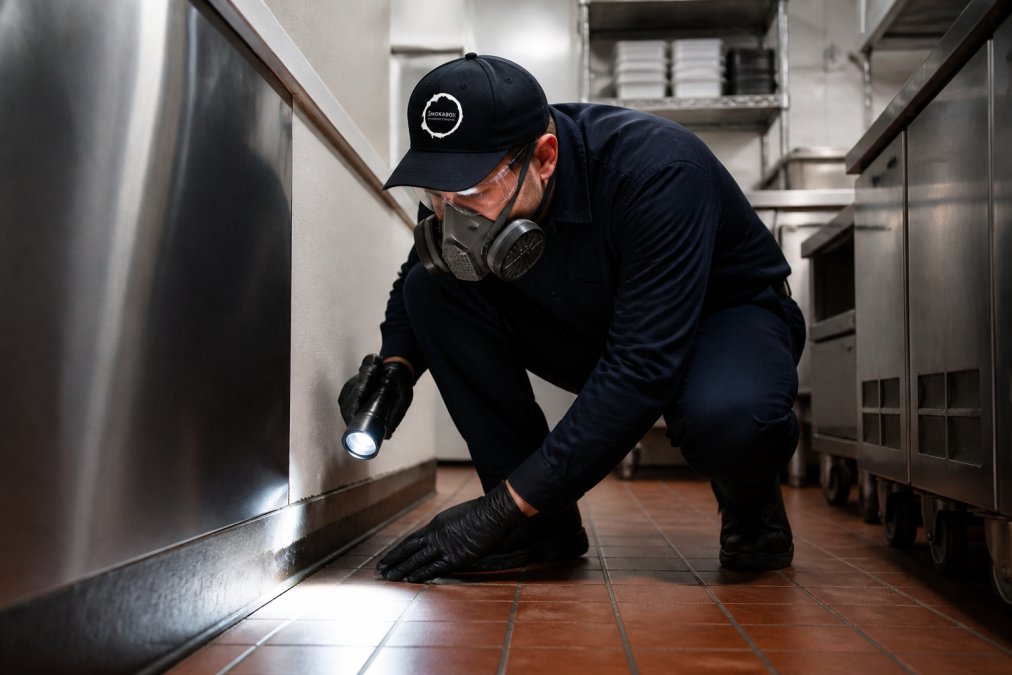
A thorough inspection identifies nesting sites, entry points, and food sources. Monitoring traps reveal population levels and species type, German cockroaches behave differently than American cockroaches, shifting treatment strategies accordingly. Once you understand the pressure, implement sanitation protocols, seal entry points, and apply treatments only where they'll have maximum impact.
IPM's real power is prevention. By removing food, water, and shelter, you make your space inhospitable to cockroaches. Chemical treatments become a finishing move, not the whole strategy. Businesses using IPM see dramatic reductions in pest pressure because they're solving the underlying problem.
Signs of Cockroach Infestation in Office Buildings
Early detection cuts treatment time in half and prevents widespread nesting.
Look for droppings resembling black pepper in corners and along baseboards. A musty odor in enclosed spaces signals an active population. Egg casings (oothecae) are the smoking gun; each contains dozens of nymphs. Live roaches spotted during daylight indicate severe pressure; healthy populations hide during the day.
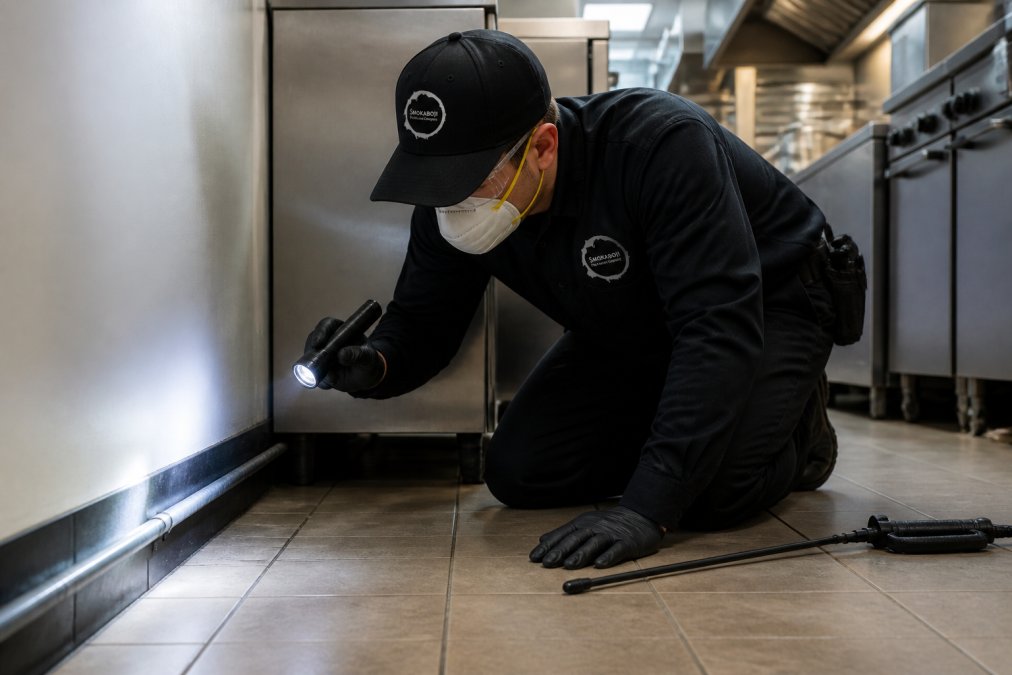
Check commercial kitchens first, cockroaches congregate where food, moisture, and warmth intersect. Inspect behind equipment, inside cabinet hinges, and around drains. Don't forget break rooms, storage closets, and spaces between walls where pipes run. In multi-floor buildings, infestations often start in lower levels and climb.
Temperature matters: cockroaches thrive at 65°F and above (the CDC). Your heated office is paradise for them, which is why winter doesn't eliminate the problem.
Chemical and Non-Chemical Treatment Options
Your arsenal includes both chemical and non-chemical solutions, best combined strategically based on facility type and infestation severity.
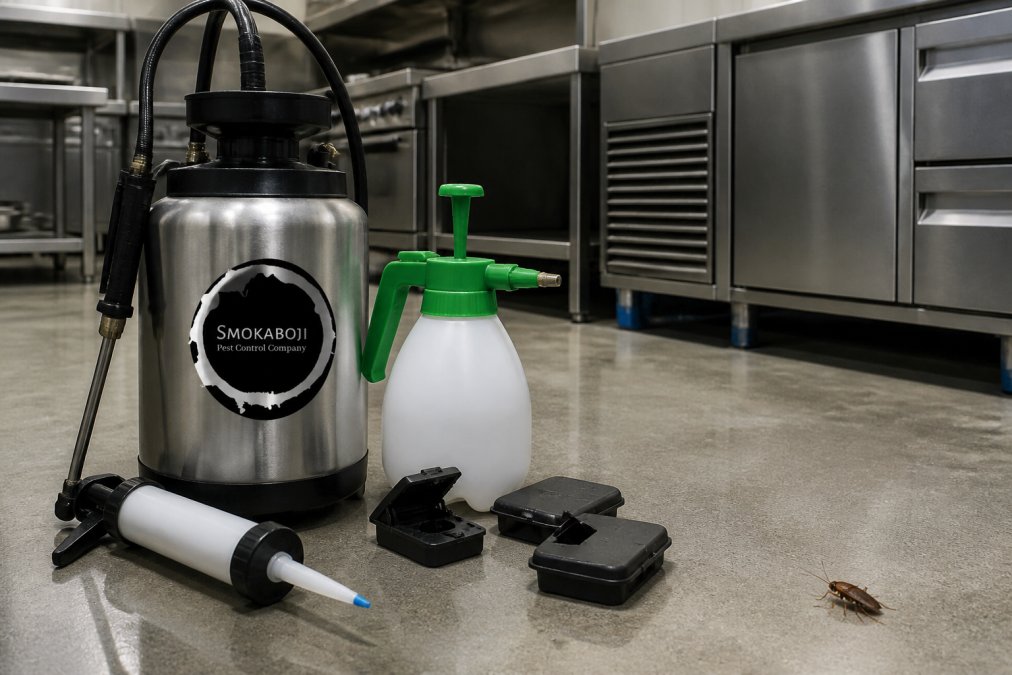
Gel baits like Advion Cockroach Gel Bait and Maxforce FC Magnum Roach Bait are workhorses of commercial control. They deliver a transfer kill effect, one roach consumes the bait and spreads the active ingredient to others through contact and feces. Placement matters: cracks, crevices, under equipment, and along walls where roaches travel. Rotate between active ingredients to prevent resistance.
Insect growth regulators (IGRs) like Tekko Pro IGR disrupt the cockroach life cycle by preventing nymphs from developing into reproductive adults. They don't provide immediate knockdown but break the reproduction cycle, critical for long-term control. Combine IGRs with adulticides for comprehensive results.
Non-toxic monitoring and traps like the Victor Roach Trap capture active roaches and provide data on population trends. Essential in food preparation areas where chemical residue is a concern, they're also your early warning system.
Non-chemical methods focus on sanitation and exclusion. Caulk cracks and crevices. Install drain stoppers. Remove standing water. Clean up food debris immediately. These eliminate conditions cockroaches need to survive. They're the foundation that makes chemical treatments effective.
The mistake most businesses make is skipping sanitation and relying entirely on chemicals. Chemicals kill roaches; sanitation prevents new ones from moving in. Without both, you're locked in a cycle of repeated treatments.
Cockroach infestations in commercial spaces demand professional intervention because the stakes are too high for guesswork. Your facility's health code compliance, employee safety, and reputation depend on getting this right the first time. Smokaboji Pest Control brings fully licensed and insured technicians who understand commercial environments, kitchens, offices, multi-family housing, and everything in between. We customize treatment plans based on your specific infestation, implement preventative maintenance to keep roaches out, and respond quickly when urgent problems emerge. Get started with Smokaboji Pest Control and eliminate the cockroach problem before it becomes a business problem.
=== FAQ ANSWERS (audit these too, same rules) ===
[1] Q: What is the most effective way to get rid of cockroaches in a business? A: The most effective cockroach removal for businesses combines integrated pest management (IPM) strategies: thorough inspection to locate nesting sites, elimination of food and water sources through sanitation, sealing entry points and cracks, and targeted chemical treatments using gel baits or residual applications. Professional pest control services apply these methods systematically, often achieving eradication when combined with preventative maintenance and staff training on reporting sightings.
[2] Q: How often should a business schedule professional pest management to prevent cockroach infestations? A: Most businesses benefit from quarterly preventative pest control visits, though high-risk facilities like restaurants and food processing plants may need monthly monitoring. The frequency depends on your facility type, past infestation history, and local pest pressure. Your pest control provider can recommend a customized schedule based on inspection findings and regulatory compliance requirements for your industry.
[3] Q: Are there specific regulations for cockroach control in food service businesses? A: Yes. The FDA Food Safety Modernization Act and state health codes require food service businesses to maintain pest-free facilities and document pest control measures (the FDA). Many jurisdictions mandate professional pest management for commercial kitchens, regular inspections, and immediate action upon detecting signs of infestation. Non-compliance can result in health code violations, fines, and closure. Your pest control provider should understand these regulatory compliance requirements and provide documentation of treatments.
Frequently Asked Questions
What is the most effective way to get rid of cockroaches in a business?
The most effective cockroach removal for businesses combines integrated pest management (IPM) strategies: thorough inspection to locate nesting sites, elimination of food and water sources through sanitation, sealing entry points and cracks, and targeted chemical treatments using gel baits or residual applications. Professional pest control services apply these methods systematically, often achieving eradication when combined with preventative maintenance and staff training on reporting sightings.
How often should a business schedule professional pest management to prevent cockroach infestations?
Most businesses benefit from quarterly preventative pest control visits, though high-risk facilities like restaurants and food processing plants may need monthly monitoring. The frequency depends on your facility type, past infestation history, and local pest pressure. Your pest control provider can recommend a customized schedule based on inspection findings and regulatory compliance requirements for your industry.
Are there specific regulations for cockroach control in food service businesses?
Yes. The FDA Food Safety Modernization Act and state health codes require food service businesses to maintain pest-free facilities and document pest control measures. Many jurisdictions mandate professional pest management for commercial kitchens, regular inspections, and immediate action upon detecting signs of infestation. Non-compliance can result in health code violations, fines, and closure. Your pest control provider should understand these regulatory compliance requirements and provide documentation of treatments.
This article was written using GrandRanker